



PHOTO VIA MAYOR BUDDY DYER FACEBOOK PAGE
UPDATE: Several other crosswalks that lead to Orlando Health from the Pulse Nightclub site were also confirmed to have been removed overnight. Click HERE to see security cam footage of an FDOT crew painting over the crosswalk.
Overnight, in the wee hours of August 21, the Florida Department of Transportation (FDOT) painted over the rainbow crosswalk outside the Pulse Nightclub site on South Orange Avenue.
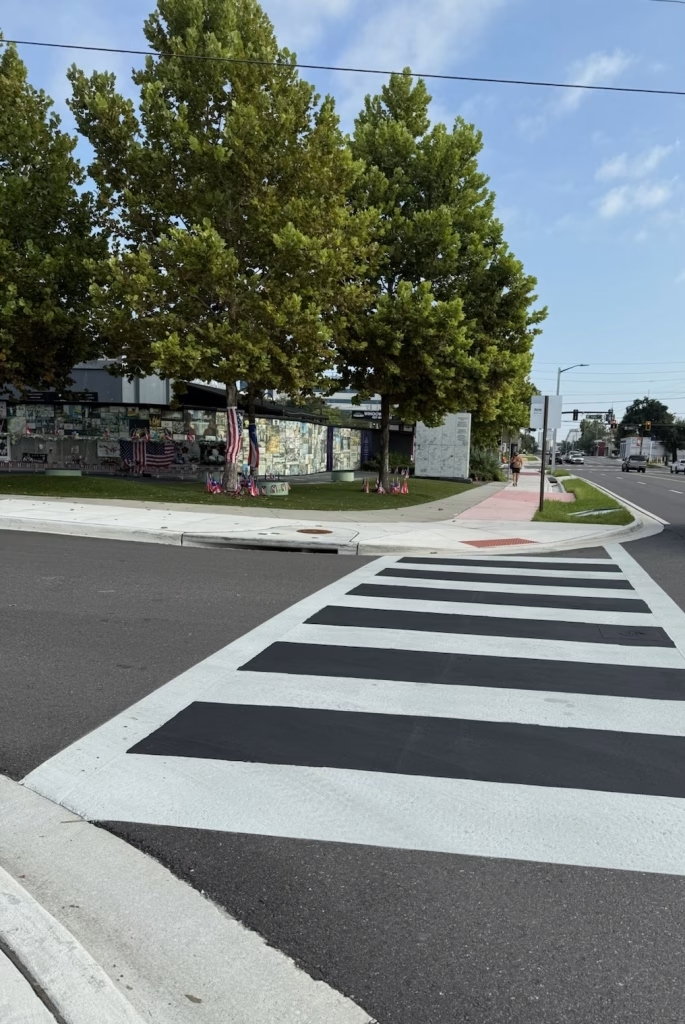
In a statement to Orlando Shine, the mayor’s office called the move “a callous action,” noting the crosswalk had been installed in coordination with the state and had enhanced visibility for the steady stream of visitors who come to pay their respects.
“We are devastated to learn that overnight the state painted over the Pulse Memorial crosswalk on Orange Avenue. This callous action of hastily removing part of a memorial to what was at the time our nation’s largest mass shooting, without any supporting safety data, or discussion is a cruel political act.
The City of Orlando’s safety crosswalks were all installed in close coordination with the state and adhere to national safety standards. In fact, the crosswalk that is part of the Pulse Memorial was installed by the state.
This crosswalk not only enhanced safety and visibility for the large number of pedestrians visiting the memorial, it also served as a visual reminder of Orlando’s commitment to honor the 49 lives taken on June 12, 2016.
While the state works to erase the memory of the victims of the Pulse tragedy by painting over the crosswalk, our community’s commitment to honoring the 49, and completing the memorial, will never waver.”
The Pulse rainbow crosswalk was created in October 2017 after a community petition, with city crews completing the work on West Esther Street at a reported cost of $2,900, a modest outlay that city officials framed as both a safety upgrade and a visible sign of love and inclusion. The work was created to FDOT specs, which demand that crosswalk art be framed by visible white lines so as not to confuse drivers.
Its removal follows a summer of escalating pressure from Tallahassee and Washington to strip non-standard “asphalt art” from public roads. Recent directives argue that rainbow or other decorative markings are out of compliance with traffic-control standards and could distract drivers; cities that don’t remove them risk losing funding. Axios and The Washington Post report that FDOT has ordered removals elsewhere and is not entertaining exemptions, even as local leaders describe the crosswalks as cultural landmarks and point to studies suggesting street art can calm traffic and improve safety – they’re referred to as “visual speed bumps,” and are proven to alert drivers that they are entering an area of significance.
We asked the mayor’s office if they had been made aware of any other crosswalk/pavement art projects in the city that are in jeopardy of being removed, and they simply stated, “We are in the process of assessing if any other crosswalks were changed.” As FDOT allegedly did not give the City of Orlando even a courtesy heads-up that they were removing the crosswalk, though city staff has confirmed that they were directed to inventory all of the artistic crosswalks in the city for FDOT over recent weeks.
We’ve reached out to FDOT for more information.