

Following the recent kickoff to the much-talked-about Festival Streetification of Church Street corridor in downtown Orlando, Orlando Shine took a moment to ask city officials for a clear(er) explanation of what it envisions for Church Street’s Festival Street redesign, and their message is: this is not a party.
Justin Eason, Assistant Director of the Downtown Development Board and Community Redevelopment Agency, answered a series of questions from Orlando Shine about the $5.2 million Phase I project, which broke ground earlier this month between Garland Avenue and the SunRail railroad tracks.
“A festival street is a design approach and not an event program,” Eason said, drawing a clear line between the physical redesign and the unstructured late-night atmosphere the city moved to crack down on in 2021. “Its primary function is to improve walkability, support local businesses, enhance accessibility and create a more welcoming environment.”
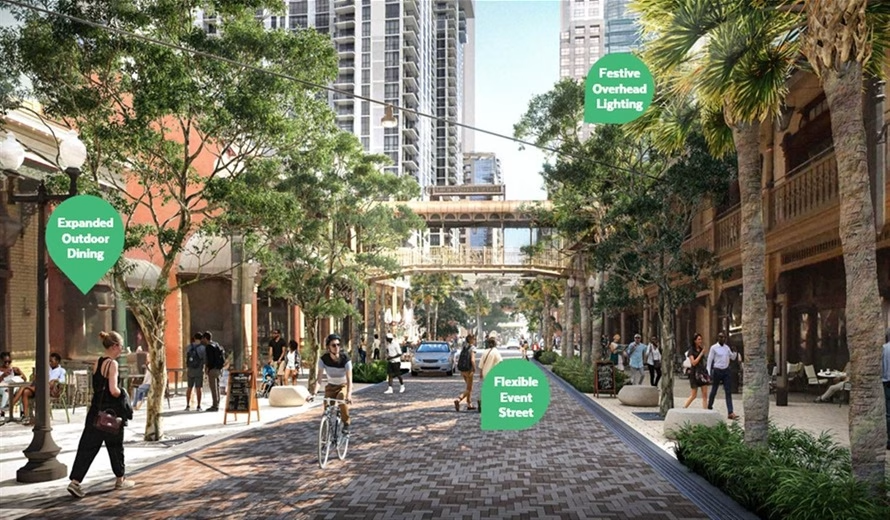
The design removes the traditional street curb in favor of a flush streetscape with textured paving that naturally discourages high vehicle speeds by making drivers feel more uncomfortable and closed in. Deployable bollards will be installed at key access points and activated during permitted street closures. Decorative LED lighting will reduce dark areas throughout the corridor, and the open design is intended to improve sightlines for both pedestrians and first responders.
On a typical day, Eason said the street will function as a low-speed corridor supporting walking, outdoor dining, local businesses, and multimodal travel, but that the design is meant to allow the space to temporarily expand for permitted community events.
Phase I is expected to be complete in late 2026 or early 2027. Phases II and III, extending the project from the railroad tracks to Magnolia Avenue, are targeted for spring and summer 2028.
Check out our full question and answer with Eason below.
According to what I’ve been seeing, the Festival Street design is meant to create a more activated, pedestrian-friendly corridor along Church Street. How does the city define “festival street,” and what kinds of events and uses are they envisioning for the space when it’s finished?
A festival street is an urban design concept that creates a flexible, shared public space capable of accommodating a variety of uses while prioritizing pedestrians, accessibility and safety. On a typical day, Church Street will function as a low-speed street that supports walking, outdoor dining, local businesses and multimodal travel. The street’s flush design removes the traditional curb, allowing the space to be temporarily expanded for permitted community events when appropriate. The goal is not to create a permanent entertainment or street party environment, but rather a high-quality public space that can adapt to different civic, cultural and community needs over time.
Is there a management entity like City District or BID taking responsibility for activating the space, or will the city manage programming directly?
The City’s current focus is delivering a well-designed public space that serves residents, businesses and visitors every day. Programming and long-term management will continue to be evaluated as the project progresses. We are looking into opportunities for possible cultural activation programs with partnerships with local businesses and organizations.
What programming is planned for the Festival Street once Phase I is complete? Is that something that’s being looked into?
There are no specific activations planned at this time. As the project is being constructed in phases, programming considerations will match what each completed phase can physically support. The intent is for the space to support a range of appropriate community, cultural and civic activities while continuing to function as an attractive, walkable downtown street for everyday use.
In 2021, the city moved to crack down on what it called a “street party atmosphere” downtown, with Mayor Dyer saying he wanted Church Street and Orange Avenue to feel safe for families. How is a Festival Street not a Street Party?
A festival street is a design approach and not an event program. The purpose of the project is to create a safer, more flexible, and pedestrian-oriented public space that serves the community throughout the day. While the design allows the street to accommodate permitted events when appropriate, its primary function is to improve walkability, support local businesses, enhance accessibility, and create a more welcoming environment. This project aligns with the goals of the Downtown Orlando Action Plan by promoting a balanced, family-friendly public realm rather than recreating the unstructured street party atmosphere the City has worked to move away from.
Has the city done a security plan for the new street design, and what does it look like? What specific safety measures are built into the Festival Street design itself, like lighting levels, sightlines, camera placement, and emergency access points?
Safety has been a key consideration throughout the design process, and city departments will work in close coordination to address the needs. The street will feature textured paving and a flush streetscape that naturally encourages slower vehicle speeds while improving the pedestrian experience. Deployable bollards at key access points will secure the corridor during permitted street closures, while decorative LED lighting will improve visibility throughout the corridor and reduce dark areas. The open design also improves sightlines for pedestrians and first responders. Any permitted event will include an operational plan that addresses emergency access, traffic management and, when appropriate, public safety staffing coordinated with the Orlando Police Department.
Will OPD have a dedicated presence on Church Street once the Festival Street is activated, only during special events, or will it be handled by general downtown patrol?
We are working in close coordination with all city departments, including OPD, to address safety needs. As with other areas of downtown, OPD will determine the appropriate level of patrol and staffing for both everyday operations and permitted events.
Craig Mateer owns several adjacent properties on Church Street. Has the mayor’s office or the Downtown Development Board been in active conversation with him about how the Festival Street design interacts with his development plans? What happens if they conflict with the city’s programming plans?
As with projects of this scale, the City regularly engages with business partners, property owners, and community stakeholders as planning and implementation progress. Our investment in Church Street is intended to create a high-quality public space that supports existing businesses while encouraging future private investment. As plans continue to evolve, the City will remain committed to coordinating with stakeholders to ensure the corridor serves the broader community and supports the long-term vision for downtown.
What role, if any, are adjacent property owners playing in shaping the programming vision for the Festival Street? Including Orlando Magic.
The City values input from adjacent property owners and community stakeholders as discussions about future programming continue. While no programming has been finalized, the focus remains on completing the project and creating a flexible public space that serves a variety of everyday and occasional community uses. As the corridor nears completion, the City expects to continue working with nearby businesses, cultural organizations and major stakeholders, including the Orlando Magic, to identify opportunities that complement the corridor, support downtown businesses and enhance the visitor experience without changing the street’s primary role as a safe, walkable public space.