



PHOTO BY BERKIN UREGEN VIA UNSPLASH.COM
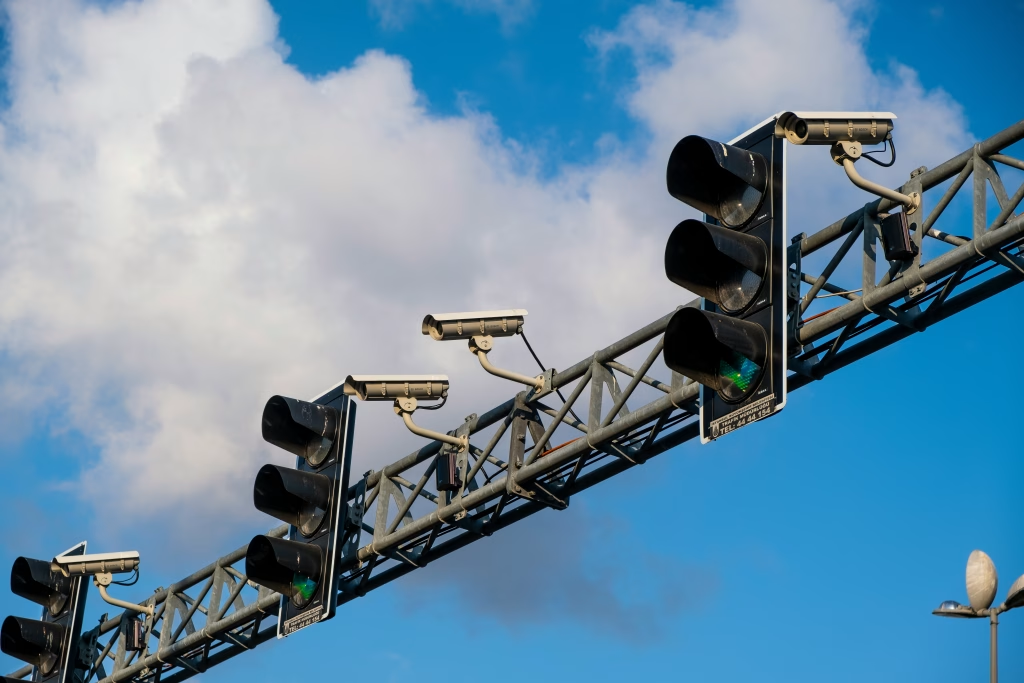
Orlando is preparing to expand its red-light camera program, with hopes of installing dozens more cameras at intersections the city has flagged as dangerous. The plan, which was up for consideration by City Council earlier today at City Hall, will nearly double the number of traffic infraction detectors currently in operation.
As it stands, the city operates 45 red-light cameras at 25 intersections, comprising fewer than 5% of the more than 500 signalized intersections across city limits. The new proposal would add another 55 cameras to cover many of the high-risk intersections identified in the city’s recent safety study. Among the intersections under consideration are several along Colonial Drive (including the intersection of Colonial and Mills), John Young Parkway, and Kirkman Road.
Orlando’s push for this expansion is part of its Vision Zero plan, which aims to eliminate traffic deaths and serious injuries by 2040. The city cites crash, injury, and fatality data showing that many intersections see frequent right-angle or “T-bone” collisions — some of the most dangerous kinds of crashes. Under state law (passed last year), cities must show that an intersection poses a heightened safety risk before placing a red-light camera there, so Orlando’s study is intended to satisfy that requirement.
Penalty when caught running a red light at a camera-equipped intersection is $158. If the violation goes unpaid, it can turn into a uniform traffic citation costing $262, plus potentially other penalties. Importantly, paying the fine on time means no points are added to a driver’s license. The violation notice includes the date, time, and a link to view footage of the instance.
Financially, the red-light camera program has become quite the money maker for Orlando City Hall as well. From July 2024 through June 2025, Orlando issued more than 60,000 violation notices and over 20,000 citations for unpaid violations, bringing in around $7.6 million in total revenue. Of that, about $4.2 million went to the city, while the rest was sent to the state, where part of it is allocated for hospital trauma centers and other safety and injury-related uses. The city says its share of the revenue funds traffic safety projects under the Vision Zero initiative.
Supporters argue the expansion will save lives, reduce serious injuries, and discourage dangerous driving behaviors. Critics counter that the cameras are burdensome, disproportionately affect lower-income drivers, and risk creating perceptions (or realities) of revenue-driven enforcement rather than public safety. Concerns also exist around fairness, visibility of signals, timing of yellow lights, and whether the presence of cameras actually changes driver behavior beyond the intersections where they are installed.
The proposal to expand the system was discussed at the City Council’s meeting on Monday, September 22, and approved. The plan is for the vendor, which in Orlando’s case is Verra Mobility, to begin pulling permits in mid-October and have the additional cameras operational by spring 2026.