



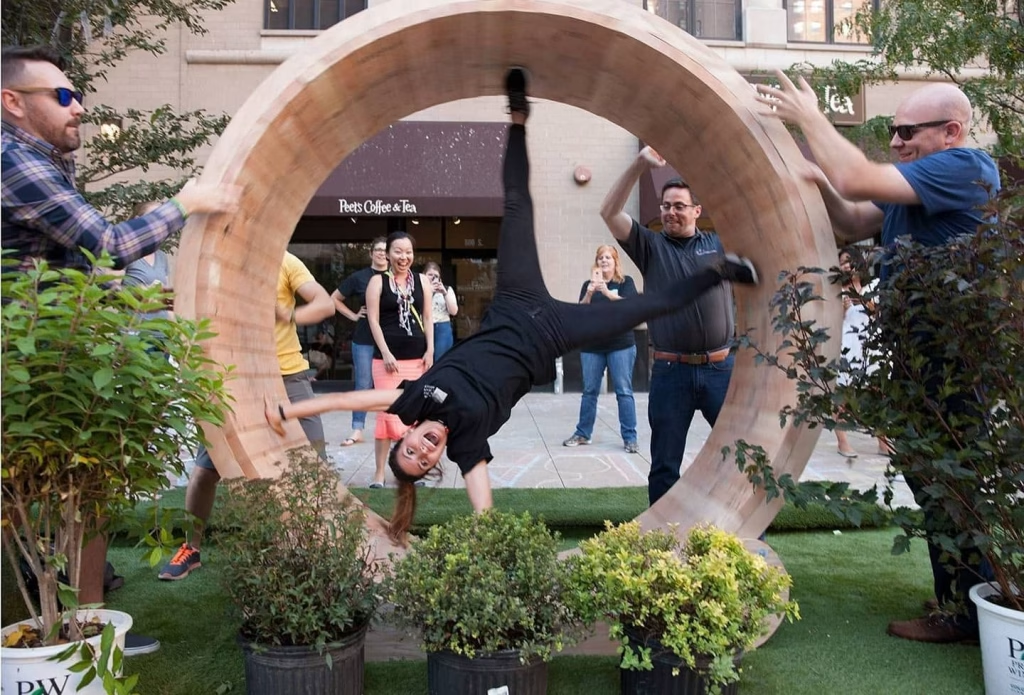
PHOTO VIA PARKING DAY ORLANDO FACEBOOK PAGE
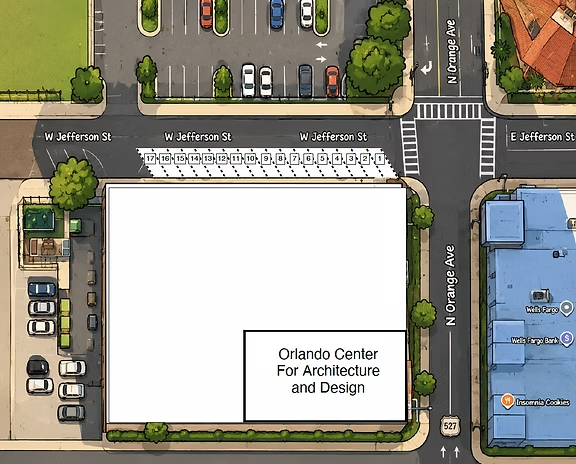
The Orlando Foundation for Architecture (Website) is bringing PARK(ing) Day back to downtown Orlando on Friday, September 18, with the mission of transforming 17 angled parking spaces along Jefferson Street into temporary public parklets for one afternoon.
Setup begins at 11 a.m., with the event running from 4:30 to 7 p.m. Installations may include educational exhibits, art displays, gathering areas and other pedestrian-focused amenities, and participants are required to use temporary, removable materials that won’t damage public infrastructure. Organizers say the event is explicitly non-commercial in nature; no goods, services or merchandise will be sold, and installations aren’t meant to function as advertisements.
Registered participants so far include SLAM Collaborative, Playmore, Dix.Hite, and Kimley-Horn, among other spaces still open for registration. A standard parking space costs $100 and includes a tabletop sign. Sponsorship packages are also available, with a $500 Event Sponsor tier offering event signage, social media and newsletter recognition, and verbal acknowledgment at the event, and a $250 Student Sponsor tier that funds a parking space for AIAS student participants along with similar recognition.
Ahead of the event, the Orlando Foundation for Architecture is hosting a PARK(ing) Day charrette at its August 5 Architecture on Tap +1 gathering, where participants can review event guidelines and workshop installation concepts.
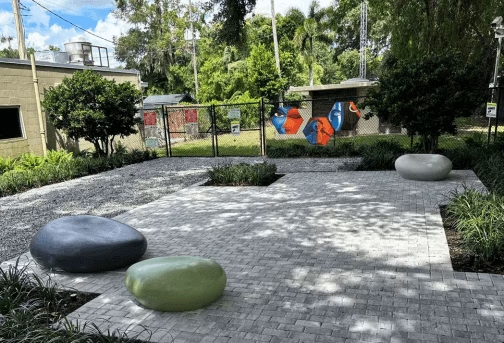
This year’s Orlando event coincides with the 20th anniversary of PARK(ing) Day as a global phenomenon. The concept began in 2005, when Rebar (Facebook), a San Francisco art and design collective, fed a downtown parking meter and installed a small strip of sod, a bench, and a young tree in a single parking space, holding the temporary “park” for the two-hour duration of the meter before packing it up and leaving. The stunt was meant to highlight how much of the city’s public right-of-way was dedicated to vehicle storage rather than public space. Rebar later published an open-source how-to guide, and the idea spread into an annual global event now held in cities around the world, credited with helping spark the broader “parklet” movement of semi-permanent curbside public spaces.
More information and registration for Orlando’s event or to sponsor or sign up for a space, click HERE.