



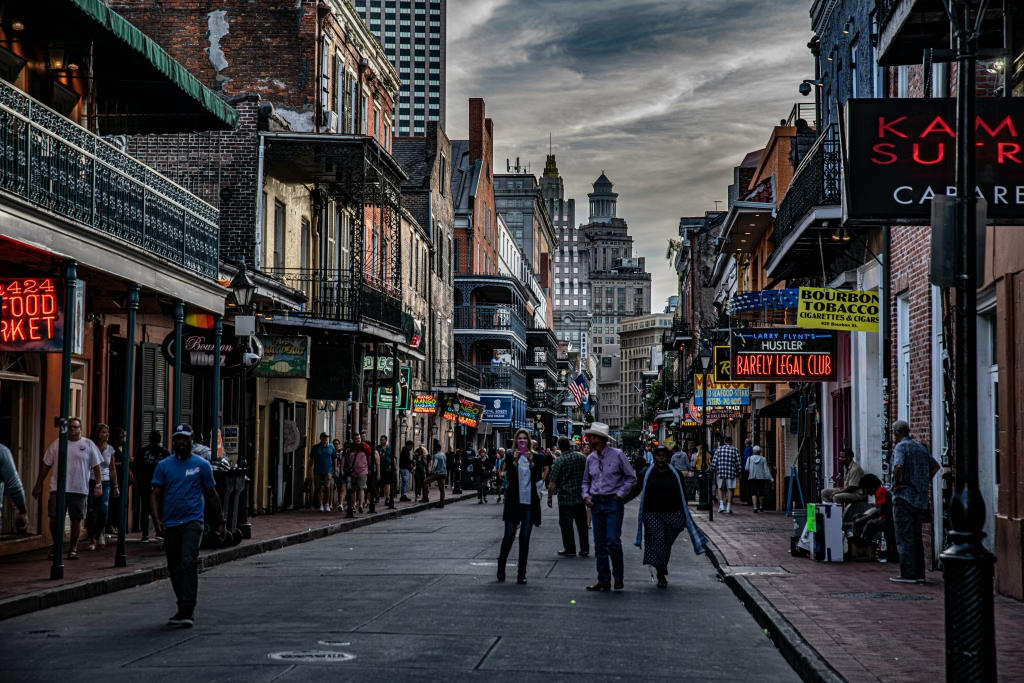
PHOTO BY MANA5280 VIA UNSPLASH.COM
New Orleans is one of the world’s great nightlife cities, a place where the French Quarter’s narrow streets, historic balconies, delicious food, and endless music draw millions of visitors year-round. The city knows how to handle crowds on a scale most places can only imagine, without losing that free-jazz, laissez les bons temps rouler feel. For Orlando, where our downtown is currently finding its late-night scene to be a bit out of rhythm (at least with City Hall), there’s a lot to learn from how cities like New Orleans manage their bustling streets, especially after major incidents.
That expertise was put to the test on New Year’s Day, when a driver intentionally plowed into a crowd in the French Quarter, killing 14 people and injuring at least 57 others, according to the FBI. It was a heartbreaking moment, but also a revealing one: the way New Orleans responded, from immediate care for victims and workers to thoughtful long-term planning, shows a model for balancing safety with the cultural spirit that makes nightlife thrive.
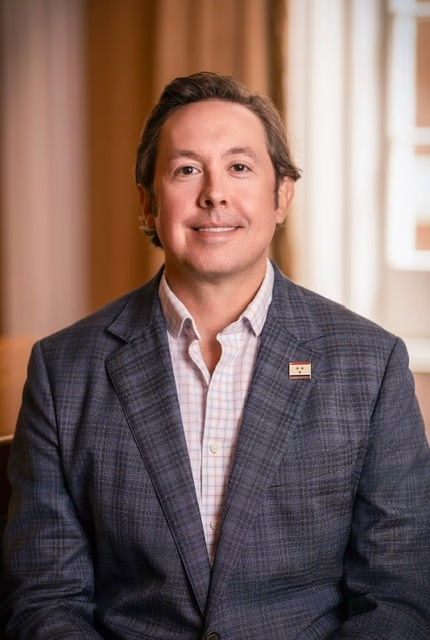
This week, I had the pleasure of speaking with Michael Ince (LinkedIn), the Acting Director of Nighttime Economy for the City of New Orleans and a former Floridian, about what Orlando can take away from NOLA’s approach to late-night audiences, crowd control, and safety in the wake of tragedy, without sacrificing the needs and wants of downtown businesses and residents.
SHINE – What was the immediate priority after the New Year’s Day incident?
“The first thing we did was take care of the people. I have said, from the beginning, that we absolutely need to make things safer for our patrons or guests, our visitors, our locals, our staff who are working in these venues. They always get lost in the discussion. We hooked folks up with mental health help through Southern Smoke Foundation (Website), got the SBA [Small Business Center] to set up shop right in the Quarter at Palace Cafe (Website), so businesses could apply for relief, and made sure folks missing shifts had some way to keep the lights on. Those couple of days’ wages might not sound like much, but it means everything to someone living week to week.”
SHINE – What short-term safety measures were implemented by the City of New Orleans to deter something like that from happening again?
“We rolled out big visual deterrents, like large vehicles at Bourbon Street entrances so nobody could drive past, heavy barriers, and lots of uniformed presence from NOPD, State Police, and the National Guard during the Super Bowl which happened just a month later. People told us they’d never felt safer, but it looked a little too militarized, not the New Orleans vibe we want forever. It felt like a post-hurricane lockdown situation, and staff members in the Quarter all said they felt like it was a bit too much. We saw a high concentration of patronage at ticketed events and private parties, but the matriculation of patronage to smaller businesses was very concentrated for a long time, which really hurt the smaller venues.”
SHINE – Were there any legislative changes made? Anything from City Hall?
“No knee-jerk laws. Instead, we’re doing a French Quarter-wide traffic study to get the whole picture. We’re replacing our old ‘musician loading zones,’ which were unenforceable, with a Seattle-style leased parking program for venues. It cuts down on headaches and works better for everyone. We brought in a former New York City police commissioner’s team to come and do a threat assessment of the district. And we’ve decided to conduct an overall traffic study plan for the French Quarter as a whole. We have this thoroughfare on Canal Street, but you also have this main arterial, which is Bourbon Street, that we normally don’t let vehicles go down at night. So we really needed to account for traffic patterns: where people are getting picked up and dropped off with things like rideshare.”
SHINE – How is parking being addressed?
“We launched an affordable parking program with 1,500 spots for hospitality workers and musicians. Also we moved rideshare drop-offs a block away on Frenchmen Street. We cut traffic by more than 80% after 8 p.m. Little changes like that matter. It’s going to be a kickstarter to bring more locals back to the Quarter, because you’ll be able to use those spaces for valet parking. Not everyone has the ability to walk a couple of blocks. It’s hot. I know it gets hot in Florida, but New Orleans is much hotter. And our mosquitoes are bigger.”
SHINE – Does New Orleans face problems with bars closing at the same time?
“If you dump everybody out on the street at once, you just create a street party waiting for trouble. We try to keep nightlife governance flexible, and we bring bar owners into the conversation; they want a safe scene too. Another problem is when clubs skew older instead of accommodating for the younger generations. What happens is you create a street party atmosphere where people aren’t allowed to get into the venue but all their friends are in there, so they’re going to go outside to the parking lot. Pepper in when you force those bars to close at exactly the same time, you get some of these kids interacting with someone at another location that they don’t like, or there’s a parking dispute, it could be one of a million issues.”
SHINE – What sort of partnerships do you have to support nightlife safety?
“We work with Safe Bar Network (Website), which trains bar staff in de-escalation strategies for free. The bar gets a certificate for its insurance, which saves them money, and everyone’s safer for it. For instance, you don’t want to break up a fight that happens inside a venue and move those individuals out into the street at the same time. That’s how a venue can be helpful from a law enforcement perspective. And then communicating to the police where those parties are to help de-escalate anything before it grows.
One thing I really press on my bars and live entertainment venues is for all of them to obtain a digital ID scanner so they can communicate with law enforcement and any other venue to ban problem-actors from becoming a problem for another venue. And that action dries down your insurance costs too.
The best nightlife governance is flexible and benefits the city as well as your business owners. You need to make them a part of the solution. They need to buy into the solution because they want people to come down and spend their money and feel safe. It can’t be entirely on them when problems happen on the street or in the parking garages. I read about an incident in Orlando, where there was a shooting in a parking garage. That could have been something completely unrelated to a venue. They may not have even entered into one. That’s a looky-loo. They’re there to gather in public to be a part of a scene. They’re not a patron.”
SHINE – Does New Orleans require venues to fund off-duty police?
“No. Venues can hire extra police if they want, but we don’t make them pay a set fee for officers who might not even be stationed inside. If you’re gonna charge a venue, they ought to see the benefit directly. We’re pushing venues to get digital ID scanners, stop underage drinking, and let them share ‘do not admit’ lists with other bars and law enforcement cuts down on problem patrons fast. My suggestion is to bring everyone to the table and try to create an action-oriented group that benefits them the most, or their bottom line, while also making the place safer. It’s already an entertainment district. It really should have a dedicated form of nightlife-type of police force.”
SHINE – What’s the overall philosophy for nightlife safety?
“You can’t enforce your way out of these problems. We use data and Risk Terrain Modeling [diagnosing environmental conditions that connect or contribute to crime or other problems], working closely with the District Attorney’s office, to figure out the real causes, and we keep everyone at the table: bar owners, police, and neighborhood leaders. Measure twice, cut once.
People come to Bourbon Street, and they think it’s like Mardi Gras. They’ve seen it on TV, and they think they can do whatever they want and get away with what they want. Not true. It all starts with bad behavior, and that can start as early as your parking experience. When people see disorder in parking lots or in the streets, then illegal vendors come in, or drug dealers. Then it becomes a powder keg of a situation that you have a really difficult time controlling. And, you know, the venues and bars are doing everything they can to account for what’s happening inside, so they need to be supported by law enforcement on the outside, because they know they’ll get less patronage otherwise. You can’t legislate your way out of these problems. I’ll say that over and over. You can’t wave a magic wand. You need everyone’s long-term buy-in.”
SHINE – Where does funding come from for all of this?
“We’ve got a mix. French Quarter Management District, state support, and tourism revenue. And the partnerships matter. Everyone’s got skin in the game.”
SHINE – Any last bits of advice for Orlando?
“I want to see downtown Orlando like it was 15 or 20 years ago, when I was hanging out there. I would love to see that. But you’re also never going to have a situation with zero crime. I definitely think that Orlando has some options that it can utilize to improve the overall situation and most likely increase sales. I don’t know of the sales tax structure for the downtown area or the entertainment district, but a sales/security tax could be useful if dedicated strictly to that area as well as some required security presence at public/private parking garages.
I also definitely would suggest that there be a monthly meeting between city admins and the collection of nightlife businesses to maintain some good communication on what can be proposed legislatively as well as some things that can be done inside of the bar that will be helpful to all parties. Especially now that there is not an active Nightlife Liaison.
The Safe Bar Network type model of violence de-escalation training, intervention, prevention of overserving, digital ID screening, harm reduction et cetera is how these businesses can help provide a safe environment for both staff and patrons while supporting the LEO agencies. I am a big believer in our department promoting compliance through education while sharing resources acquired from multiple partnerships that will support the businesses . This model best assists the enforcement side when maintaining compliance, in essence they have to complement each other to be sustainable.”
The French Quarter may have centuries of nightlife experience under its belt, but the challenges New Orleans faces aren’t all that different from Orlando’s, just on a bigger stage. What makes the real difference is how they respond: centering people first, leaning on partnerships, and making sure safety measures and public policy work in harmony with the city’s identity and business community.
For Orlando, the lesson is clear. We can’t simply legislate our way into a vibrant, safe downtown. It takes listening to the people who live it every night, from bartenders to police to business owners, and building solutions together. That means smarter parking, staggered hours, better training, and design- and data-driven strategies that tackle issues at the root without draining the life out of our streets.
SHINE TAKEAWAYS:
- In any crisis, start with people. Have a plan to immediately connect nightlife workers to counseling, peer support, and short-term financial relief. Use trusted local partners to deliver it.
- Short-term, high-visibility measures can reassure crowds, but they shouldn’t feel like a lockdown. Have a phased plan to scale back to less obtrusive measures that still maintain safety.
- Resist rushing new rules after a high-profile incident. Focus on data-driven fixes that address actual operational pain points for venues and staff.
- Target parking solutions for the people who have to be there — workers and performers — and push unnecessary traffic to the perimeter.
- Avoid blanket closing times for all venues. Use staggered hours or incentives for operators to help reduce mass exodus problems. Maybe use the existing After Hours Permit to extend operating hours for those who are required to pay extra for police costs.
- Partner with training groups that give venues a financial and safety incentive to participate.
- If assessing fees for safety, make sure venues can see the link between their payment and the protection they receive.
- Invest in tech that reduces risk inside venues and builds a shared information network between operators and police.
- Make collaborative governance the default. Use data to target real problem conditions instead of relying solely on more policing or new laws.
- Fund safety initiatives with a blend of tourism-related revenue and shared contributions from stakeholders who benefit.
- Location matters — some concepts are better just outside the main nightlife core, where costs are lower and operations are easier.