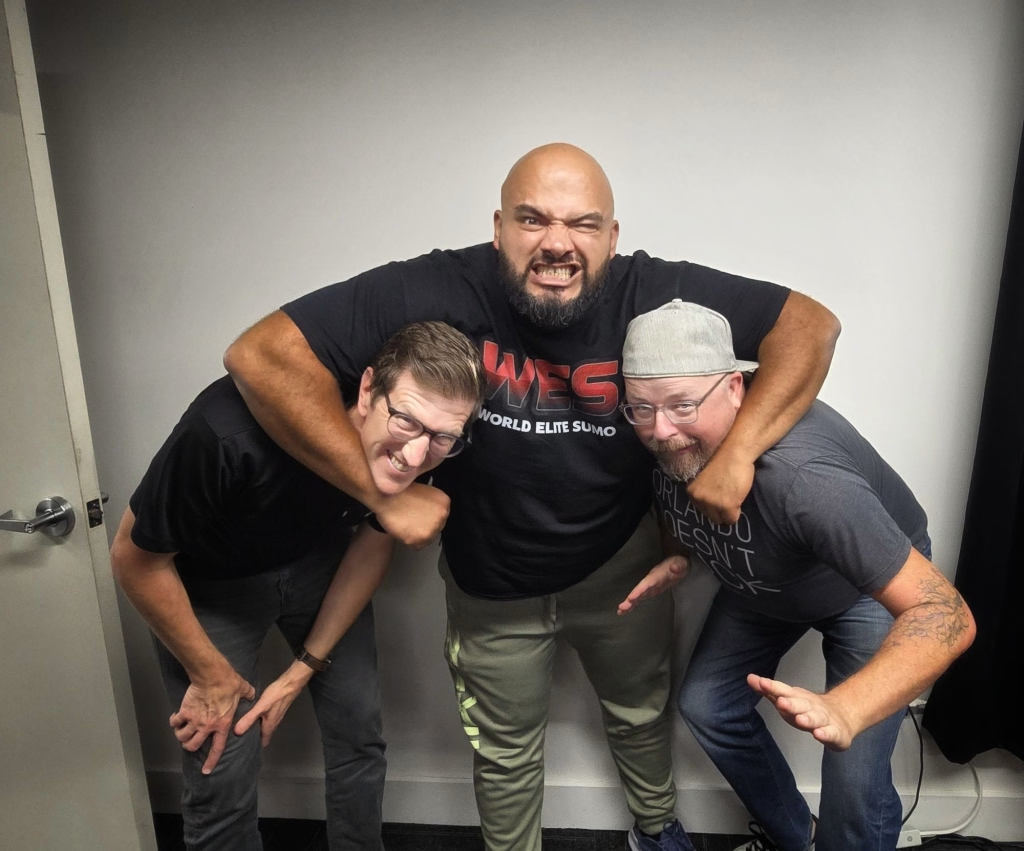
An Egyptian Japanese sumo wrestler is bringing his American pro league back to Orlando, with a 12-man tournament set for Saturday, November 21, at the Caribe Royale.
World Elite Sumo (Website) calls itself the first independent professional sumo league established outside Japan. Its founder, Abdelrahman “Sandstorm” Shalan (Instagram), said the league holds an event every month or every other month in a different state. He said he spent eight or nine years working toward it, and the first serious step came in December 2025 with a small event that sold out 300 tickets. A show at UCF in March followed, then a New Jersey event where he said about 65 percent of 8,000 seats sold. He said the league sold out a 2,000-seat arena in Santa Cruz, California, last month, and he thinks it’s growing every time they host an event. Tickets are available through the league’s website.
World Elite Sumo is bringing a one-night, 12-man, open-weight tournament to the Caribe Royale (Website) on Saturday, November 21, with a Power Slap heavyweight, a former top-division Japanese wrestler, and a local MMA fighter among the competitors. Fighters can use techniques from their own sport as long as their hands are open. “Everything has to be sumo,” he said. Announced competitors include Makini Manu, a power slap super heavyweight, Hidenoumi Takuya, a former top-division Japanese sumo wrestler, and Soslan Gagloev, who competes out of Orlando, according to WFTV.
Shalan said the league shows the sport side of sumo and leaves out the Shinto religious traditions. “We have whole respect for tradition,” he said, adding that about 70 percent of his fans in Japan support what he is doing and the rest feel it is far from tradition. He said he is not presenting traditional sumo and wants people to focus on the sport.
Shalan started sumo at 14 after the Egyptian national team coach spotted him in the gym, he said. He said he won medals at international championships in Estonia, Bulgaria and Poland between 2008 and 2010. He then moved to Japan, where he said the first six months were a test. He woke at 5 a.m. to prepare senior wrestlers’ belts and clean toilets, and he ate whatever was left after the coach and top wrestlers finished. He was not allowed to speak anything but Japanese. “I thought about quitting every day,” he said, but he treated the hardship as motivation.
His Japanese name, Ounarashi, means “great sandstorm.” Shalan said sumo legend Taiho gave it to him. He said he holds the record for the fastest rise through the ranks and for the most knockouts in a single competition. He said his style often involved an elbow to the face off the start, a move he said is not part of sumo but is not illegal.
For full event details, click HERE.
Q&A
Edited for length and clarity. Questions are from The Orlando Shine Show.
You have an event coming up. What is it?
“Right now we have World Elite Sumo, the first pro sumo league outside Japan, and pretty much we’re based here in the U.S. We do one event every month or every other month in a different state. This time we have our event on November 21st at Caribe Royale.”
What can people expect?
“We have a whole sports event that starts with Japanese drumming, and then we have real sumo matches, but in a modern way. We have 12 athletes and do a 12-man tournament. It’s family-friendly. Expect to see something you’ve never seen before.”
How is this different from sumo in Japan?
“We have three rounds in every match. You win one, and I win one, and we go to the third. If you win two rounds, we don’t go for the third. And everyone in WES must wear shorts under the sumo belt, because not everyone will accept seeing those two figures. It took me a while for my family and even my people in Egypt to accept seeing me fighting like that in front of them.”
How did you get into sumo in Egypt?
“My dad sent me to the gym every day since I was eight. When I was 14, I made the Egyptian national team coach notice me, and he said, ‘Come and try sumo.’ I said, ‘I’m a bodybuilder, why would I do this?’ He put a guy in front of me who was half my weight, and I found myself flying through the air and going upside down seven times. I loved it. I fell in love with the sport.”
What was life like as a new wrestler in Japan?
“You wake up at 5 a.m., before every other wrestler, and clean the toilets. Then you put their belts on for them. After training, half of us go to the kitchen to make the food, and the coach and the high-ranked wrestlers eat first. Whatever is left, we eat. Some days there was only rice and some soup. I wasn’t allowed to speak anything other than Japanese, or I’d be kicked out. For the first two years, I was speechless.”
Did you want to quit?
“I thought about quitting every day. But for me it was motivating. It’s a different culture, a different path. Every day I spent on it, I was humiliated more, and I used that.”
How did your faith fit with sumo’s Shinto traditions?
“It was a big shock at the beginning. They pray in the kitchen so the rice is blessed, and they pray before and after training. I took it as part of the whole package of being a pro athlete. Whatever you guys do here, I do the same as you.”
How does WES handle tradition?
“We have whole respect for tradition. We present the sport part from sumo, not the deep Japanese part or the Shinto part at all.”
What do your fans in Japan think?
“About 70 percent of them support what I’m doing, and the other 30 percent say it’s good but far from tradition. I admit I’m not doing traditional sumo. I modernize sumo to fit the Western audience.”
Where do you want WES in five years?
“I want to be on TV, on free channels, so people can just open it and watch live with no paying. I want everybody to fall in love with sumo, in the U.S. and the whole world.”
Where do you get your name, Sandstorm?
“My Japanese name is Ounarashi, the great sandstorm. The one who named me that was the sumo legend Taiho. He was not fully Japanese and got some hate at the beginning, but he broke all the records. He gave me a push at the beginning.”