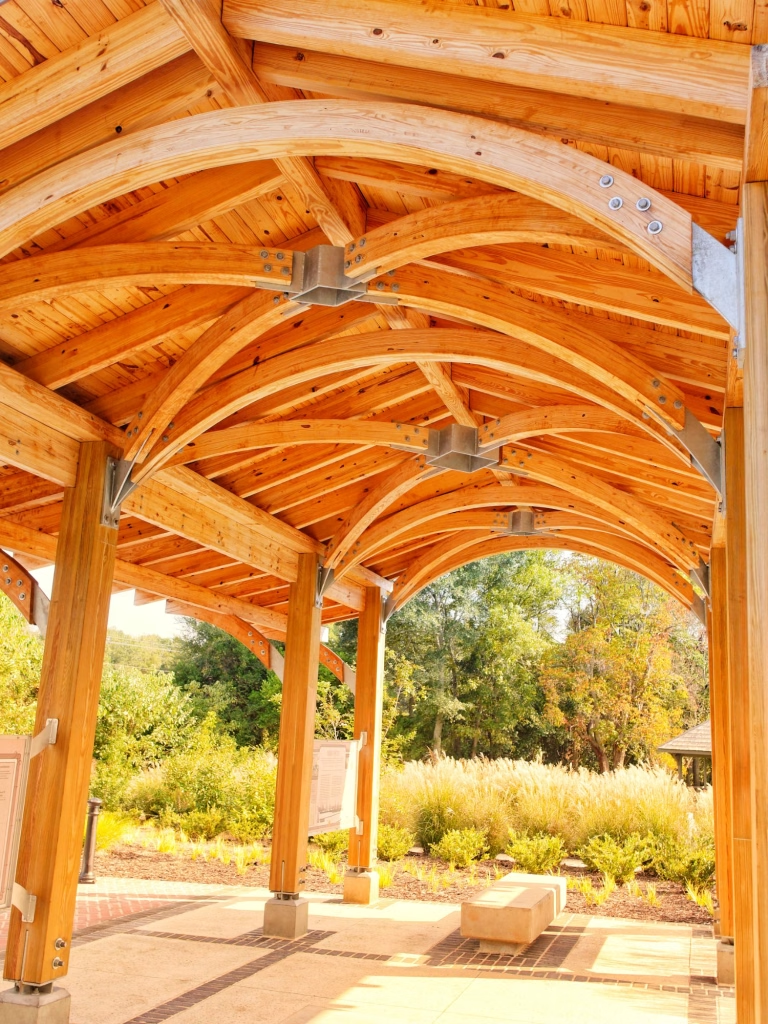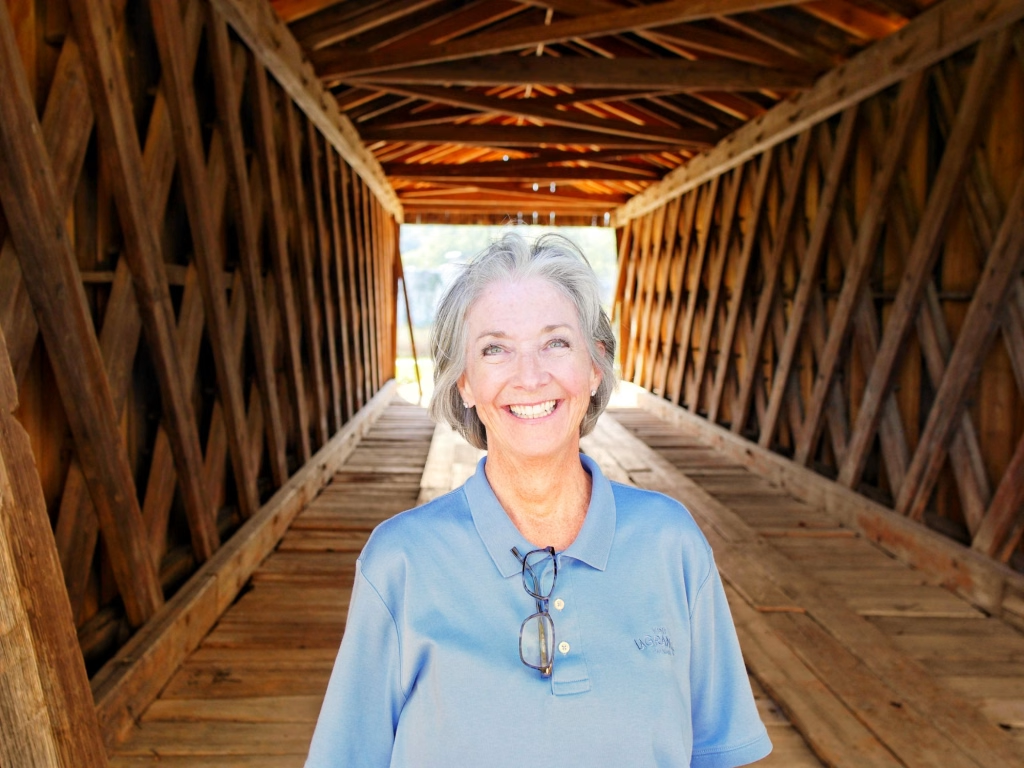
TILLEY, PICTURED IN THE COVERED BRIDGE
LaGrange, Georgia (located about an hour and a half southwest of Atlanta), has restored Mulberry Street Cemetery, a 1863 burial ground where Confederate soldiers, the bridge builder Horace King, and about 1,000 formerly unmarked graves share a hillside. Visit LaGrange (Website) president and CEO Kathryn Tilley (LinkedIn) walked me through it on a recent visit; both the history of the project and the actual (beautiful) new public park.
The site at 101 West Mulberry Street [GMap] opened to the public on July 24, 2025. The project cost $2.7 million, according to the Georgia Trust for Historic Preservation, and in 2026 it earned the trust’s Excellence in Preservation award.
When Tilley’s team started, she said, almost none of what visitors see now existed. There was a field, a creek, and a hillside that was known to locals to hold an unconfirmed number of Confederate graves. Ground-penetrating radar carried out in 2016 turned up about 400 graves nobody knew about, outside of the Confederate grave site. When Tilley asked for a newer scan a couple of years later, the same surveyor (using newer technology) found 1,005 confirmed unmarked burial sites. Most are believed to be African American burials from between the 1860s and the cemetery’s closing in 1930. And thus began Tilley’s mission to not only restore some dignity to the graves, but to transform the site from an ignored in-between space into a thoughtful place for reflection. An amenity for the local community.
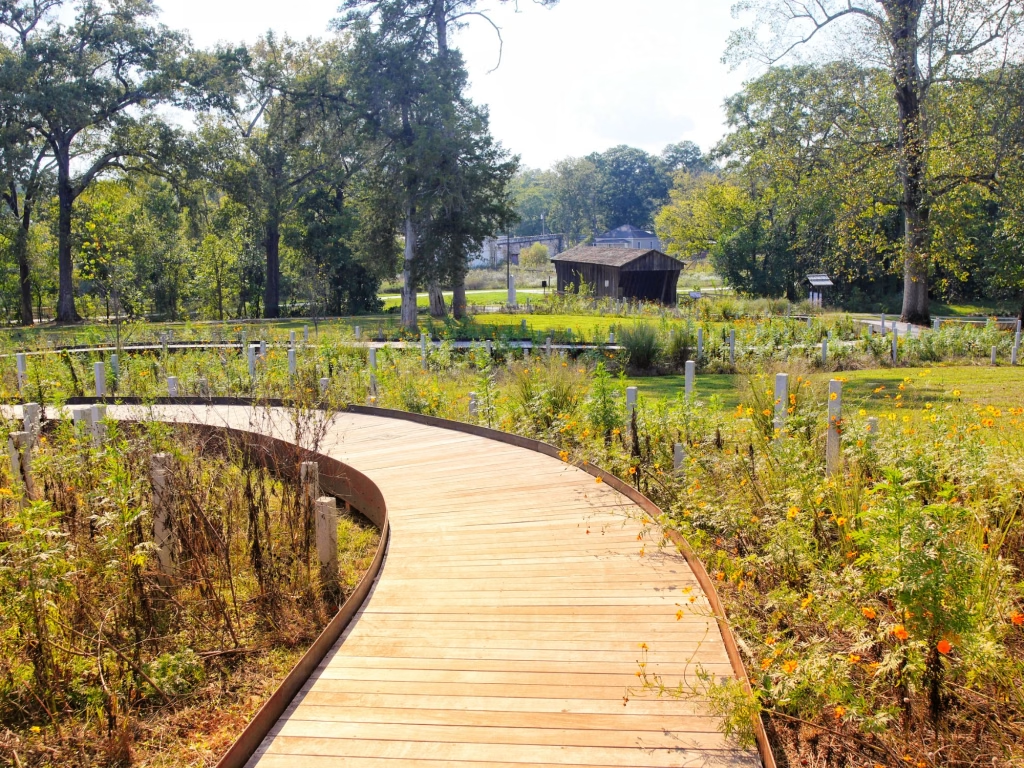
Tilley said the team didn’t want anyone to have to walk over graves. So her team designed a raised, meandering path that crosses the grounds, with footings placed only where radar showed no grave to be present. Where the path crosses a grave, the marker is set into the walkway. Flat markers sit in the grass, and pillar markers line the edges. All 1,005 sites have been marked.
The covered bridge was the project’s starting point. Part of the Wehadkee Covered Bridge, built by Horace King, had been at Callaway Gardens since the 1960s, and Tilley, a former employee, petitioned for it to be the crown jewel of the cemetery, where it could join its maker. It was taken apart piece by piece, moved and reassembled at the cemetery in 2022, where it now connects the cemetery to The Thread, a multi-use trail that Tilley said will run 29 miles around the city once finished, with about 15 miles already completed at the time of my visit.
Horace King (1807 to 1885) was a master bridge builder and engineer who was born enslaved in South Carolina’s Chesterfield District and rose to become one of the most prominent bridge builders in the antebellum South. He was bought by contractor John Godwin in 1830 and became Godwin’s right hand on bridge projects, probably planning and directing the work on the first public bridge between Girard, Alabama, and Columbus, Georgia, across the Chattahoochee River. Alabama’s legislature passed an emancipation bill in 1846 that freed King, and he went on to build town lattice truss bridges over most major rivers from the Oconee in Georgia to the Tombigbee in Mississippi, and the state hired him for carpentry on the new Alabama capitol in Montgomery, including circular staircases. After the Civil War, he served two terms in the Alabama House of Representatives as a moderate Republican, and in 1872 he moved his family to LaGrange, Georgia, where he and his sons continued building bridges, houses, and college buildings. King died May 28, 1885, and his sons carried on the King Brothers Bridge Company.
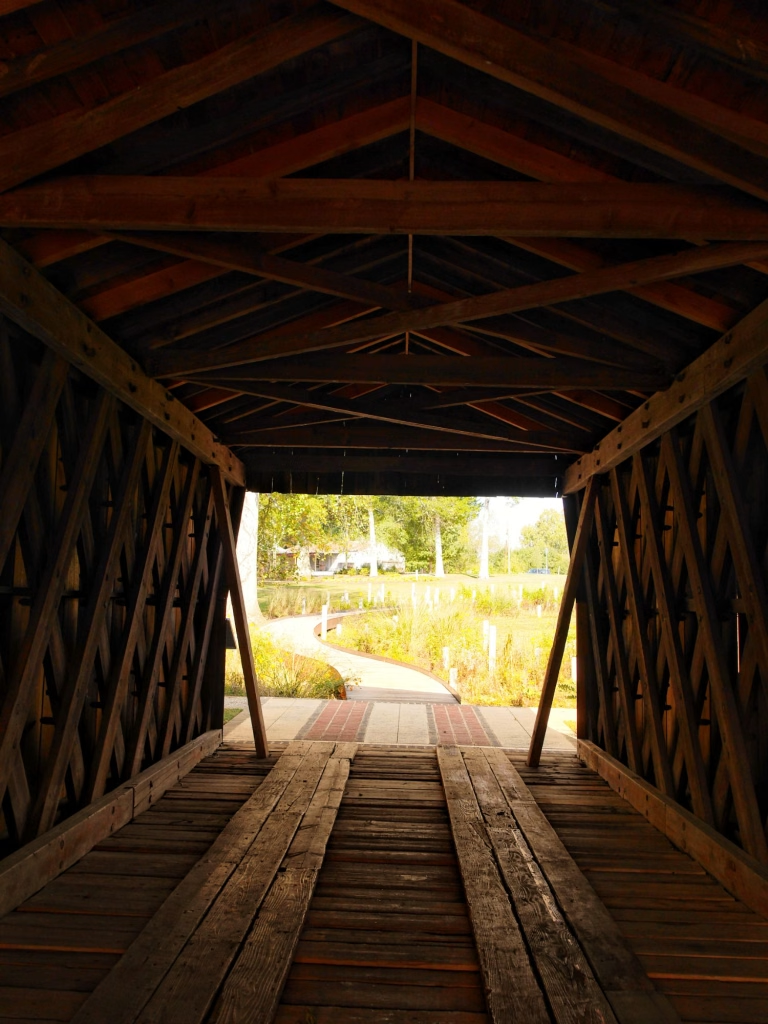

Tilley pointed to numbers hand-painted on the beams by the original builders and to wooden pegs instead of nails. She said the first heavy rain after installation sent water against the bridge’s underside, and it held strong.

The project was designed alongside the community. Tilley’s team presented the plans to hundreds of people in small groups, including pastors of the city’s Black churches, the housing authority and LaGrange College, and asked what they were getting wrong. They also called the Sons of Confederate Veterans, who, after reviewing the drafts for some on-site interpretive panels to be included in the cemetery, corrected the team’s wording, saying, “the men are veterans, not only soldiers.” A later volunteer group from the organization, she said, spent a Saturday cleaning and resetting the stones by hand, including King’s monument, free of charge.
Instead of a traditional groundbreaking, the city held a blessing, with a Black pastor and a white pastor praying together.
On a rail line along the cemetery’s edge, a CSX freight train rolled past during the tour. Tilley said it is the same line that carried Confederate soldiers to LaGrange’s wartime hospitals, where those buried here died. “This exact same railroad track brought these boys here,” she said, “and it’s still in use today.”
Tilley said the cemetery has already changed how some people see it. Two Black women in their 70s visited shortly after it was finished, she said, and told her that as girls they would run past the property because a grandmother had warned them never to linger there; that it was bad juju. It was the first time in about 70 years they had felt comfortable enough to step inside.
An adjacent mill is now being converted into more than 100 units of affordable housing by DASH, a nonprofit housing developer, and the cemetery acts as an amenity for the block. Residents have told her there may be burials across the creek, she said, and DASH’s founder offered to deed that land to the cemetery.
Tilley said funds from “Spread for the Dead,” a funeral-food cookbook the team published, raised about $15,000 for upkeep. The Troup County Archives is still trying to find descendants and plans another family Bible day next spring, when people can bring records that might name someone buried there.
For visiting information, go to mulberrystreetcemetery.org.
It’s interesting to watch a smaller market’s visitors bureau take a hands-on approach to shaping the local community and actually building/enhancing physical amenities. In LaGrange, Georgia, Visit LaGrange President and CEO Kathryn Tilley has led the restoration of Mulberry Street Cemetery, the relocation of a historic covered bridge and a walking path that opens the site to the public, and she has worked with a local nonprofit developer on affordable housing next door.
The bureau treats a place visitors can walk through as part of its job, not just something to advertise. Orlando’s tourism model works differently. Visit Orlando is built to market a destination that already has world-famous attractions, while major physical projects, from the performing arts center to stadium upgrades, are largely funded separately through Orange County’s tourist development tax decisions. Each approach makes sense for its market, but the contrast shows how a bureau can serve when it gets to help build the reasons people visit and not just promote them.