



Sometimes, Orlando Shine gets invited to get outside of our Central Florida bubble and visit another beautiful part of the country as part of our Road Trip series. While we’re on the road, we tend to bump into some amazing people, which is why we launched our new Field Trip features to shine a light on the equally amazing people who come across our path.
When Billy Mencer Ackerly stepped into the street in downtown Providence on June 26, 1976, he wasn’t sure what was going to happen. None of the marchers were. But they showed up anyway.
“It was absolutely very scary, and we didn’t know what was going to happen,” he said. “People on the sidelines were still looking at us like we just came off of a spaceship. It was almost like they didn’t believe that we would have enough courage to be able to say who we were.”
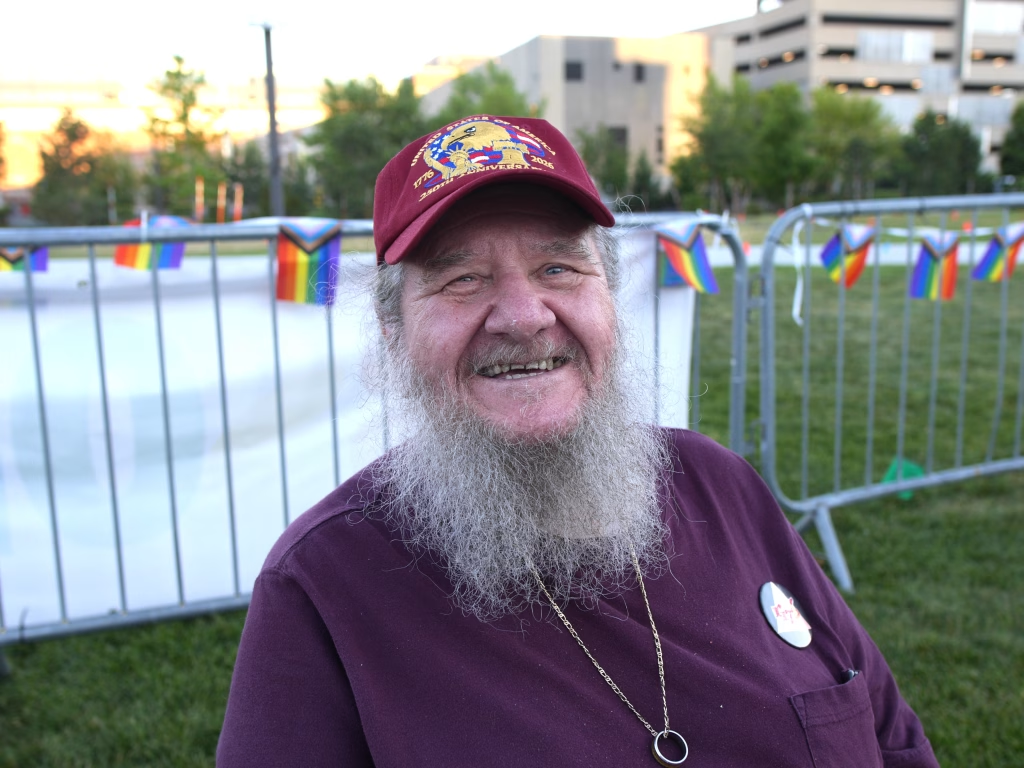
Fifty years later, I met Cowboy Billy, as he is known throughout Providence’s queer community (because it’s tattooed on his arm), at Rhode Island Pride this past June, in partnership with Visit Rhode Island. He was warm, gracious, and every bit the living landmark the community treats him as.
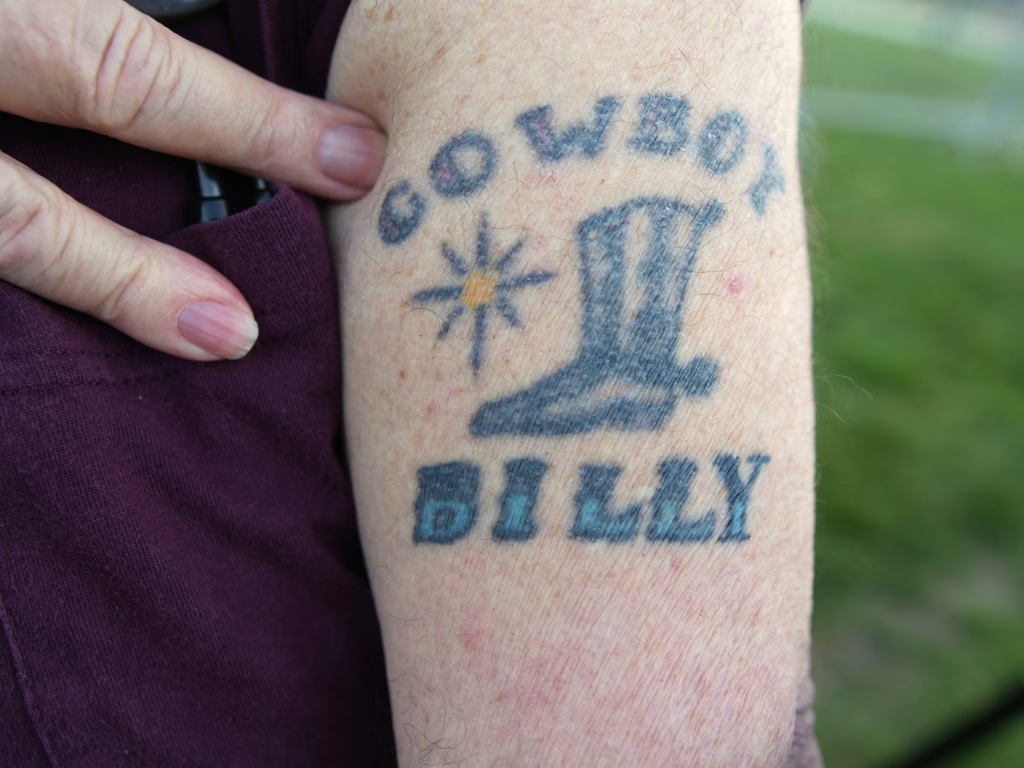
Mencer Ackerly was 25 years old when he marched in Rhode Island’s first Gay Pride Parade, one of roughly 75 people who took to the streets that day. Getting there wasn’t easy. The Bicentennial Commission had rejected a proposal to include the pride parade in the city’s bicentennial celebrations, and the police chief declared there would be no parade in Providence. The Rhode Island ACLU took the city to court, and a Superior Court judge ruled that the march could proceed.
The person who gave Mencer Ackerly the courage to march was his mother. “My mother was in a car with two other mothers, driven by a gay guy. And on each side of the car it said, ‘I’m proud to say my child is gay,'” he recalled. “It was the best thing my mother ever did for me.”
A retired mental health worker and gay rights activist, Mencer Ackerly was among those who organized the march and helped make the legal case for its right to exist. He left home at 16 and built his life in Rhode Island, becoming one of the enduring faces of a movement that started in those streets.
He has returned nearly every year since. “When I’m in the parade, I will also be thinking of all those ’76ers that have passed away over the years and about their bravery and their courage,” he said. “And I just believe they’ll be clapping up in heaven and celebrating for all of us.”
The ’76ers, as they are known in Providence, are credited with paving the way for what became one of New England’s largest Pride celebrations, drawing more than 100,000 people to the city each June. The movement they started contributed to civil rights protections being extended to gay men, lesbians, and bisexuals in Rhode Island in 1995, and to transgender individuals in 2001.
Mencer Ackerly said he hopes that by showing up year after year, he can reach someone on the sidelines who may be taking their first steps. “If we can touch somebody’s life on the sidelines, it might be their very first time of coming out,” he said.