




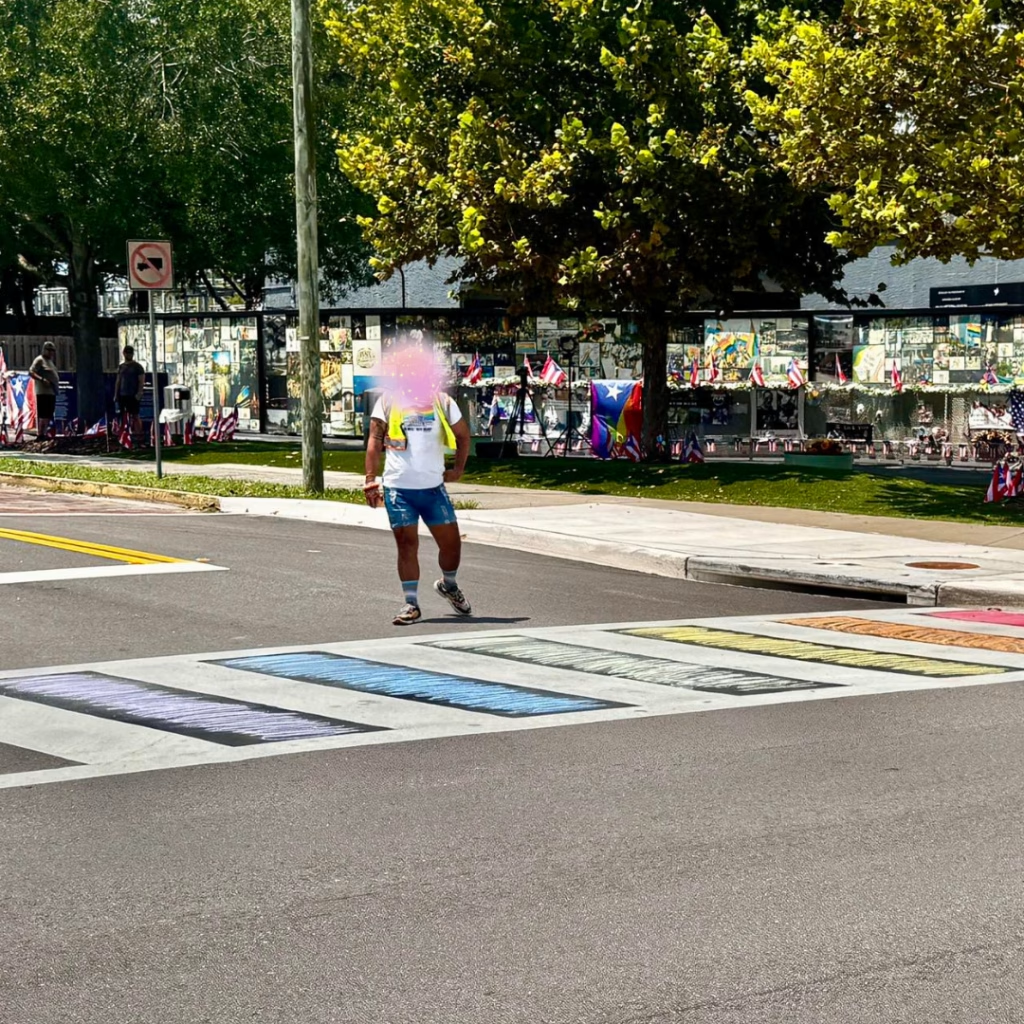
PHOTO BY DREW SIZEMORE
Early in the aught hours of August 21, FDOT crews removed the Pulse Memorial Crosswalk on South Orange Avenue, and also repainted over commemorative markings along the Survivor’s Walk corridor that linked the nightclub site with Orlando Health.
In a statement shared with Orlando Shine, FDOT said the action was taken to bring the corridor into compliance with state and federal traffic-control standards and its recent guidance on “non-uniform” pavement art; we’ll publish their full statement with this post.
“Thank you for your inquiry. Please see FDOT’s statement below.
As the state highway department, it is the duty of the Florida Department of Transportation (FDOT) to ensure the safety and consistency of public roadways and transportation systems. That means ensuring our roadways are not utilized for social, political, or ideological interests.
Earlier this year, the Department completed a months-long process of updating the Manual on Uniform Traffic Control Devices (MUTCD) with input from representatives of state and local governments. This update included a prohibition on non-uniform traffic control devices, such as pavement markings on state and local roads.
In June, FDOT notified all local governments of these updates and revised provisions of Florida Statutes that give the Department authority to withhold state funds for noncompliance. This was followed by similar policy updates from USDOT Secretary Duffy.
Last week, local governments not in compliance [with] local roads began receiving notifications to bring their roadways up to state standards to ensure locals govern themselves accordingly.
In addition to ensuring all local governments comply, FDOT completed a review of all state-maintained roadways and is now correcting pavement markings not in compliance. That includes street art previously installed on state right-of-way, such as the intersection of Orange Avenue in question.
Transportation infrastructure is for the movement of people and goods. In this case, while the crosswalk has been restored to its proper form, local efforts are underway to construct a permanent memorial on adjacent properties, funded by the State of Florida. Any attempt to suggest otherwise is false.”
Generally speaking, if FDOT determines something like the crosswalk doesn’t conform, the department can legally order it removed, even if it’s on a city street and merely adjacent to a state road. Whether FDOT itself does the painting or directs the city to do it depends on the right-of-way and any agreements in place. We asked Michael Williams, the Communications Director for FDOT, for a list of non-uniform installations in the area that they would be removing, but had not heard back at the time of this post.
The move drew immediate backlash from city leaders and community members who visit the site year-round, with Mayor Buddy Dyer calling the removal “a cruel political act.” The crosswalk, first installed in 2017, had served as a visible point of remembrance until it was painted over before dawn. Though a number of locals used chalk to fill in the crosswalk later in the day.