



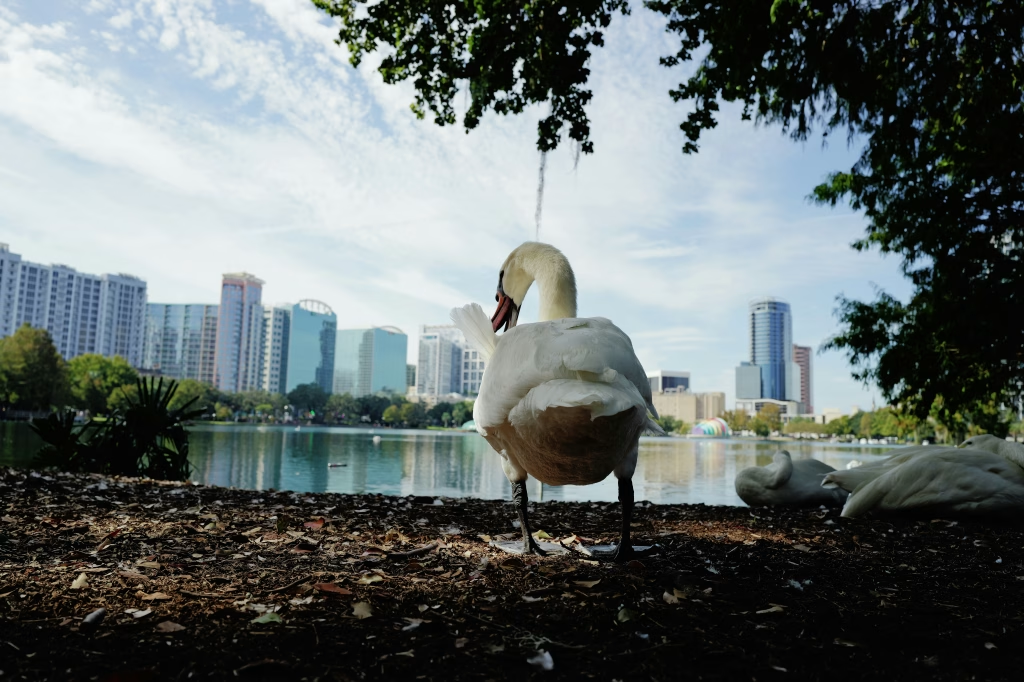
PHOTO BY DAVID VALENTINE VIA UNSPLASH.COM
When the City of Orlando announced in May that it was pausing its swan program at Lake Eola Park, officials cited the upcoming park construction and FWC care standards as the primary reasons. But a city presentation obtained by Orlando Shine tells a more complete story, one where the price tag of properly maintaining the flock definitely had some influence.
The presentation, prepared by the city’s Families, Parks and Recreation department, laid out what it would actually cost to continue the swan program in compliance with Florida Fish and Wildlife Conservation Commission requirements: $332,600 per year in ongoing expenses, plus $55,000 in one-time startup costs. That includes two additional Parks Service Workers at $77,000 each, two required swan care seasonal employees at $46,800 each, $50,000 for a veterinarian on contract, pens meeting FWC standards, educational materials, supplies, and water quality management.

For context, the city has historically spent approximately $41,100 per year on swan care, according to the city’s own response to questions from Orlando Shine, with a portion of that going to the salary of the park manager. The presentation put the cost of continuing the program at more than eight times that amount.
Orlando Shine asked the city directly whether cost was the determining factor in the decision to pause the program. The city pushed back on that framing.
“While calculating cost was important to understand in the overall scope of the program, the ultimate decision came based on the FWC standards of care for the swans,” a city spokesperson said.
The formal decision was made on May 7, 2026, after city staff briefed Mayor Buddy Dyer and Commissioner Patty Sheehan on the recommendations from a comprehensive plan that took approximately five months to compile.
Orlando Shine also asked about the health of the swans after the caretaker who received the birds, Williams Exotic Waterfowl, stated in a video that many were suffering from parasites and malnutrition when they arrived. The city disputed that account, saying all swans received their annual checkup during a round-up in November 2025, during which they were weighed, and none were found to be underweight or malnourished.
On the question of whether FWC ever recommended ending the program, the city said no. FWC officials reviewed the city’s standard of care and provided clarification during the planning process but did not advise the city to shut the program down. The city said it has not received any violations from FWC and had been working with the agency to “meet updated standards.”
One notable detail to emerge from our reporting is that the City of Orlando is not actually required to hold a captive wildlife permit for the swans. Rick Brown, an investigator with FWC’s Captive Wildlife division, confirmed that the city is exempt from the licensing requirement under Florida Statute 379.3761, which states that the permitting provisions for exhibition do not apply to “any municipal, county, state, or other publicly owned wildlife exhibit.” That exemption means the FWC care standards the city cited as a driving factor in its decision were ones it was voluntarily working toward, not ones it was legally obligated to meet.
As for whether the swans will return after construction, the city declined to commit. “Any estimates regarding when the swan program may return would be premature,” a spokesperson said.
The swan feeder fund managed by the Orlando Community and Youth Trust raised $15,120.51 between January 2022 and May 2026, less than 5% of the annual cost identified in the city’s analysis. The city said donations supplement but do not drive the program’s budget, with the main source of funding coming from Lake Eola Park’s general fund allocation. There is no dedicated line item for swan care.