

PHOTO BY DREW SIZEMORE
As first reported by Cristobal Reyes for Orlando Sentinel, Orange-Osceola County State Attorney Monique Worrell announced Friday that all charges have been dropped against six people who were arrested last year for using chalk at or near the former rainbow crosswalk outside the Pulse nightclub on South Orange Avenue.
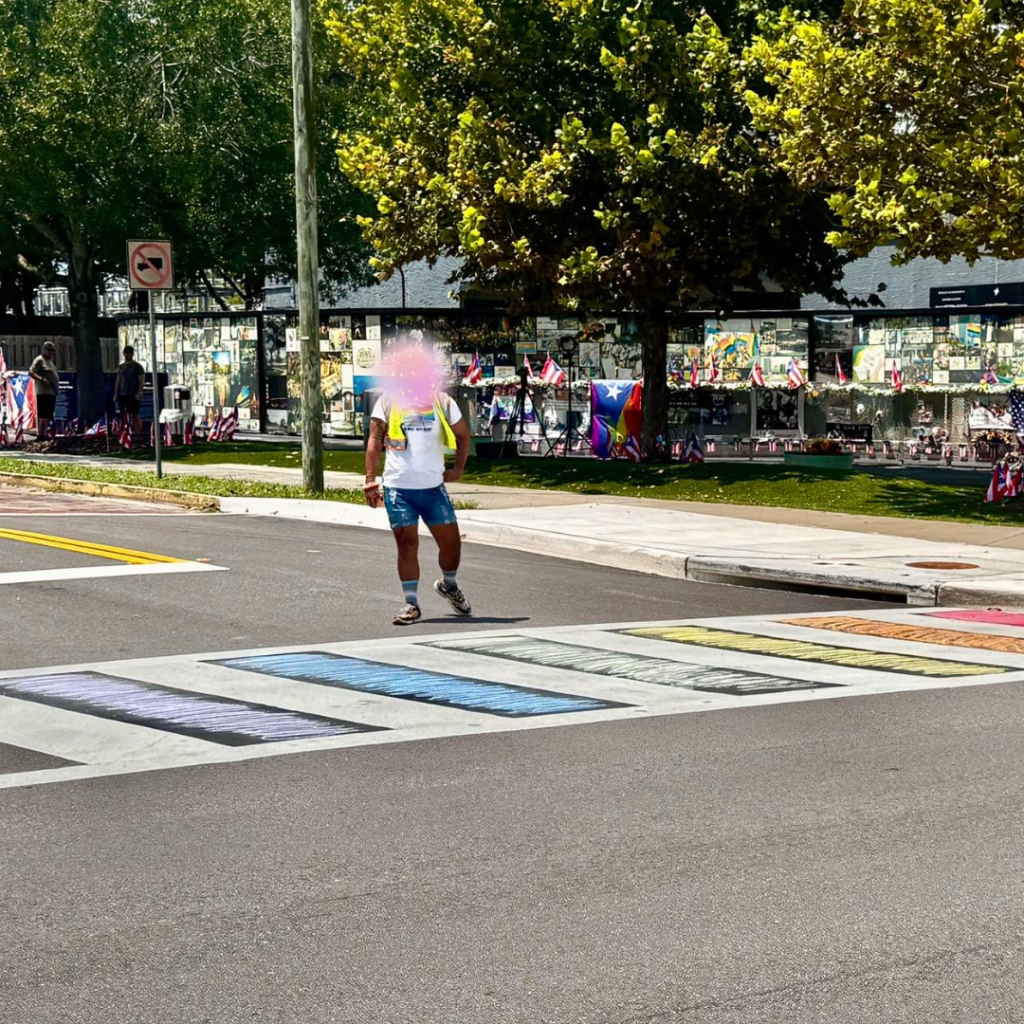
The crosswalk was first installed in 2017 as part of a $9 million state-funded improvement project on South Orange Avenue and served for years as a memorial to the 49 people killed in the 2016 mass shooting at Pulse, most of whom were LGBTQ+. The Florida Department of Transportation painted over it without notice in August 2025, in a move Mayor Buddy Dyer called at the time, “callous.” Gov. Ron DeSantis defended it, claiming the crosswalk had turned a state road into something used for “political purposes.”
For months after, protesters gathered repeatedly to add chalk back to the pavement. Six of them were arrested and charged with interfering with an official traffic control device, which is a third-degree felony under Florida law. Two were specifically accused of “aggressively” chalking the word “Resist,” which inspired one of the shirts in our online shop.
Worrell said that her office concluded the charges could not survive legal scrutiny. The felony statute requires proof of actual property damage of $1,000 or more. All six arrests involved sidewalk chalk. “Sidewalk chalk is water-soluble,” Worrell said at a press conference. “It is designed to wash off outdoor surfaces. It does not permanently alter, etch, stain, or structurally impair a surface.”
The cost estimates FDOT submitted to support the charges were cleaning invoices, not repair costs, Worrell said. Her office sent FDOT a detailed questionnaire asking it to substantiate its figures. FDOT did not respond. In one case, a heavy rainstorm had already washed the chalk away before state troopers even arrived on scene.
Worrell also raised concerns about selective enforcement. Elected officials were photographed chalking at the site alongside protesters and were not arrested. When a trooper was asked how many others were seen chalking without being arrested on August 31, he said he could not advise on that number. “That answer, combined with the documented presence of others chalking freely, is the very definition of selective enforcement,” Worrell said.