

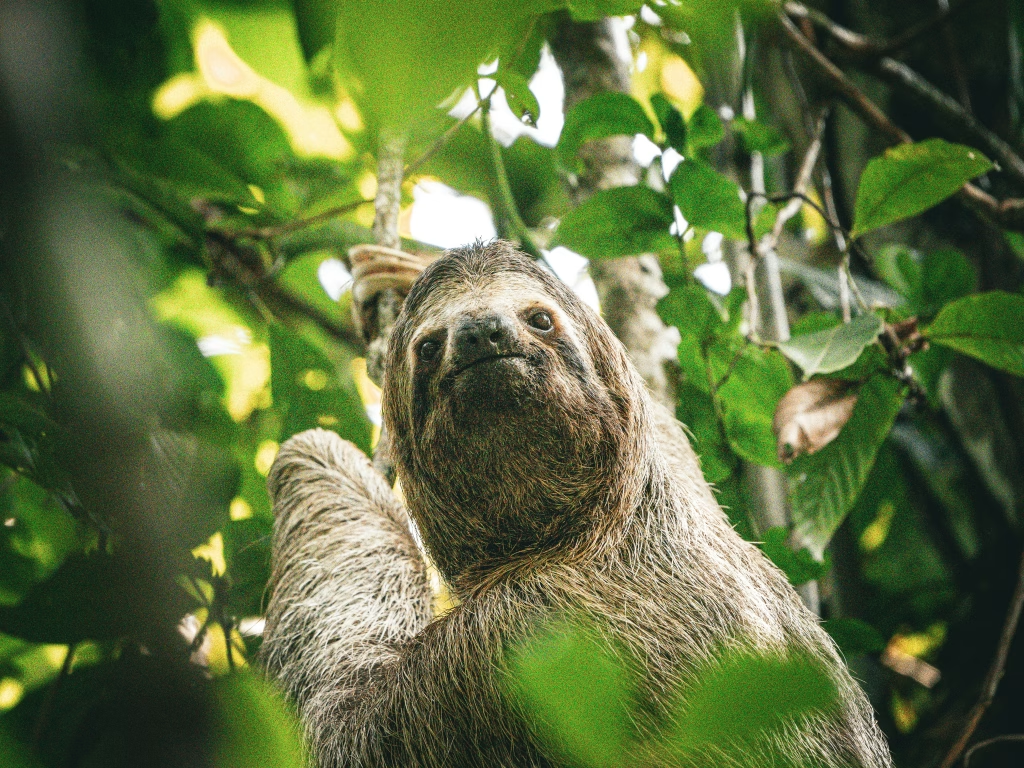
PHOTO BY DANIEL TISCHER VIA UNSPLASH.COM
An investigation by Inside Climate News has put a spotlight on Sloth World, a planned International Drive attraction marketed as the world’s first “Slotharium,” after a Florida Fish and Wildlife Conservation Commission report and state necropsy records revealed that more than 31 wild-caught sloths have died in the facility’s care since late 2024. But according to accounts from former staff members on Reddit, that number could be even larger.
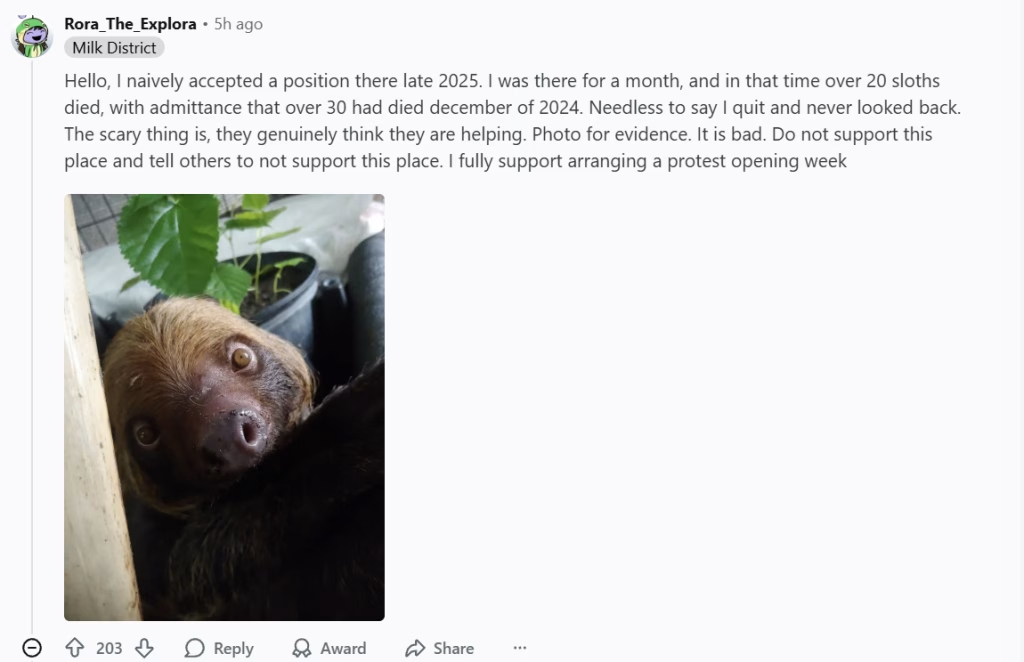
A former senior-level employee at Sloth World (Website) has told Orlando Shine that they left the company earlier this year and that they believe the International Drive attraction should not open.
“The owner is terrible, and I don’t want the place to open. I saw enough when I was there that I knew it wasn’t good.”
– FORMER EMPLOYEE
The former employee said they applied after seeing a job posting online, had a phone call with owner Ben Agresta, before being invited to the facility, which they described as a disorienting first impression. “I grew up in Orlando, and I know I-Drive, so I was confused when he invited me to a t-shirt shop. And when I got there, there was nothing but a cement shell. It seemed really unlikely that it could be a sloth habitat, but he seemed to know what he was talking about.”
Shortly after starting, they said concerns began to mount when the Sloth Conservation Foundation started publicly asking questions about how Sloth World was sourcing the animals. When the employee asked internally where the sloths came from, they said they were told the animals were “legally imported through someone who is like a fancy Joe Exotic,” and that they were animals from exhibits and private collectors who could no longer care for them.
The source described Agresta as someone with no background in conservation, saying, “He used to own a bonsai farm and had a sloth as a pet before this. But that’s it,” and characterized his management style as erratic and financially driven. “He was extremely paranoid and kept pushing to have us sell tickets early so he could fund the construction. And then they had to keep pushing the opening date back, because they were so far behind.”
On August 7, 2025, FWC conducted an unannounced routine inspection and found that two sloths were being kept in cages too small to meet state captive wildlife requirements, and that neither the animals nor the cages had been labeled as required under the exception that permits temporary, smaller housing. The report notes that Bandre was on his way to searching for a third veterinarian for the facility at the time of the inspection. The FWC’s response: a verbal warning.
State Rep. Anna Eskamani has said the regulatory response was inadequate and that she is looking into the business.
“State-level enforcement has so far been limited to a single verbal warning, and FWC has told reporters there are no active investigations. I spoke to FWC today, and despite the sloth deaths, no laws were technically broken beyond potential charges of animal abuse (which I am exploring). The permit they were granted also does not require deaths to be reported (which needs to change at the state level), but what I find really ridiculous is that this company now has an expired permit they are trying to renew!”
– CORRESPONDENCE FROM ANNA ESKAMANI TO CONGRESSMAN FROST
Our source also described the operation of the quarantine facility, which they said is located two blocks from the main attraction at 6582 International Drive [GMap], in the parking lot of Oh Shucks Pub and Karaoke Bar. According to the source, Pete Bandre, identified in the FWC captive wildlife report as the facility’s licensed wildlife dealer and broker, was making weekly trips to Miami to pick up new sloths, arriving with three or four animals at a time at an estimated cost of $300-400 per animal. The source said they were unclear where in Miami the animals were being sourced from, but that’s where he would meet his providers. He would then keep them in a series of cages in the quarantine facility for a few days before introducing them to the larger general population.
The former employee described a visit from the Toucan Research Institute (Website), a South American conservation group with expertise in sloth care, which toured the facility, in the hopes of working with them on their conservation messaging. Three days later, the group pulled out of the project. “They toured the facility and found that some of the animals were pregnant,” the source said. “Three days later, the group said it’s not a good setup and bailed on the project, saying they couldn’t align themselves with the operation.”
Dr. Rebecca Cliffe, founder of the Sloth Conservation Foundation (Website), has stated publicly that “There is no justification in 2026 for acquiring wild sloths for exhibition.” The organizations also flagged that Bandre, identified by Sloth World as its vice president and head of animal care, is listed in public business records as a former CEO of Incredible Pets Inc., which advertised sloths for sale to private buyers and imported 80 sloths into the United States between 2011 and 2021, making it one of the largest documented importers of the animals during that period.
As of March 5, 2026, new regulations took effect in March 2026 designed to restrict the purchase of sloths from abroad, by requiring all shipments of sloths into the U.S. to require CITES (Convention on International Trade in Endangered Species of Wild Fauna and Flora) documents and inspection by the U.S. Fish and Wildlife Service. According to the former employee, Agresta wanted to import as many animals as possible before the restrictions took effect, with an eye toward breeding locally and controlling the domestic supply. “I think he wanted to be the only place to get sloths in the country. He denied that when I questioned him, but it was pretty obvious.”
The Sloth Conservation Foundation and The Sloth Institute (Website) issued a joint statement in January raising concerns about Sloth World’s sourcing of wild-caught sloths from Guyana and Peru. “When removed from the forest canopy and shipped internationally to the U.S., sloths often suffer from serious health issues related to the change in suitable diet and exposure to an artificial environment,” said Sam Trull, executive director of The Sloth Institute. “For a lot of captured sloths, this leads to their death.”
Sloth World has not responded to Orlando Shine’s requests for comment.