




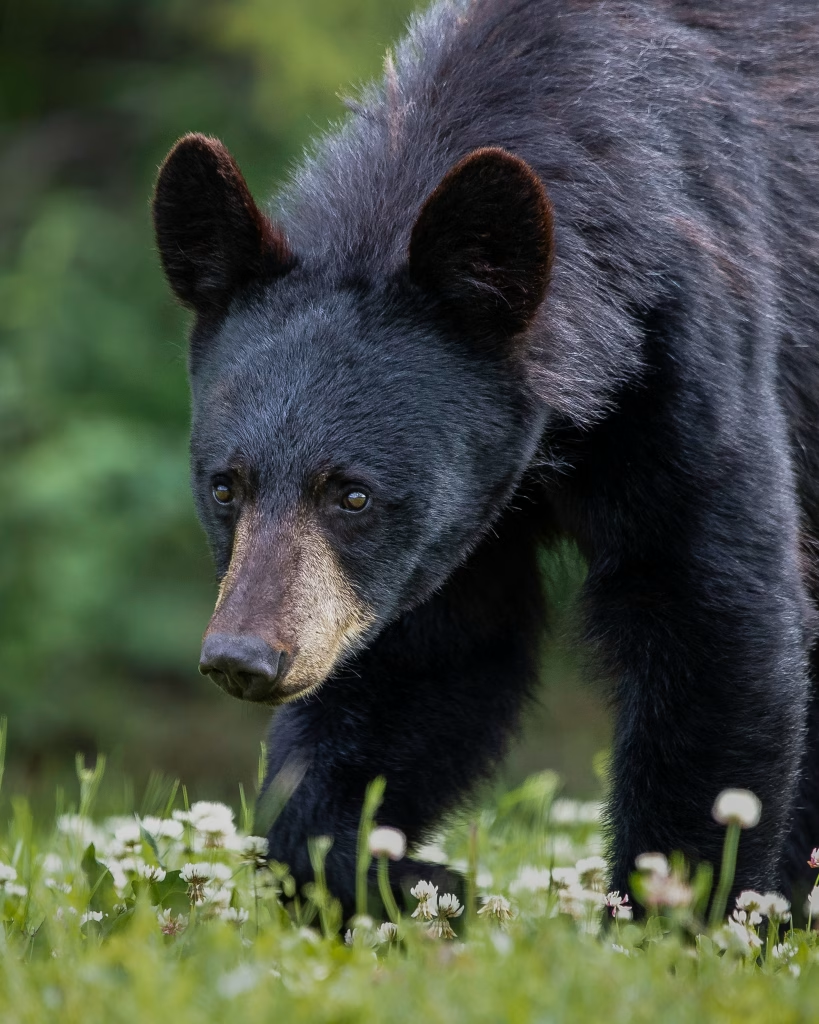
PHOTO BY PETE NUJI VIA UNSPLASH.COM
Earlier this week, the Florida Fish and Wildlife Conservation Commission (Website) cleared the way for the state’s first black bear hunting season in a decade.
In a unanimous (5–0) vote, officials approved a 23-day regulated hunt set to run from December 6 to December 28 of this year, in four designated bear management zones . According to the FWC, these areas have the largest and most viable black bear subpopulations, each with more than 200 bears.
- East Panhandle: 68 permits
- North Florida: 46 permits
- Central Florida: 18 permits
- South Florida: 55 permits
Only 187 permits will be issued via lottery, each allowing a single bear to be harvested per permit, with a cap per region to prevent overharvesting. Permit fees will be $100 for Florida residents and $300 for non-residents, and hunters will be prohibited from taking cubs or females with cubs.
Supporters argue this controlled hunt is a necessary management tool to address a rapidly growing bear population, now estimated at around 4,000 individuals, and rising incidents of bear-human conflicts. Though opponents say there are fewer places for bears to go, which leads to more human interaction.
FWC Chair Rodney Barreto and other officials emphasize that the restrictions differentiate this hunt from the poorly regulated 2015 season, which ended sooner than planned when nearly 300 bears were killed in just two days, including protected mothers and cubs. At the time, hunters weren’t required to report kills immediately, which meant there was no real-time harvest tracking, and by the time FWC realized quotas had been reached, hundreds of bears had already been killed. They also had sold 3,700 permits, with no lottery or strict limit per zone.
The decision to bring back the hunt has sparked fierce backlash from wildlife and conservation advocates. Critics, including Bear Warriors United, the Sierra Club, and Defenders of Wildlife, condemn the hunt as unnecessary, calling it inhumane and driven not by science but by political agendas. They warn that it could reverse decades of conservation progress, endanger fragmented bear populations, and even permit cruel practices like using bait stations, bows and arrows, and trained dogs
In response, opponents have launched last-minute legal challenges, with Bear Warriors United filing a lawsuit intended to delay or stop the hunt by arguing that the FWC failed to adhere to its own scientific and regulatory standards.