



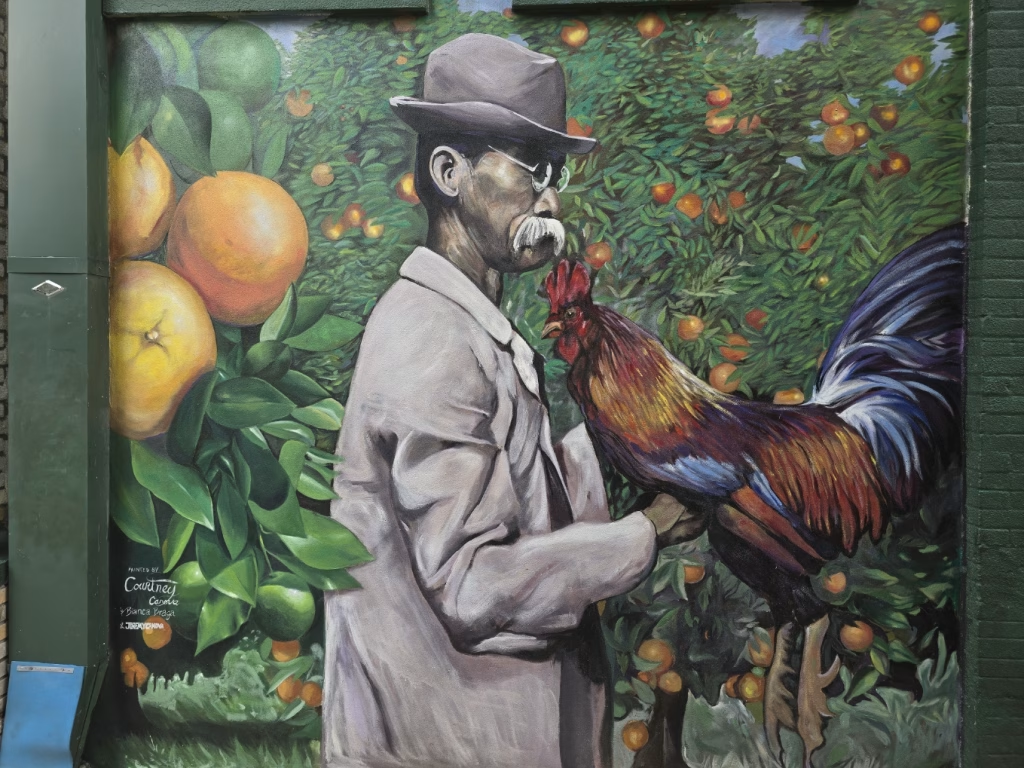
PHOTO OF MURAL BY ARTIST COURTNEY CANOVA, INSTALLED IN 2003 IN DOWNTOWN DELAND
“Once Upon a Time” is a column that journeys back through Central Florida’s past to uncover overlooked, surprising, and downright remarkable moments that deserve to be dusted off and shared once again. Each installment dives into a notable event in the region’s rich cultural tapestry: forgotten roadside attractions, frontier-era dramas, oddball characters, pioneering innovators, and the everyday lives that shaped communities across Orange, Seminole, Polk, and Lake counties.
Long before Florida became synonymous with orange juice commercials and citrus crates in northern supermarkets, a quiet horticulturist in DeLand was busy reshaping the future of the state’s groves. His name was Lue Gim Gong, but locals knew him by another title, “The Citrus Wizard.”
Born in 1857 in Taishan, Guangdong, Qing dynasty China, to a family of farmers, Lue immigrated to the United States. At the age of 12, he was sent with a group of Chinese workers to North Adams, Mass., to help break a strike at a shoe factory, where he was paired with a tutor named Frances “Fannie” Burlingame. Fannie eventually adopted him, converted him to Christianity, and took him to DeLand in 1886, where she and her sister owned a five-acre orange grove on the city’s west side.
Settling in DeLand, he devoted his life to experimenting with citrus trees by cross-pollinating varieties with skills he had learned in China, tinkering with growth patterns, and obsessing over how to make oranges sweeter, hardier, and easier to ship. He also developed an apple that ripened early, a tomato plant that grew in clusters, and a cold-resistant grapefruit.
His crowning achievement came in the form of an orange that combined sweetness with a long shelf life, a breakthrough that transformed how Florida fruit could reach markets up north without spoiling. It was a combination of a “Hart’s Latee” Valencia orange with a “Mediterranean Sweet”, and is named the “Lue Gim Gong,” though is sold under the name “Valencia.” In 1911, the American Pomological Society recognized his contribution with the prestigious Silver Wilder Medal, the first time it had been awarded to someone working in citrus.
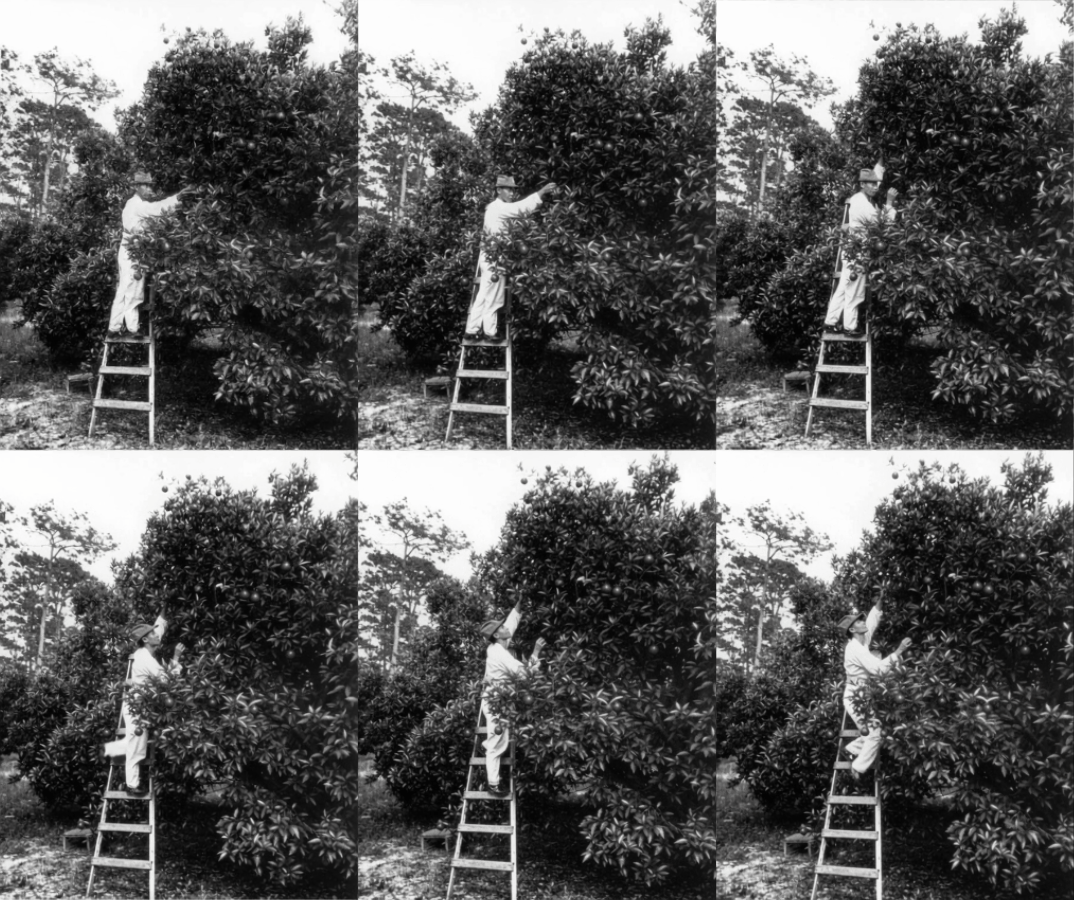
Despite his contributions to the industry, he lived simply and inherited Fannie’s home on Wisconsin Avenue in DeLand when she passed away in 1903. He was known for walking through town with his pet rooster named March, perched at his side. March was a local curiosity, strutting alongside his master on trips around town, and is now seen as much a part of DeLand’s character as the oak trees and church steeples. Locals recall how children would gather to watch the rooster follow Lue.
Lue never married and lived with the family of his mentor, Fannie Burlingame, who had encouraged him in both his horticultural and Christian pursuits. His modest lifestyle contrasted with the profound economic impact of his work. While growers across Florida profited from hardier crops and expanded citrus exports, Lue remained rooted in his experimental plots, constantly adjusting grafts and seedlings.
By the time of his death in 1925, his name was already legendary among Florida farmers. Today, his resting place in Oakdale Cemetery is marked by a headstone that simply reads, “Lue Gim Gong — Citrus Wizard.” His home in DeLand still stands as a quiet monument to a man whose innovations rippled across the state’s agricultural economy.