


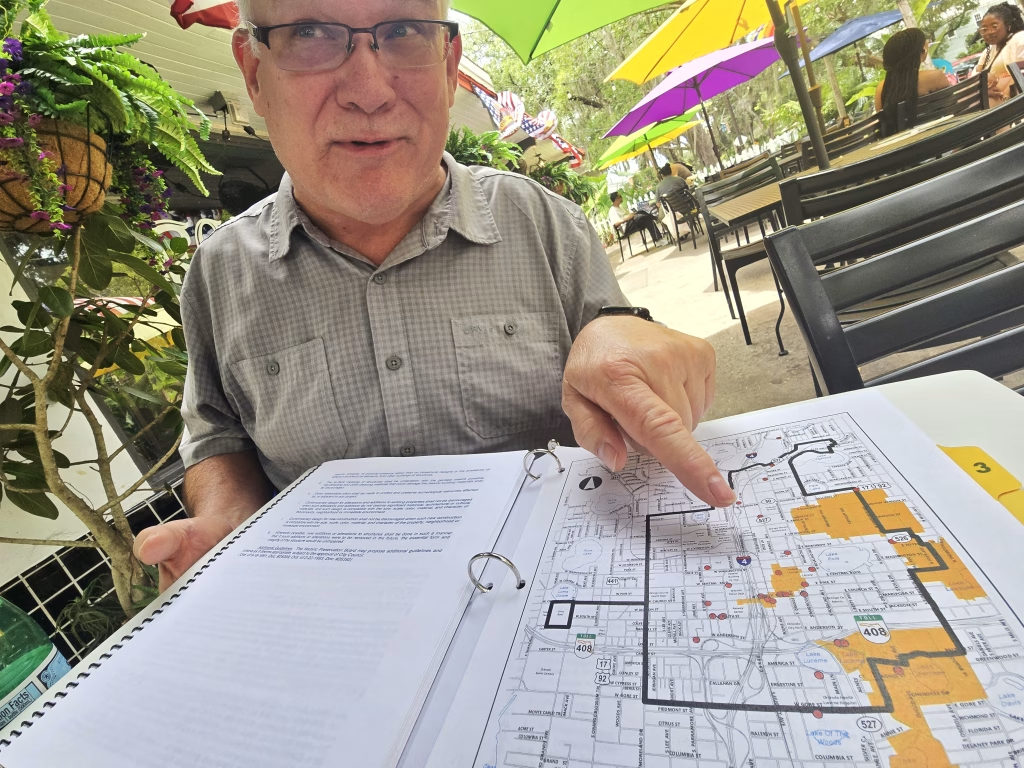
HISTORIC PRESERVATION BOARD CHAIR JEFFREY THOMPSON POINTS TO THE SMALL HISTORIC DISTRICT AT THE CENTER OF THE LARGER CRA, ASKING HOW THE CITY CAN BLAME THE LACK OF DEVELOPMENT IN THE AREA ON SUCH A SMALL FOOTPRINT
Jeff Thompson has lived on Amelia Street since 1989, which is the actual year the Lake Eola Heights neighborhood became a historic district. He’s been on the City of Orlando’s Historic Preservation Board for 18 years, and is currently serving as its chair. He spent 30 years as a senior landscape architect at Walt Disney World, helped renovate multiple homes in Thornton Park before it was designated, and built a house downtown he calls “turn of the century,” even though it was built in 1999.
He also had his first legal drink at Rosie O’Grady’s on Church Street. A blue whale, he said. He loves Orlando and its history.
Orlando Shine sat down with Thompson this week at Eola General (Instagram) in Lake Eola Heights, days after the Orlando City Council passed the first reading of a proposed 36-month moratorium that would remove downtown’s Historic Preservation District from the board’s oversight. A second and final reading is scheduled for June 22, and if it passes, it takes effect immediately.
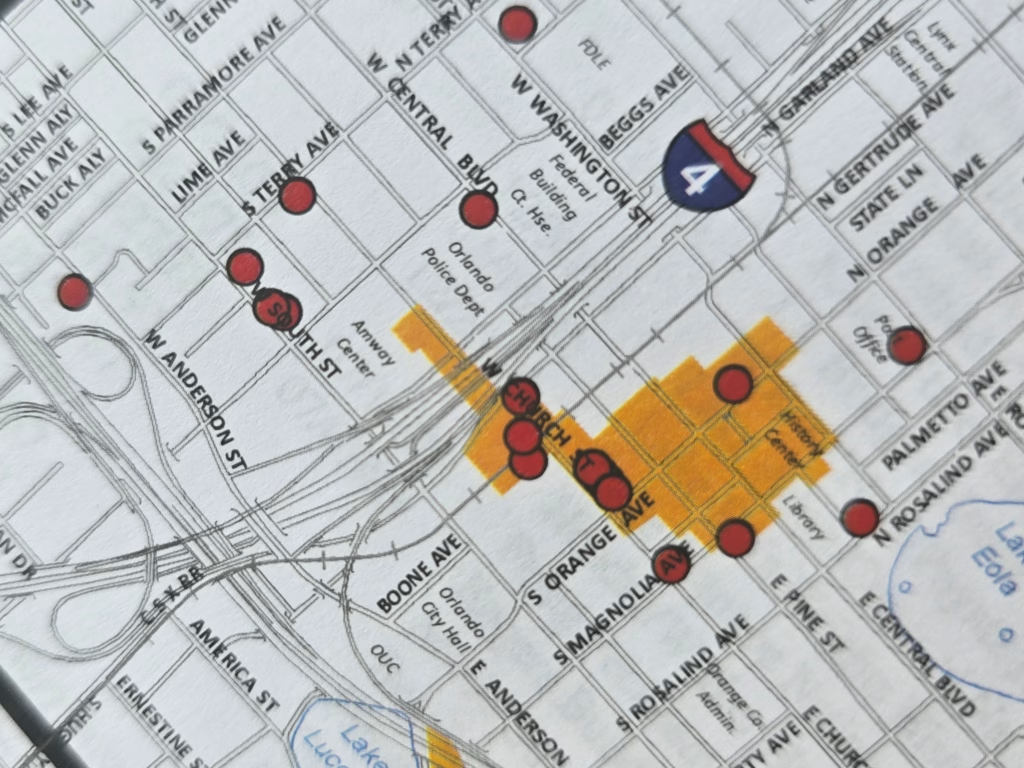
“They’re basically going to gut the historic preservation district downtown,” Thompson said. “And what’s ironic is that it is the oldest historic district in the city. The first one. It’s also the only commercial one.”
As we reported last week, the moratorium would redirect downtown projects from the Historic Preservation Board to the Appearance Review Board for the duration of the three-year period. The city’s economic development team has framed it as a way to remove barriers that make renovation costly and unpredictable. Thompson doesn’t buy that framing.
“In the past five years, we have not denied a single applicant that has come before the board from this downtown district,” he said. “Not one.”
He pushed back on the city’s claim that the Appearance Review Board would still provide meaningful protection. “They say yes, appearance review. But that appearance review is based on the historic ordinance, and they’re doing away with the historic ordinance. So the appearance review will be just like any other building downtown. There is no protection. No teeth.”
Thompson pointed to the Plaza building on Orange Avenue as a cautionary example. At the time, the Historic Preservation Board recommended that the developer preserve a portion of the historic facade before demolishing the McCrory/Woolworth building that stood there. The developer, Cameron Kuhn, disagreed and brought it to City Council, and Council overturned the board’s ruling. The building came down the same night.
“By midnight the same day as the City Council hearing, the building was torn down,” Thompson said. “So you can see there, the override built into the system is already there. City Council already has the power to disagree with us on any individual case. So their reasoning for the moratorium doesn’t make sense. It’s already in the bylaws.”
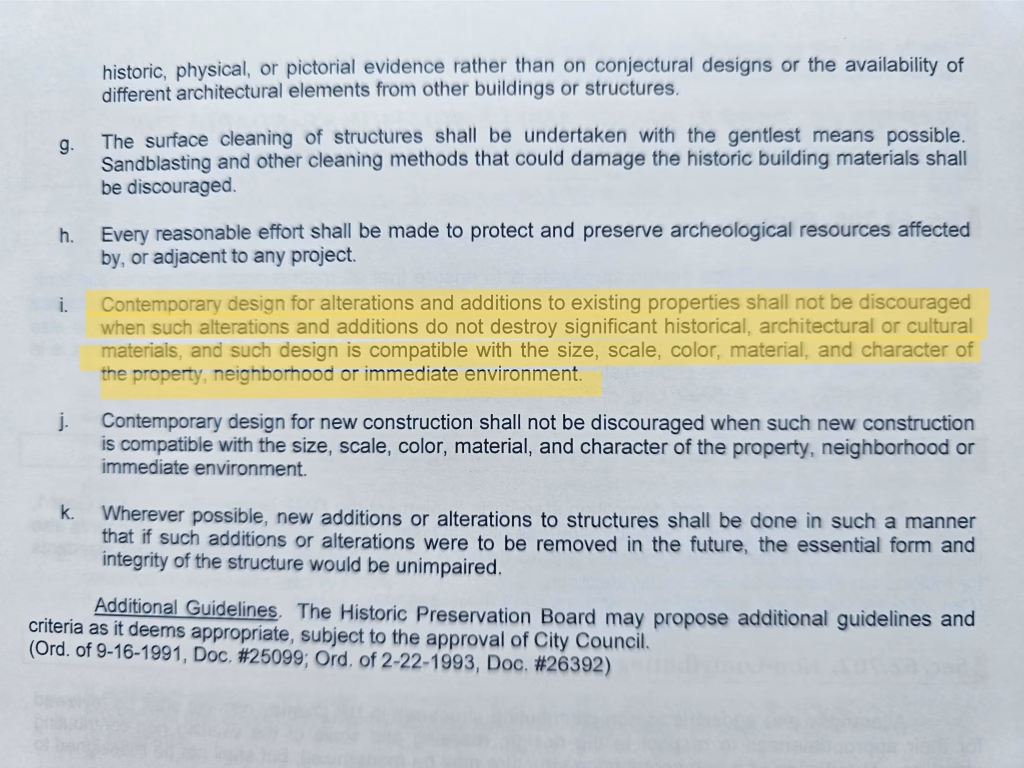
That, he said, is precisely what makes the moratorium puzzling. The current system already gives City Council full authority to override the board on any project it chooses. The moratorium, in his reading, simply removes the need to do that publicly, on a case-by-case basis.
“It’s almost as if this gives everybody cover,” he said. “By enacting this broad moratorium, no longer is any building protected. So if any specific site within the district comes before demolition, one that would not have ordinarily been granted, they don’t have to vote on that specific issue.”
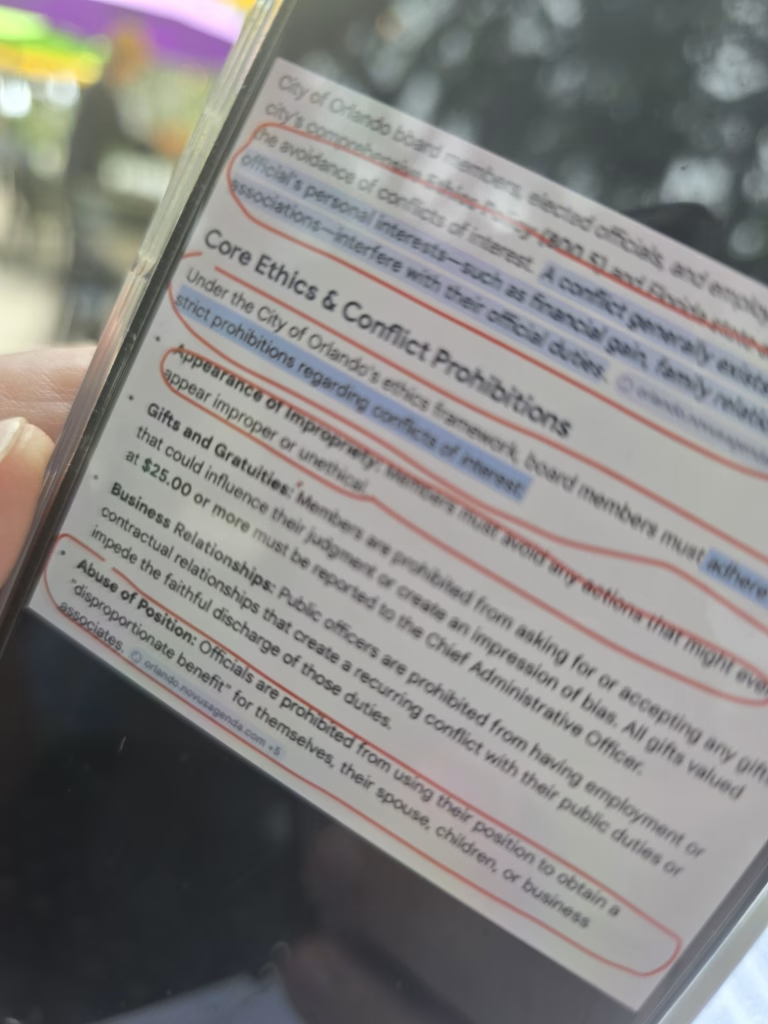
Thompson also questions the timing. He said the board tried to flag the significance of a historic house near Lake Eola, known as the Lubbe House, the last surviving historic home on the park, and found itself in conflict with city leadership over whether it should be designated a landmark. The mayor, Thompson said, has indicated he doesn’t want it placed on any historic significance list, citing concerns that designation could complicate future decisions about the property.
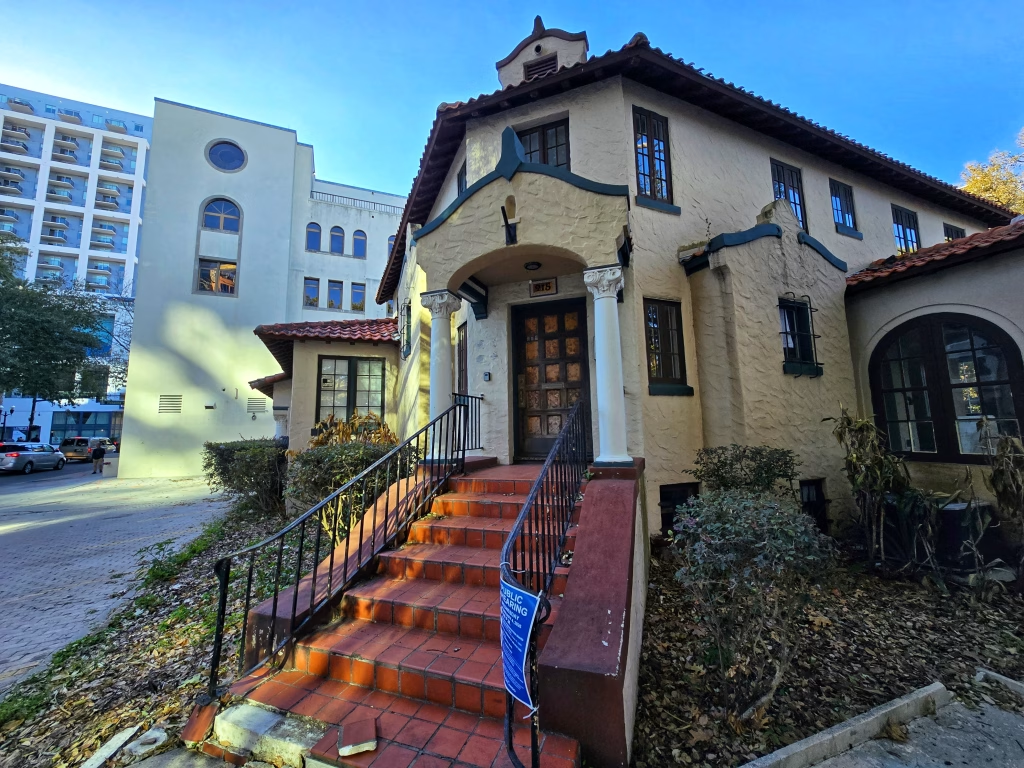
“There are rumors that the board’s move to suggest landmark status for that house was maybe the beginning of the impetus for this whole moratorium,” Thompson said. “I think the moratorium started in 2025. They started working on it then — that’s just my suspicion.”
He also raised concerns about the Church Street corridor. Several prominent businesses have left in recent years, including Hamburger Mary’s, which Thompson said was told its accessibility ramp would be blocked by a planned food hall. He suggested some property owners may be deliberately letting buildings sit vacant while waiting for development conditions to improve. A practice sometimes called “land banking.”
“It makes you wonder,” he said. “It’s easy to say the financial environment doesn’t make sense to build a tower now, but it’s also what people do when they land bank.”
Thompson also pushed back on the idea that historic preservation is fundamentally at odds with commercial growth. He pointed to Disney Springs as an example, saying the entire development is built around a narrative of Central Florida’s history, drawing on citrus labels, warehouse architecture, a fake high line and a fabricated origin story around a natural spring. “Here, Disney — the best storyteller in the world — is telling the story of historic Central Florida, and people are flocking to it,” he said. “And here in Orlando, it feels like we’re doing just the opposite.”
He also noted the irony of the timing. This year marks the 50th anniversary of historic preservation in Orlando, an anniversary that began with the Downtown Historic District, and the 150th anniversary of Orlando’s founding.
“This is the year they choose to do away with the downtown historic district,” he said.
The second and final reading of the moratorium ordinance is scheduled before the Orlando City Council on June 22. Those who want to weigh in can attend the hearing or email the commissioners and the mayor directly before the vote.


