




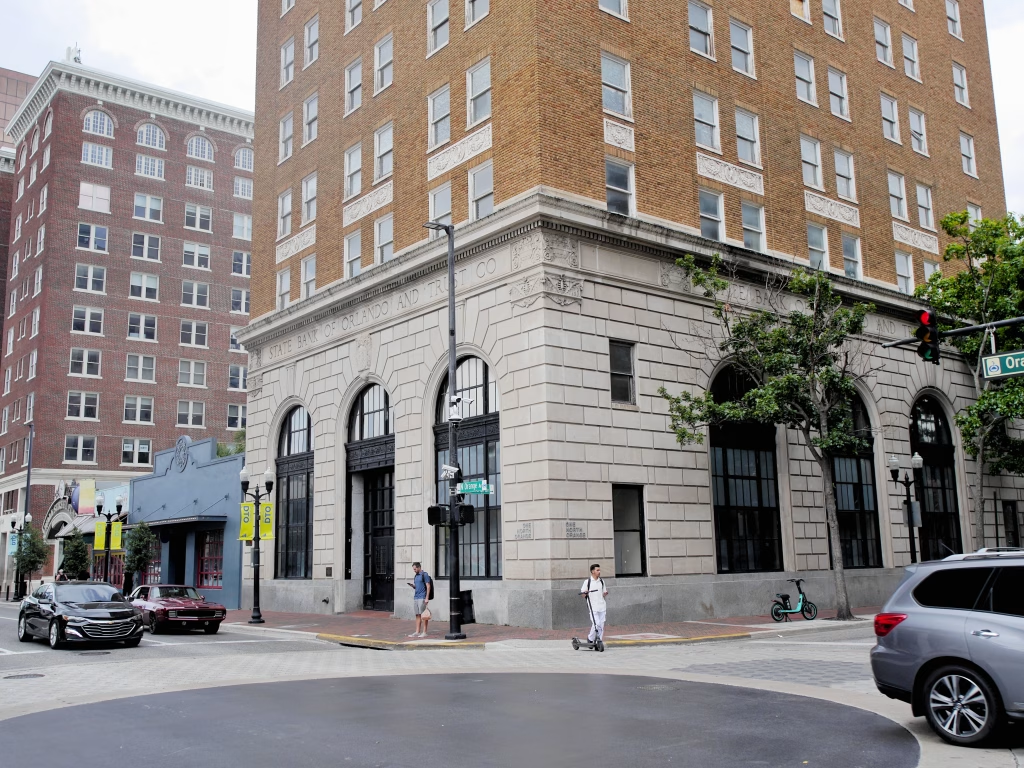
1 NORTH ORANGE AVENUE WAS RECENTLY PURCHASED BY ORLANDO'S CRA
Orlando is proposing to temporarily bypass its Historic Preservation Board for downtown development projects, allowing the Appearance Review Board to handle approvals for the next 36 months in an effort to attract investment in vacant and underutilized buildings. The City Council will consider the proposal for first reading on June 8, with a second reading scheduled for June 22. If approved, the moratorium would take effect immediately.
Under the proposal, projects in the Downtown Historic District would no longer require a Certificate of Appropriateness from the Historic Preservation Board. Instead, they would be reviewed under the Downtown Design Guidelines by the Appearance Review Board. Demolition requests would still require review, and the city said demolition permits cannot be issued without a building permit for the replacement project.
Orlando City Planner Division Manager Jason Burton explained the difference between the two review processes, saying,”The Historic Preservation Standards follow the Secretary of the Interior Standards for Historic Preservation, which require buildings to be restored to their original character. The Appearance Review Board standards are based on urban design principles but don’t require the same treatment of historic fabric and materials.”
The city is also proposing a financial incentive program offering property tax rebates for developers who preserve significant architectural elements of historic buildings.
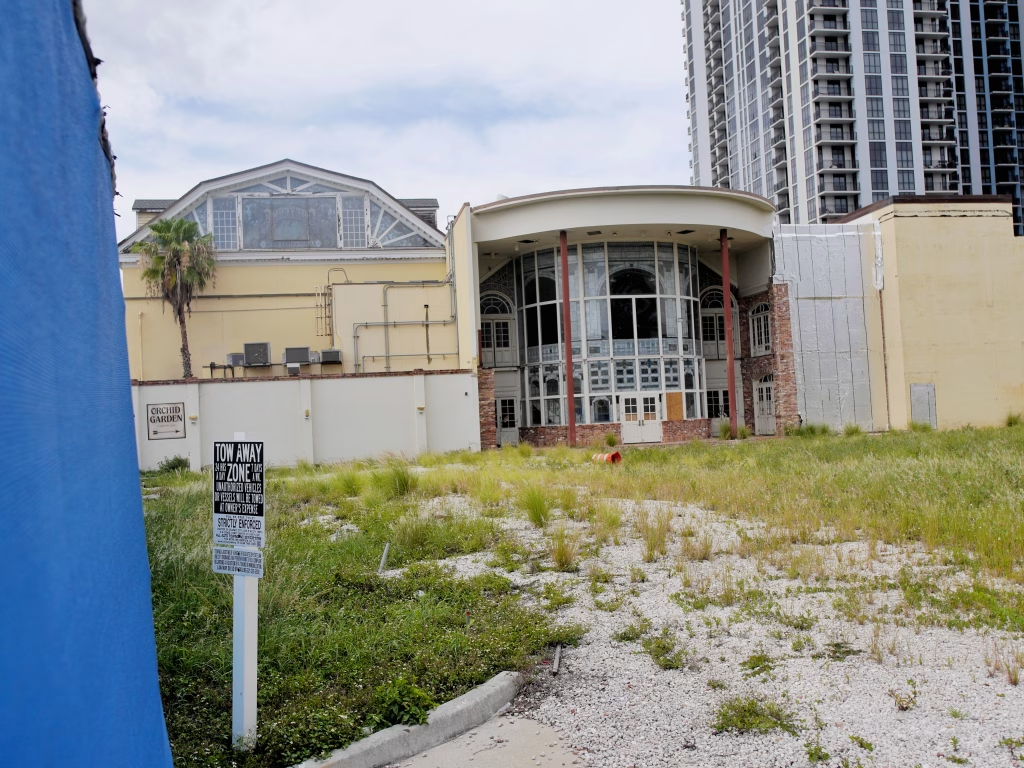
We spoke with Economic Development Director Lillian Payne at City of Orlando, who said the current preservation rules “can make renovation projects difficult, costly and unpredictable,” despite more than $200 million in public investments through the DTO Action Plan.
“The Historic Preservation Standards are more restrictive,” Payne said, meaning the Appearance Review Board would allow projects that wouldn’t pass historic preservation review. As an example, Payne asked me to imagine a proposal for a large sidewalk cafe with a modern awning on Church Street. Under current rules, such a cafe couldn’t be approved on a historic building that originally didn’t have an awning. Under the new process, it could be allowed if it respects the building through design elements like setbacks or proportional transitions.
Nine buildings in the district are locally designated landmarks. Those property owners would have to opt into the moratorium to participate.
Payne noted that the city has already purchased several historic buildings, including 1 North Orange and the Rogers Kiene Building, to preserve them for adaptive reuse because the market hasn’t been willing to invest in them. Though it must be said that the Rogers Keene Building was, in fact, donated to the City of Orlando by its former owner, Ford W. Kiene, with the stipulation that it be maintained as a cultural and arts facility.
According to Burton, the proposal would also allow adaptive reuse projects that aren’t possible under current standards, citing the Hearst Tower in New York City as an example, where developers demolished the interior of a historic building, demolished portions of the facades, and built a new tower on top while preserving key historic elements. “That’s just not possible under the current process,” Burton said.
As much as I love DTO and have dedicated my 25-year career working downtown, the honest truth is that our core is struggling when it should be thriving. What we have been doing is not working and needs to change. I support the decision by the City of Orlando to try and kick start development by removing arduous barriers that are time-consuming, costly, and generally not helpful. We have an incredible stock of buildings along the West Church Corridor, and adaptive reuse will play a significant role in revitalizing this area full of potential. We are on the verge of transformative work happening over the next 5-10 years, and I’m hopeful this move by the City is the impetus for change.
- RYAN YOUNG, CEO, INTERSTRUCT DESIGN + BUILD
The Historic Preservation Board responded with unanimous opposition earlier this week, passing a motion stating that “the proposed ordinance is not the best way to promote growth and that the current preservation ordinance is functioning efficiently.” The board’s chair expressed concern about the process itself, noting that the HPB only learned of the proposal through an email from City staff and that the public received only five days’ notice before the City Council hearing. When we asked Payne why the board wasn’t included earlier in the process, she said: “I don’t think it would have been useful.”
“They have very strict criteria that they have to use when they review projects that come before them. So they don’t have that flexibility to be able to look at a project that, like the type of projects that Jason has just been talking about. They don’t have the ability to approve those because their goal and what they are set out to do is to have those buildings essentially preserved back to their original state.”
– LILLIAN PAYNE, DEPARTMENT DIRECTOR, ECONOMIC DEVELOPMENT, CITY OF ORLANDO
According to the Orange Preservation Trust (Facebook), the HPB also disputed the characterization of historic preservation rules as an obstacle to development in a statement that has been making the rounds on social media. Board members noted that “it’s unbelievable to think the five blocks that constitute the Downtown Historic District are what is holding back development investment” when considering the broader downtown area. Board members noted that the HPB has denied zero projects in the past five years, suggesting the board is not blocking development.
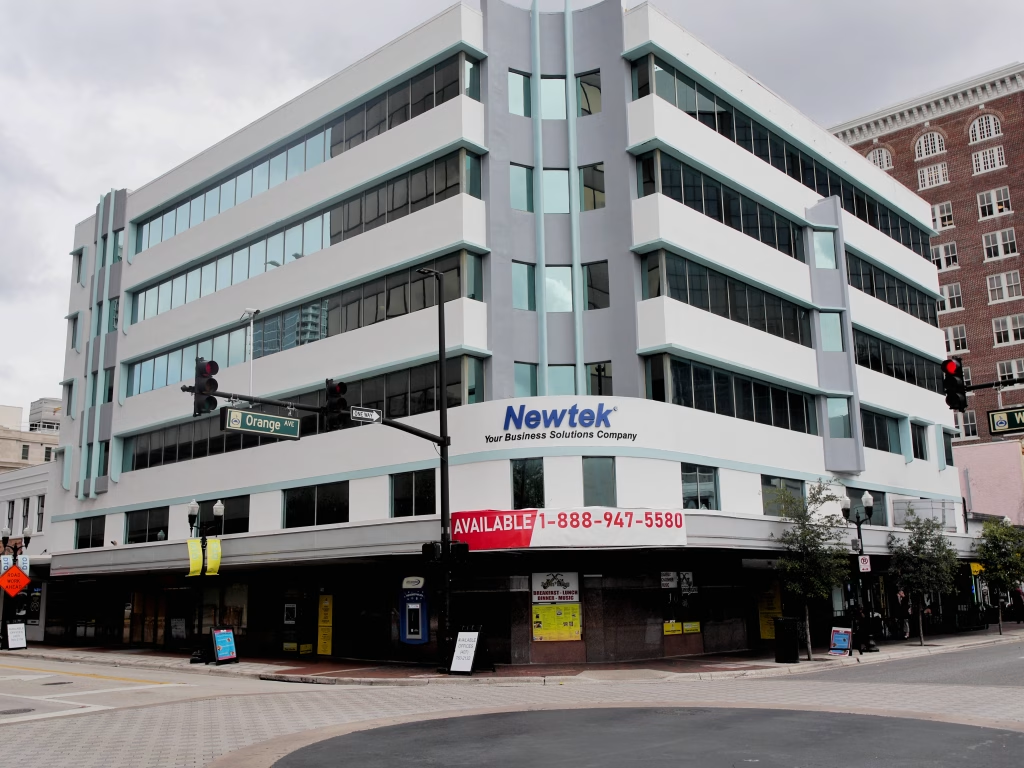
Additionally, the board noted that if developers can’t fill current vacancies at today’s rental rates, new buildings with higher rents are unlikely to succeed, and pointed to failed projects approved under less restrictive review, like the Plaza Building, built after the City overturned the HPB’s recommendation to preserve the historic McCrory/Woolworth Building, which currently has mostly vacant retail spaces. We asked Payne what she thought about that rebuttal, and she said, “Yeah, I would say the retail spaces, the majority are empty. I don’t believe that the design of that building was in the best interest of the world of retail, but we did get many residents out of it, and so it did increase our residential count downtown, and there is, I think, something to be said for that.”

The board also expressed concern about the speed of the process, with one member saying the fast timeline “creates a sense of being sneaky.” When asked why it seemed that the city was expediting the process on the moratorium (telling the HPB less than a week in advance of the first council vote, then scheduling the second vote just a few weeks later), Payne said that’s just how things are done at City Hall. “We typically take our readings back to back. But, you know, a moratorium is something that only goes to city council. It doesn’t go to the advisory boards for any recommendation before council.”
Burton said the timing of the proposal coincides with the $200 million CRA infrastructure investment in downtown, including streetscape improvements on Church Street and new connectivity around Lake Eola. The city wants to ensure private investment responds to those public improvements.
He also emphasized that the Downtown Historic District is unique. “We are very unique in that our Historic District is embedded within the Central Business District,” Burton said. Most cities with historic districts locate them on the periphery of downtown. Orlando’s district sits at the center, creating different development dynamics.
The city said it will monitor development activity over the 36 months and use those findings to guide future policy. The City Council can terminate the moratorium early if it chooses, though projects with substantial permits would likely be vested for about two years.
The Historic Preservation Board will have representation at the June 8 City Council meeting.