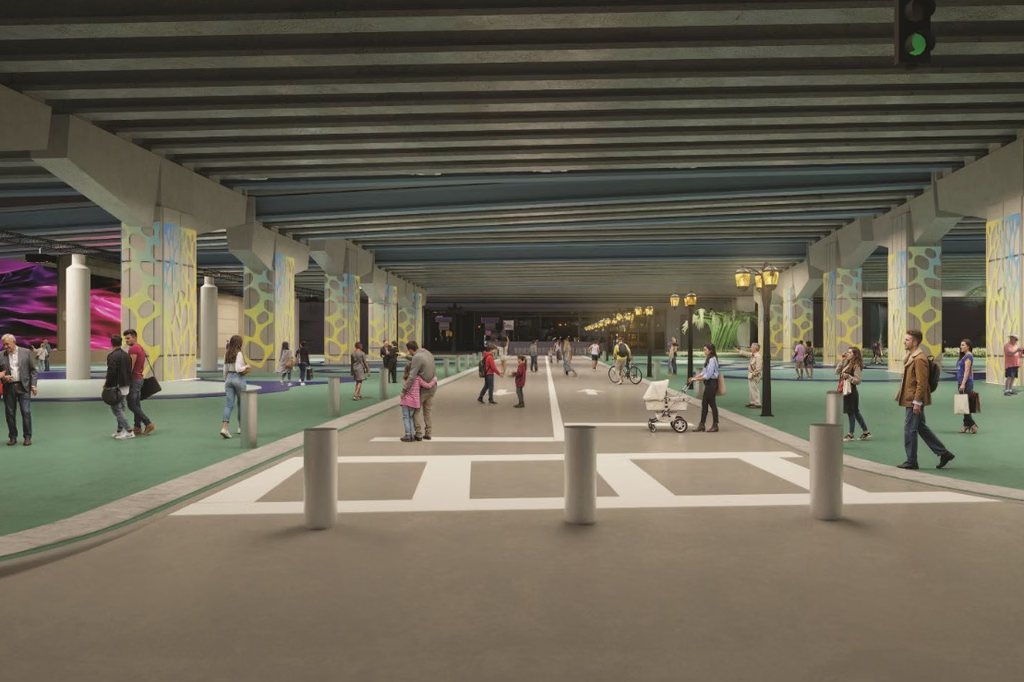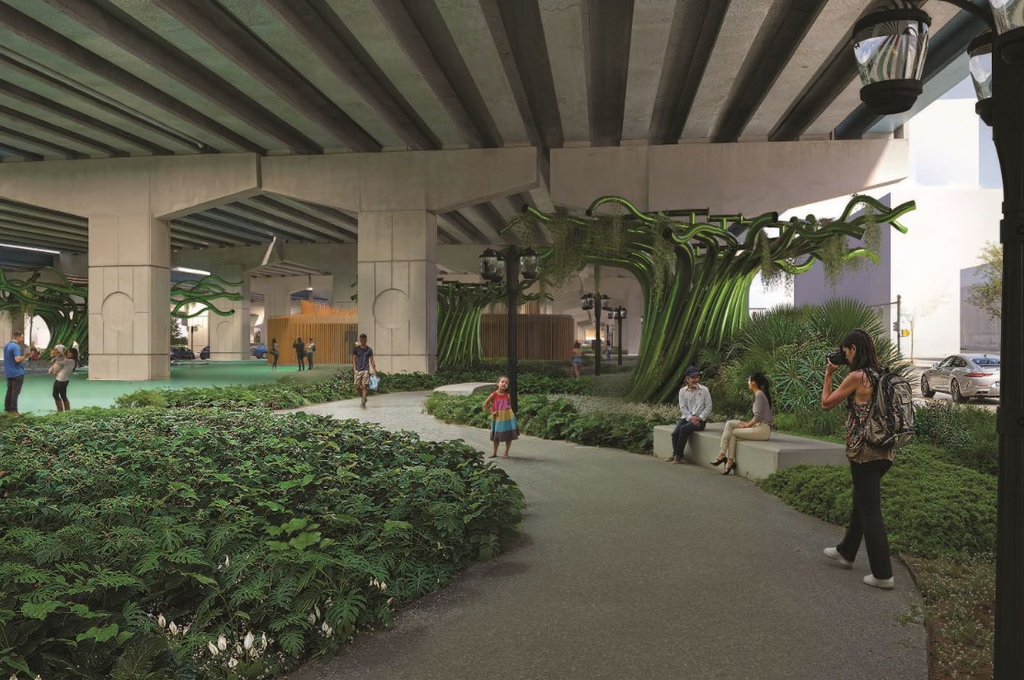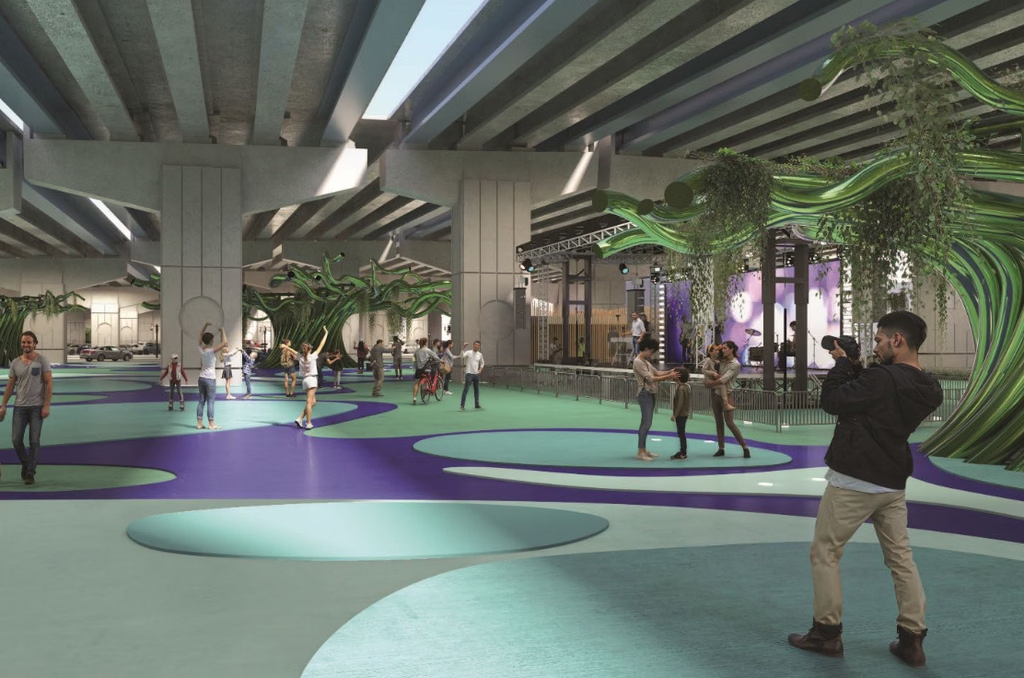


RENDERINGS VIA CITY OF ORLANDO
Eight days after the Orlando City Council locked in the last of the funding for The Canopy, the $33.75 million park planned for the land under I-4, the project cleared a quieter hurdle with the city’s Appearance Review Board, which just signed off on a Major Certificate of Appearance for the design itself, including the seven metal tree sculptures that feature heavily in the renderings shared publicly thus far.
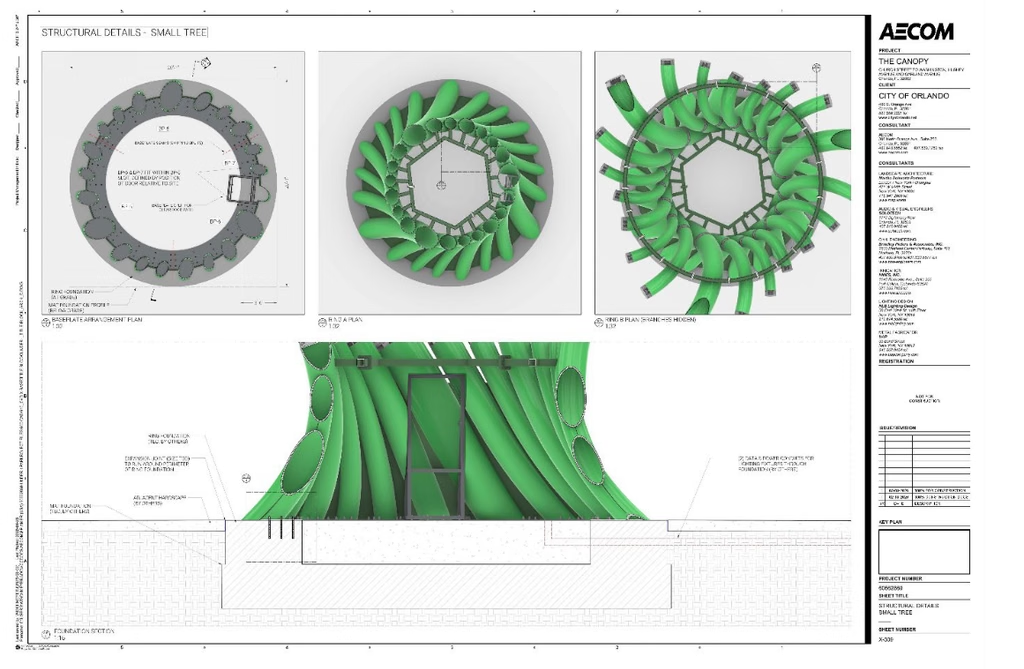
Those sculptures have shown up in renderings for two years now, but the staff report filed for this approval, along with a conversation Orlando Shine had with Marty Hudson, the city’s project lead on The Canopy, fills in a lot of what those trees are actually going to be, how they’ll work, and why the design team landed on trees in the first place for a stretch of downtown that can’t grow any.

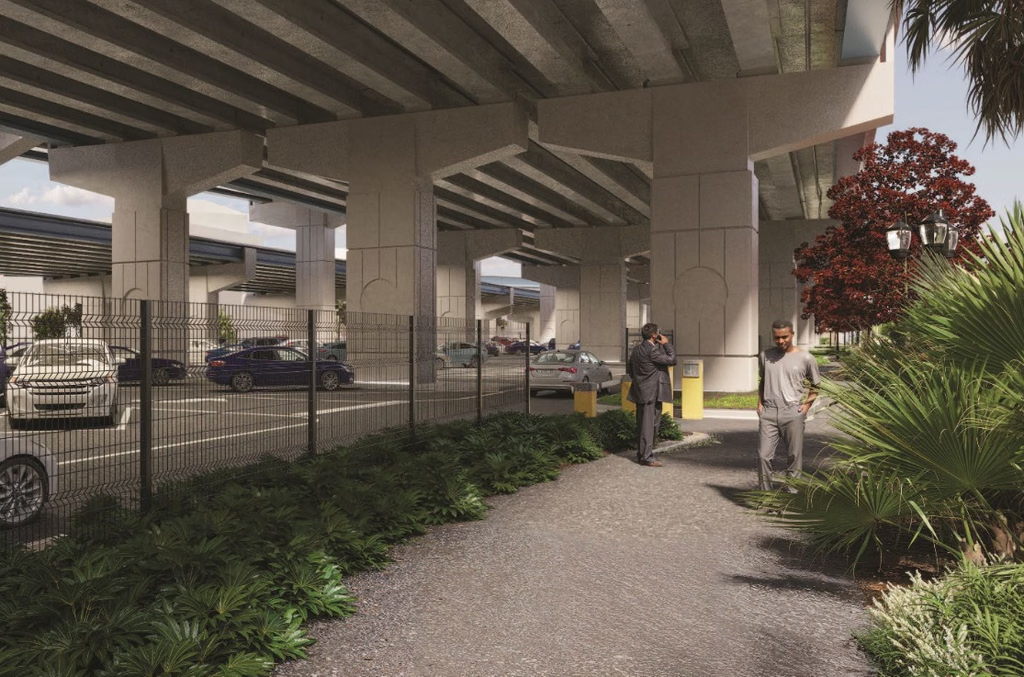
The Canopy sits on roughly 10 acres beneath the elevated I-4 deck, running about three-tenths of a mile from Church Street to Washington Street, between Hughey and Garland avenues. It’s concrete above, concrete below, and, outside of the streetscape at its edges, none of it can really support any vegetation.
“It’s been a two-year design process so far,” Hudson said. “The land under the interstate is a great space to invite people in,” Hudson said, but doing that meant finding a way to “put more nature into the hardscape of the space without actual plants. The metal trees, which have been part of The Canopy’s concept since early design work, are the artistic stand-in: sculpture doing the job foliage can’t.”

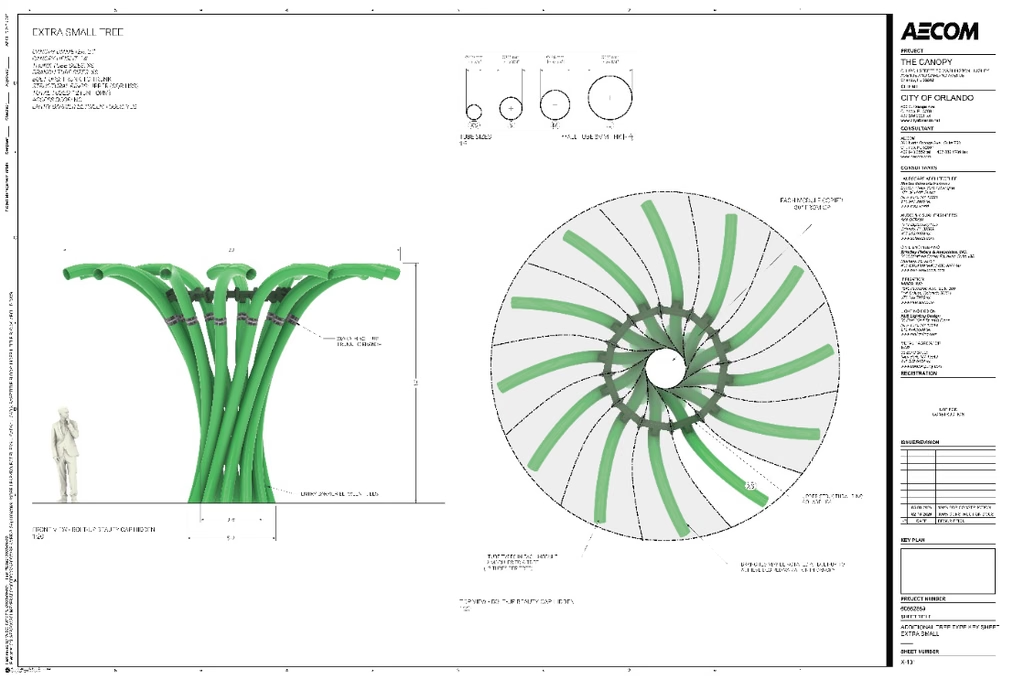
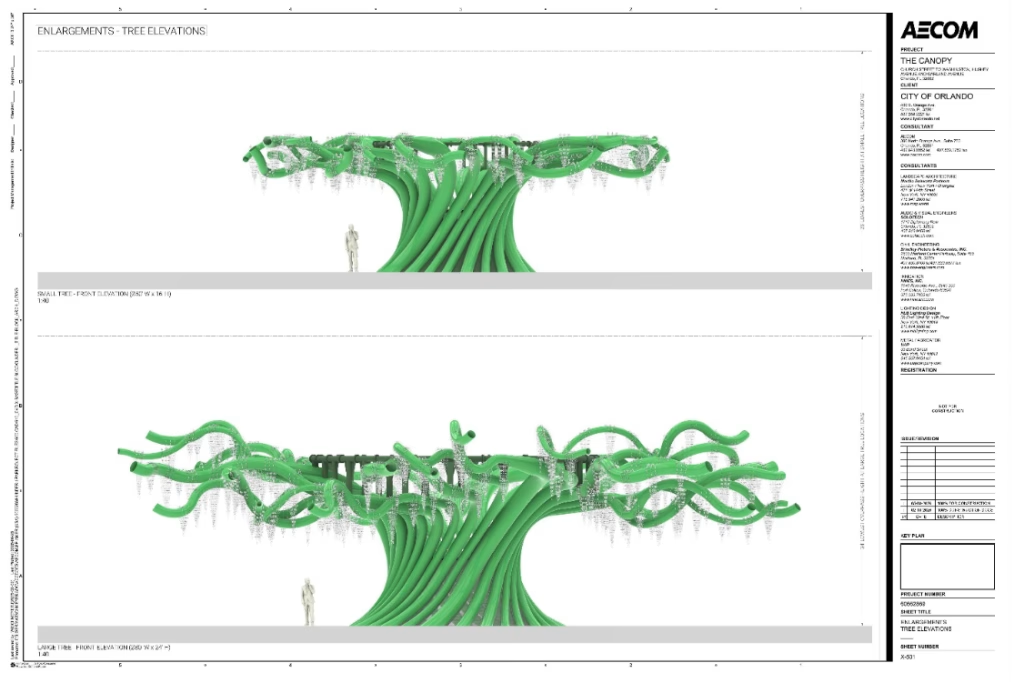
There will be seven of them, in a range of sizes the design team has been calling, informally, the sapling, a midsize option, and, the largest, the “mother tree.” Drawings included in the ARB filing show the structures boasting dozens of hollow steel branches welded into a ring at the base and radiating outward and up from a central trunk, engineered more like a piece of structural sculpture. All seven are modeled after live oaks at different points in their life cycle.
Some of the trees will carry a chain-link stand-in for Spanish moss, hung from the branch ends. Digital mock-ups in the filing show lengths of loosely woven chain draped off a green steel pipe, tested at roughly the scale a real moss curtain would hang. The chain “moss” is designed to move and catch light and sound the way real moss sways in a breeze, and Hudson shared that it will also function like a set of wind chimes.
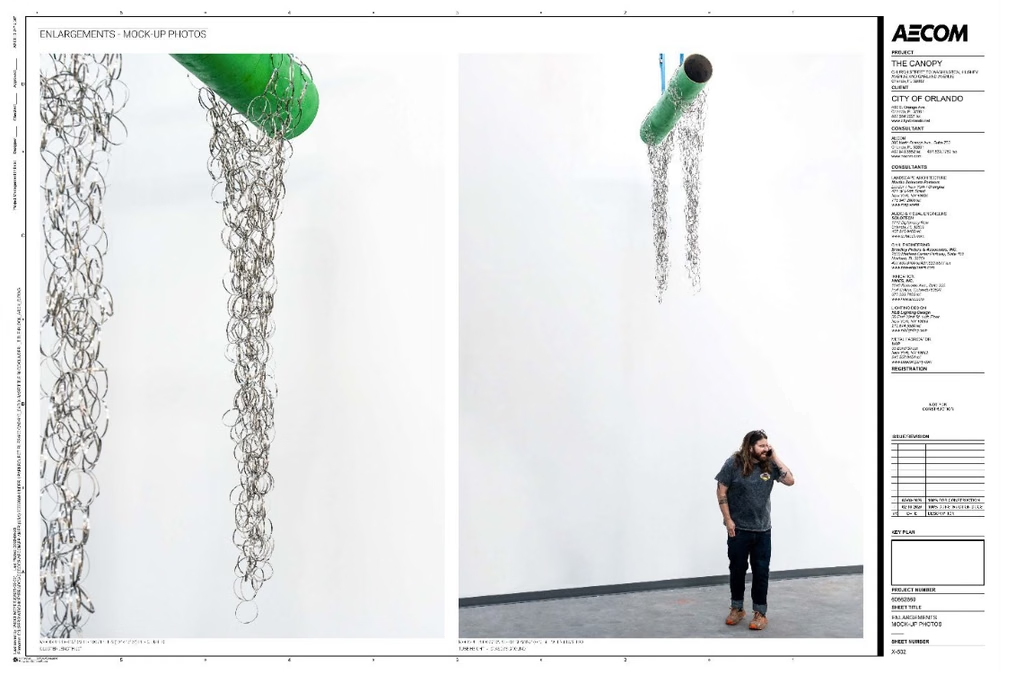
I’m just going to put this out there. With their smooth, welded pipe branches gathered into joints, the trees look a lot like the PVC pipe instruments from Blue Man Group’s stage show, but Hudson said that’s a coincidence of form, not function, and that despite the resemblance, the trees aren’t built to be played or touched. They’re sculpture, not instruments. Which is kind of a missed opportunity, but nobody asked me.
The sculptures are being fabricated by Urban Art Projects (Website), a public art and architecture company with a global fabrication practice spanning offices in Brisbane, New York, Los Angeles, known for large-scale metal and cast public artwork.
The same approval filing from the ARB also covers a restroom-and-storage building tucked into the block bounded by Hughey, Pine, Garland and Church, with an electrical room built specifically to run the audio-visual effects planned for the space, plus new light poles and structural trusses threaded through the corridor.

Real vegetation is also expected to return once you step outside the highway’s footprint. The Orlando Urban Trail, which the city has planned to extend roughly 10 blocks along the I-4 corridor, will run alongside The Canopy with native plantings, with actual trees and understory that can’t survive in the shade of the interstate. Landscape plans filed with the ARB show the same pairing at a smaller scale: live oaks, crepe myrtles, and other approved canopy species planted in structural soil along Hughey and Garland, standing just outside the fence line from their steel, non-musical instrument counterparts underneath.
Building permits still have to follow, and staff flagged that final material samples for the sculptures and the restroom building need a final review before anything goes up. But it locks in the visual identity of the space just as the money and the schedule are falling into place. The city council finalized the last piece of funding, $30 million from the Downtown Community Redevelopment Agency on top of $3.75 million from FDOT, on August 12, with construction expected to start within 60 days and the park targeted to open by the end of 2027.