



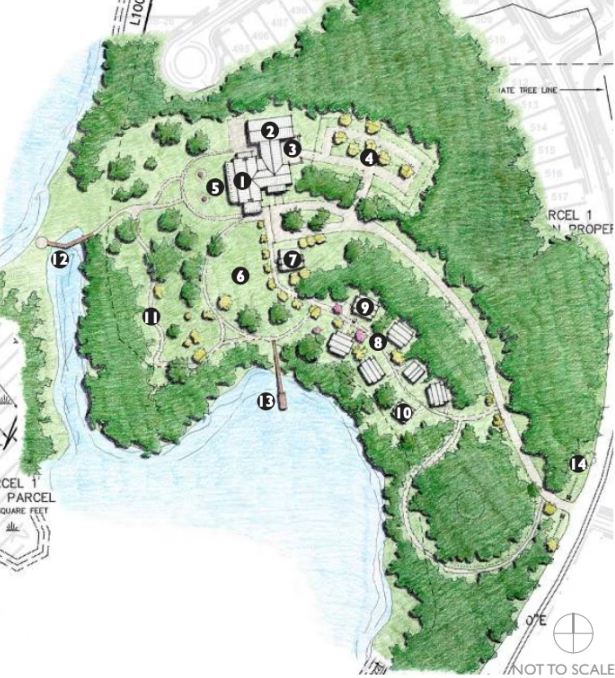
IMAGE VIA CITY OF WINTER GARDEN
The Winter Garden City Commission votes tonight at 6 p.m. on the Johns Lake Urban Village PUD, a large residential development proposed near Marsh Road and Williams Road that has slowly been working through the city’s review process since 2023. But on the eve of the vote, public records obtained under Florida’s Chapter 119 law show a series of communications between city planning staff and the developer’s team that raise serious questions about how the process was run, and some residents are calling foul.
The city did not answer our questions before publication. When we reached out, staff directed us to last night’s commission meeting and said they were unavailable to respond to individual inquiries.
Here’s what the emails show.
- Planning staff asked the developer to write the city’s responses to resident objections.
On May 8, Planning Director Kelly Carson emailed developer Scott Boyd and his lobbyist Heather Isaacs with a Word document compiling resident objections to the project. Her ask, in her own words: “There are a couple of points that I need your team’s help/input on, which I highlighted in the attached document. Can you please review and send me your responses?”
Two and a half hours later, Carson forwarded a resident’s formal opposition letter, sent to the City Commission with Carson copied as staff, directly to Boyd’s personal Gmail and Isaacs’ private email. The forward came from her mobile phone and contained no message.
Both emails are in the public record, and Boyd certainly could have obtained it through a public records request themselves, but with Carson forwarding it from her personal mobile, while asking them to write the city’s responses to resident objections, suggests she was actively helping the developer to prepare counter-arguments to resident opposition, and not as neutral as a planning director should be.
Formal opposition letters addressed to the Commission should also typically be logged and distributed through official channels like the City Clerk, and not forwarded by a staff member directly to a developer’s personal email account.
2. The developer’s attorney helped write the city’s own rezoning ordinance.
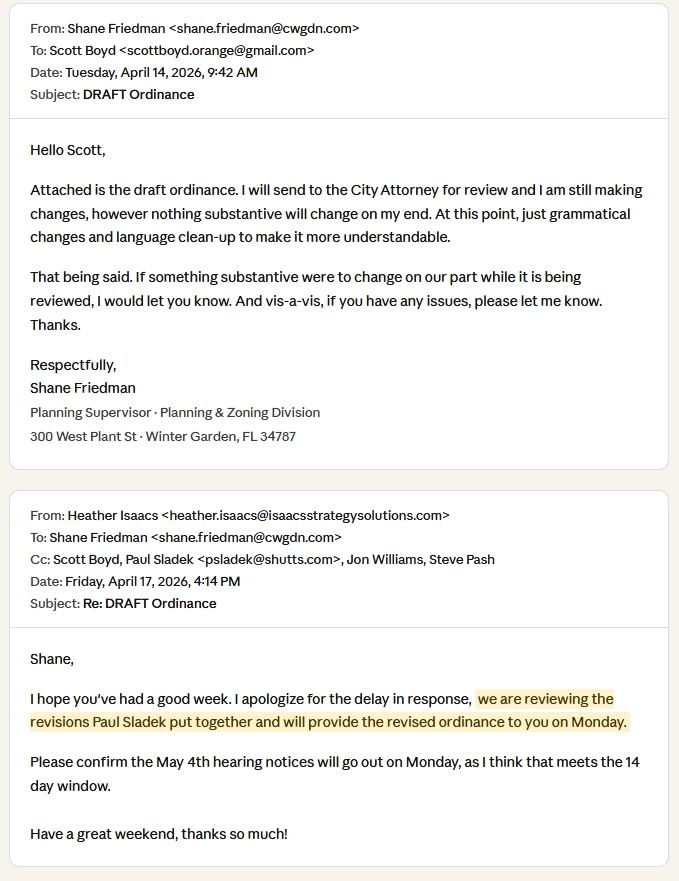
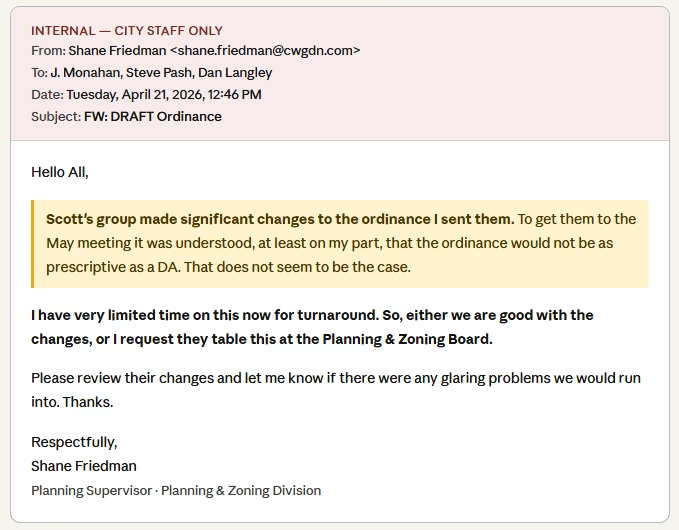
April email records show planning staff sent the developer a draft of the rezoning ordinance, which the developer’s team returned with substantial revisions drafted by their attorney, Paul Sladek of Shutts & Bowen.
Planning Supervisor Shane Friedman flagged the situation internally on April 21: “Scott’s group made significant changes to the ordinance I sent them… either we are good with the changes, or I request they table this at the Planning & Zoning Board.” That internal email is the most significant: it’s staff acknowledging in real time that the developer had taken over the drafting of the ordinance the Commission is now voting on.
3. The city’s own traffic consultant found the road couldn’t handle it.
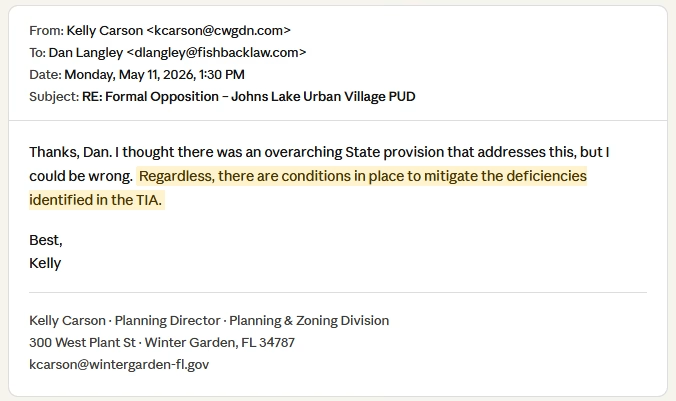
LTEC, the city’s independent traffic reviewer, issued a memo in October 2025 finding that the evening volume-to-capacity ratio at Marsh Road and Williams Road would rise from 0.103 today to 219.523 with the project, and warned traffic would cut through the adjacent Waterside neighborhood. The developer is responsible for funding 48.8% of the required intersection fix. The other 51.2% has no identified funding source. The Developer’s Agreement that would make any of those conditions legally enforceable had allegedly not been signed at the time of this story.
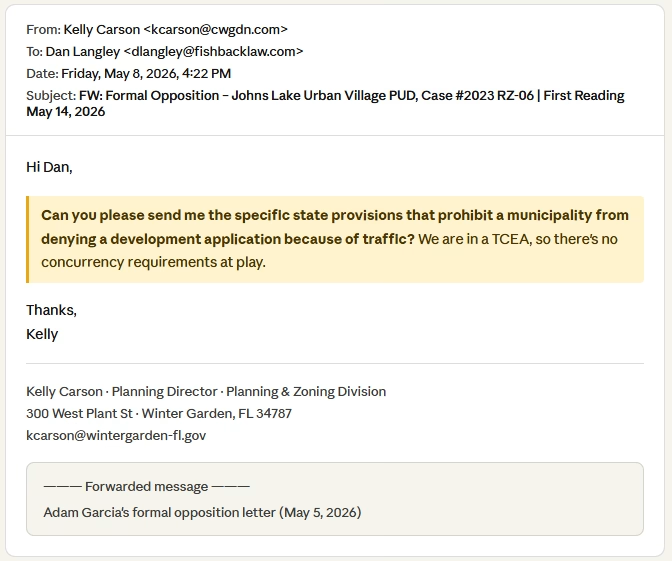
After a resident submitted a formal traffic objection, Carson emailed the city attorney asking him to send her “the specific state provisions that prohibit a municipality from denying a development application because of traffic.”
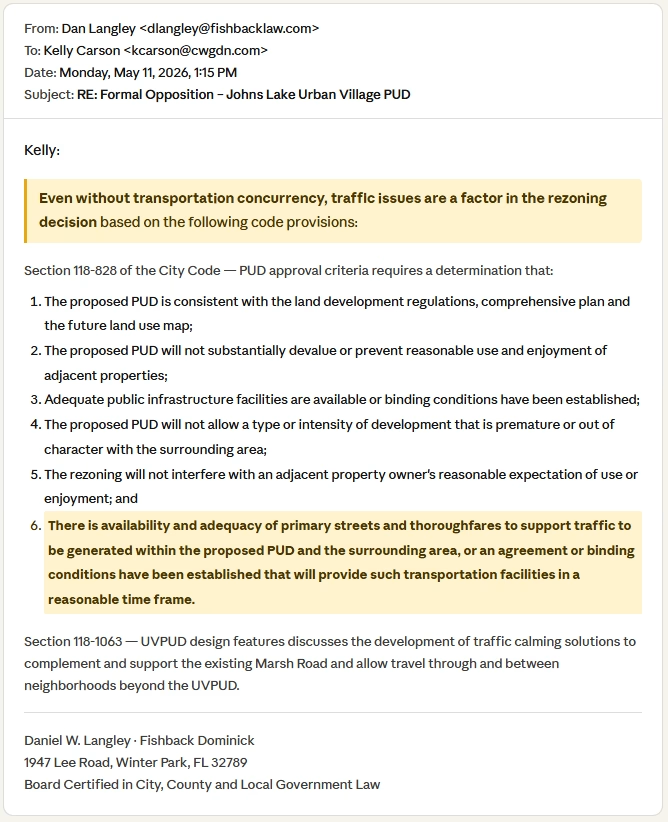
The city attorney’s response cited city code sections that explicitly make traffic adequacy a required finding for PUD approval, the opposite of what Carson appeared to be looking for.
4. The school site that justified the project’s density was removed without a new P&Z review.
The original 2023 application included a 13.65-acre site for an 800-student elementary school as one of the primary public benefits justifying Urban Village density. That site was removed from the application sometime between the October 2025 DRC review and Planning & Zoning approval, a change Friedman disclosed to a resident in a late April email, citing traffic concerns. The P&Z Board approved a project with a school. The Commission is voting tonight on one without it, and the Board never reviewed the revised version.
Orange County Public Schools certified in February 2025 that school capacity for the development is “not available.” That determination expired in August 2025 and has not been renewed.
5. Staff told the developer’s team what to expect at the P&Z hearing.
In a May 1 email to the developer’s lobbyist ahead of the Planning & Zoning Board hearing, Friedman wrote that he planned to address public concerns himself during his staff presentation rather than letting them come up during public comment, adding that “hopefully your team will only need to go up to the podium if absolutely necessary.”
The vote is tonight. The Winter Garden City Commission meets at 6 p.m. at City Hall, 300 W. Plant Street [GMap]. The meeting is open to the public. We will update this story once/if we get a response from the City of Winter Garden.
All communications cited here were produced by the City of Winter Garden under Chapter 119, Florida Statutes. Orlando Shine reviewed the original email files, some of which are included in the story above.