



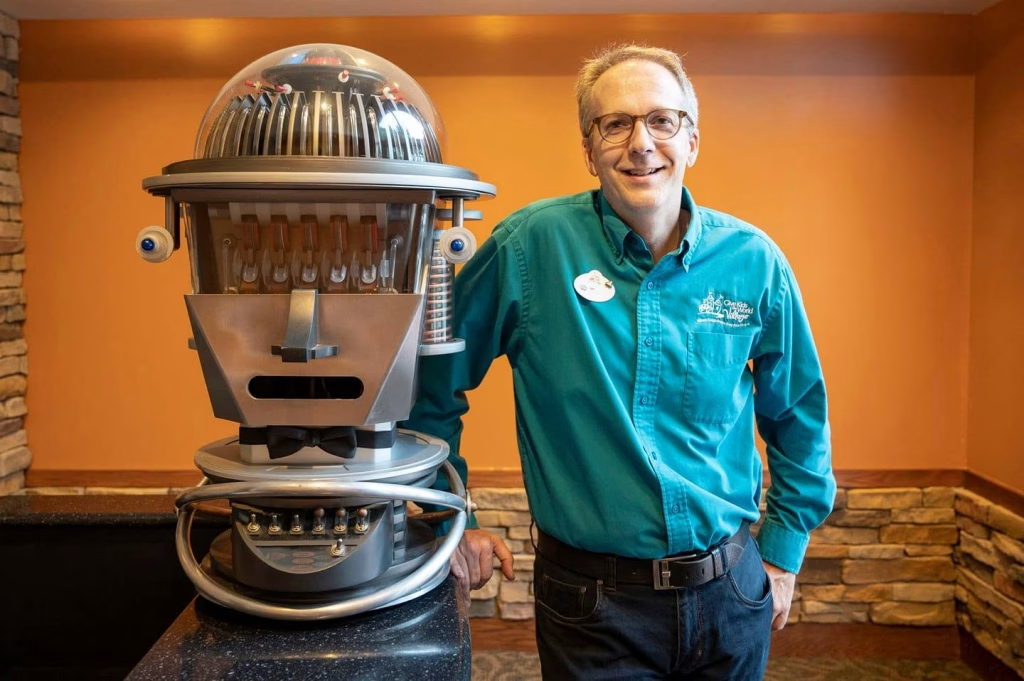
IAN COLE PHOTO VIA GIVE KIDS THE WORLD
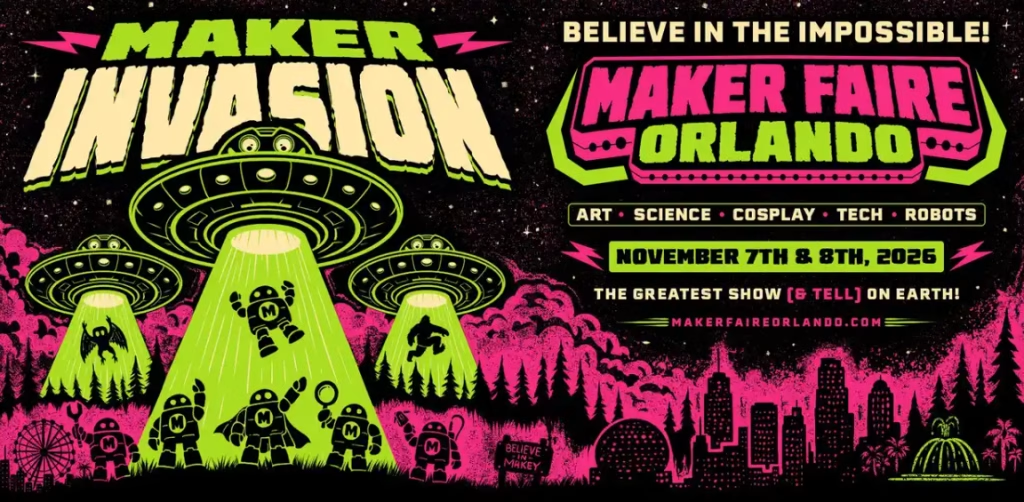
Maker Faire Orlando (Website) returns for its 14th year on Saturday, November 7, and Sunday, November 8, at the Central Florida Fairgrounds and Expo Halls, 4603 W. Colonial Drive. The event runs 10 a.m. to 5 p.m. both days, rain or shine, with free onsite parking.
The nonprofit, community-organized event is produced entirely by volunteers under founder Ian Cole and his wife, Candy Cole, through the couple’s Maker Effect Foundation, which also runs the MakerFX makerspace in Orlando. The Faire brings together hundreds of exhibits and hands-on activities spanning science, art, rockets, robots, crafts, technology, and music, along with stage talks, panels, and performances throughout the weekend.
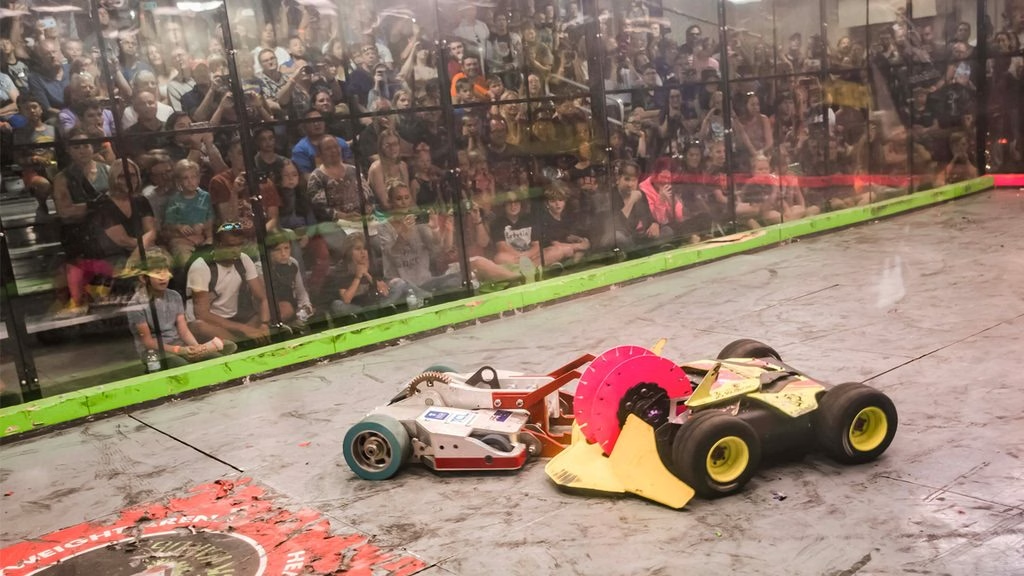
This year’s ticket includes admission to Robot Ruckus, the Faire’s combat robot competition, which draws robot builders from around the country and features robots on display from the television show “BattleBots.” Discounted and free admission is available for first responders, active military members and veterans, as well as employees of schools, colleges, universities and libraries, all with valid identification.
The Faire will also hold its second annual Field Trip Day on Friday, November 6, inviting students, teachers and homeschool families to a dedicated day of hands-on learning and exhibits ahead of the public weekend.
“Maker Faire Orlando brings together an incredible mix of curious minds and creative spirits, people who love to learn, build, and share,” Cole said. “From engineers and scientists to artists and crafters, it’s a one-of-a-kind space where makers showcase their passions and projects, offering a glimpse into the future and sparking inspiration for all who attend.”
Tickets are available now through Humanitix, with student pricing available for current college students with valid ID. More information, including the full schedule and program, is available HERE.
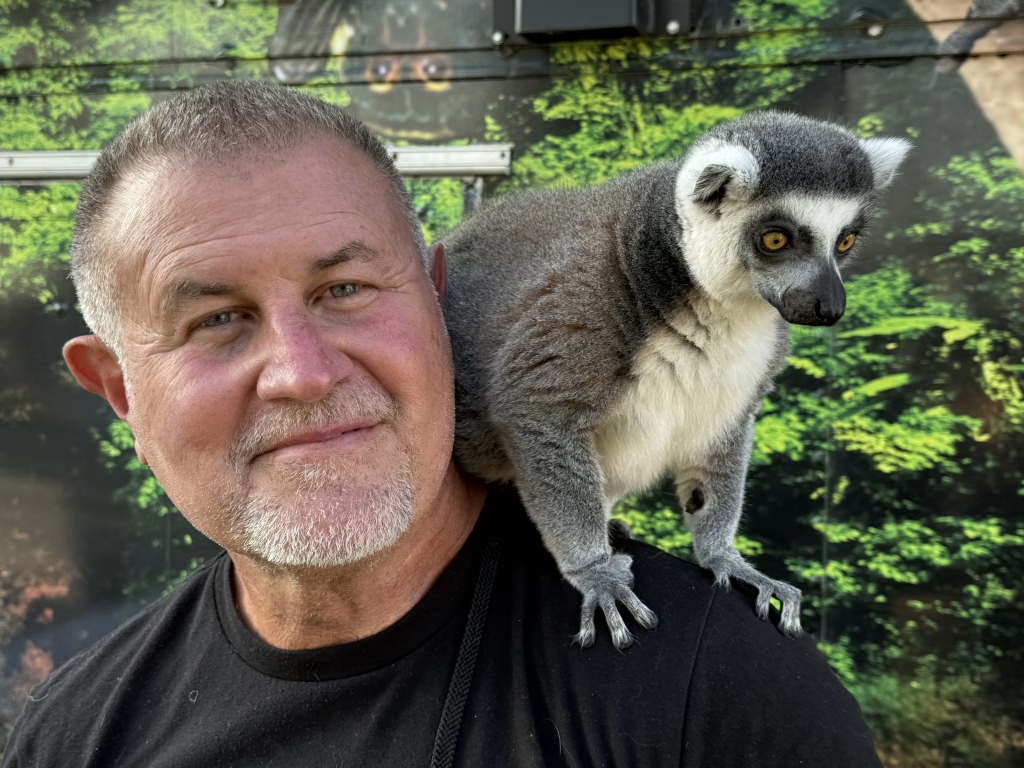
We had a chance to speak with Ian Cole, the co-founder and lead organizer of Maker Faire Orlando, to chat about what it takes to put on the annual event. Cole co-founded Maker Faire Orlando in 2012 and has run it ever since through the nonprofit he leads, the Maker Effect Foundation (Website), which also operates MakerFX Makerspace. Cole’s day job is chief innovation officer at Give Kids The World (Website) in Kissimmee.
- What was the spark that made you want to bring Maker Faire to Orlando in the first place?
I have two sons, Adam and Andrew. When they were about 10 and 12, I had the means to take my oldest, Adam, out to Maker Faire in the Bay Area. We both had an amazing time. It was our tribe, our people. He came back so fired up to learn.
I had this realization on the trip home that this was super cool, but most of the people I know don’t have the means to do that. I started thinking about his friends, and I thought, we need something like this in Orlando. I grew up here and went to Evans High School. We heard you could license the name and do your own community version. Myself and another gentleman, Dave Casey, had met at a local makerspace, and we said we should do this.
We thought maybe 300 people would show up the first year. 2,500 people showed up. Towards the end of that day, people kept coming up and saying, “We’re gonna do this again next year, right?” And I had this moment of, wait, what have I done? We’re headed into year 14 now, and it’s altered my life, my family’s life, my friends’ lives, in a very profound way.
2. You and your wife, Candy, run this together. What’s it like building something this big as a team?
We’re just a portion of it. There’s a core group of producers, some who have been with us since year one, like Jessica, who’s on our board. Our weekly production meetings usually have 12 to 15 people. There’s a core center group that thinks about it all year long, a larger group that meets weekly and takes on a role, and a bunch of crew that comes out that week to help. Between setup, tear-down and the event itself, it’s almost a full week of effort.
3. What does the first Maker Faire look like compared to this year’s?
The first year, we spent so much time just trying to explain what it would be. Most people need to see something to understand it. We spent a lot of time giving people permission to show off their stuff.
That first year and the year after were single-day events, and the whole team said, we have to go multi-day so we can actually see the event, instead of putting in all this effort, tearing it down, and it’s gone. Now it’s a beast of a very different size. The first year we had maybe 100 exhibitors and 2,500 attendees. This year we’ll have 200-plus exhibits, and we’ll badge 1,500 makers and their helpers before the first attendee even walks in.
Two years ago we added a field trip day, on the Friday before the main event. The first year we tested it with 250 kids. Last year we said, let’s do 2,500, and it filled immediately, so we ended up around 3,000. We’re going to be at 3,000 again this year, and we’re already going to have to say no to more.
4. This is the second year for field trip day. What made you want to dedicate a day to students and schools?
It’s about accessibility. I’ll have people say, “Couldn’t I see that at MegaCon?” And I’ll say, yeah, if you can afford it. It’s $40 a day just to park there. We don’t charge for parking. Our goal is to make it accessible for the kid who can’t get to MegaCon.
For a lot of the kids who come on field trip day, this is going to be their first exposure to cosplay, their first time seeing a fighting robot, their first time learning they can make their own video games or write their own books. All they need is one spark, or to meet one person who can enable them along their journey.
That goes back to something my son said on that first trip to Maker Faire Bay Area. He said, “Ordinary people can make amazing things.” We’ve all been to theme parks where you see something incredible, but you don’t know there are just normal people behind it, because they’re under NDA and can’t talk about it. At a Maker Faire, you see something awesome, and then you can actually talk to the person who made it about how they made it.
5. Florida has more Maker Faires than any other state outside New York. Why do you think this community took root so strongly here?
Some of it is just stupid persistence. There’s a great community here, but it’s a little harder to find sometimes. You go to California, and you’ve got Burning Man; you see all the Silicon Valley companies. Here, there’s a ton of super creative people, but they all work under NDAs for theme parks. They can’t talk about what they do for a living, so they all have these little side creative outlets.
When I started working at the village and got involved with the Themed Entertainment Association and IAAPA, I realized I already knew a lot of these people from Maker Faire. All the things I knew them for, like the Amigas and the dog-powered robot, that was their creative outlet, because their day job is being an Imagineer and they can’t talk about it.
6. During the pandemic, your team organized a response network for medical supplies across Central Florida. What did that teach you about what this community is capable of?
The world shut down, including the village, where I’d only been working for about a year. Then the PPE conversation started. The general sentiment in the maker community was that no one wanted to be in the position of helping save the world, but we weren’t going to not do it.
People started designing 3D-printed face shields. I realized pretty quickly that the network we’d built for fun and inspiration could be used for practicality. I reached out to Orlando Health, and we built a program almost overnight to funnel face shields being made in the community. Teachers were pulling printers out of schools and printing at home. Someone connected us with Coca-Cola, and they shipped us around 13,000 pounds of clear plastic on rolls. Our friends at Correct Craft built a whole hoist system to spool it down into smaller rolls, and we distributed it to people with laser cutters around the state.
There was also a mask-sewing effort organized around Danielle Zis. We reached out and asked who was cutting their fabric, and they said the people sewing were doing it themselves. So we organized a fabric drive, had someone running a laser cutter for eight- and 10-hour shifts, and created a logistics pipeline with the sewing volunteers. We made more than 25,000 masks that way. It was a lot of panic at the time, but it was cool to realize these networks and communities can be activated for good.
7. For someone who’s never been to a Maker Faire, what shouldn’t they miss this year?
If you’re into fighting robots, there’s always something new there, and kids building things and breaking each other’s toys is always a lot of fun. I love seeing what the cosplay community brings. We’re still going through exhibit applications, so we’re finding new things all the time. There’s a woman this year who makes jewelry out of silver spoons, using the ornate patterns already on them. There’s a gentleman who submitted a quarter-scale, remote-controlled Sherman tank.
That’s why I always tell people to check the website, because it keeps changing between now and November. We’re also working on connecting local manufacturers and companies with the fair, since this community is a great source of future employment for middle school and high school kids who’ll be looking for jobs in a few years. Our stage content is still coming together too, so stay tuned.