



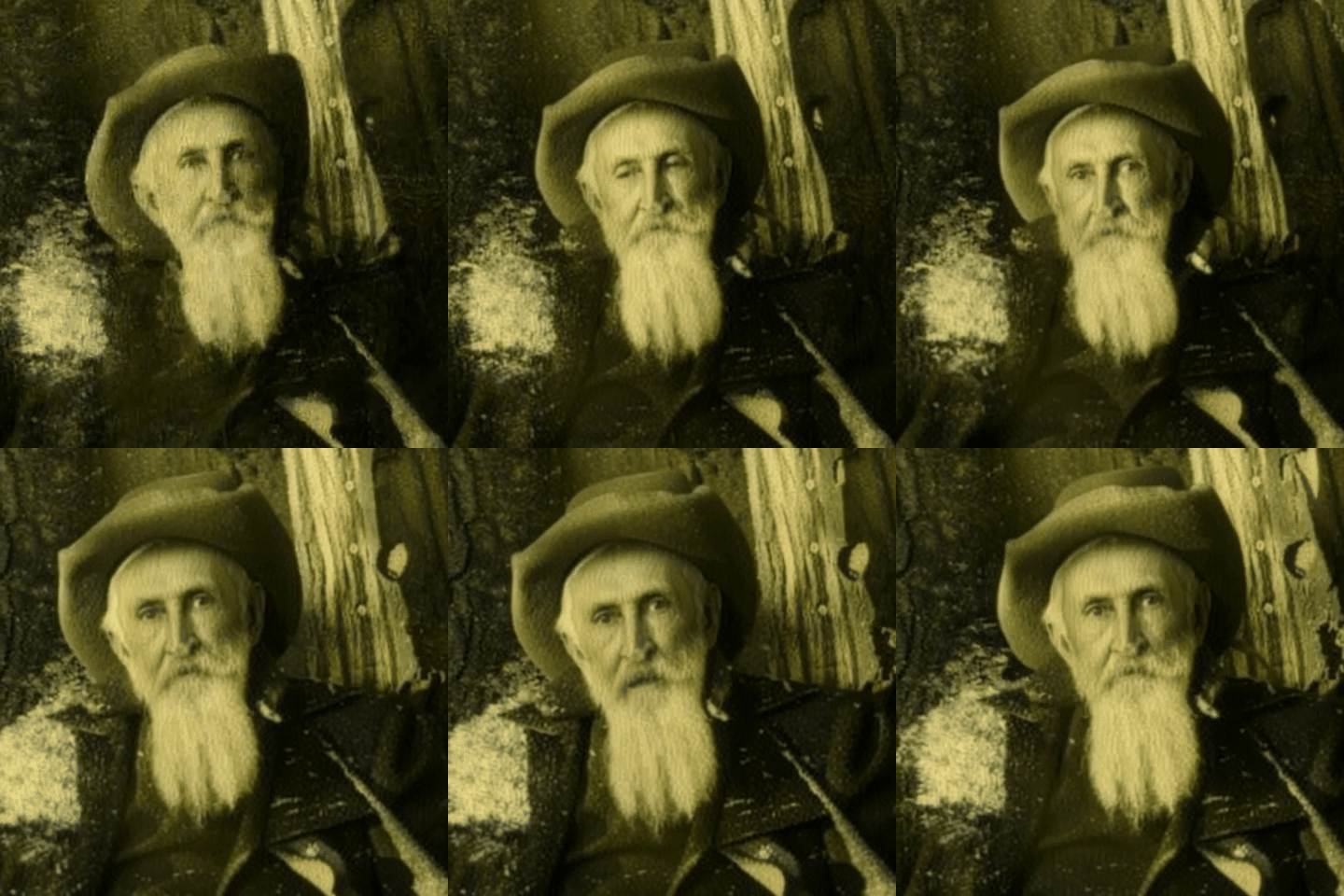
BASED ON AN ACTUAL PHOTO OF LAKE HOLDEN FROM 1882-1887
Before Orlando became the bustling economic hub of Central Florida, it was a vast, untamed wilderness of pine forests, swamps, open prairies, gopher tortoises, and danger noodles.
In 1843, Aaron Jernigan arrived as the area’s first permanent settler, marking the beginning of what would eventually grow into the city we know today. Originally from Camden County, Georgia, Jernigan came to the region after the U.S. government opened Florida’s interior to settlement following the Second Seminole War.
The Second Seminole War (1835–1842) was the longest and most costly of the three U.S.–Seminole conflicts, fought largely over Native resistance to forced relocation under the Indian Removal Act. The war ended with most Seminoles being killed, captured, or forcibly moved to Indian Territory (present-day Oklahoma). A small number evaded capture and retreated into the Everglades.
Once large portions of Central and South Florida were no longer under Seminole control, the U.S. government implemented land policies through military land grants, homesteading incentives, and low-cost sales to encourage settlement.
This served two main purposes:
- Military Strategy: Populate the region with settlers who could help secure it against any remaining Seminole resistance.
- Economic Development: Open fertile land for agriculture, ranching, and trade, integrating Florida more fully into the national economy.
Veterans of the war were often rewarded with land parcels, and new settlers like Aaron Jernigan were drawn in by the promise of affordable, resource-rich acreage. In 1843, he acquired 160 acres along the west side of Lake Holden, about two miles northwest of Fort Gatlin, and began raising roughly 700 head of cattle and cultivating crops like corn, cotton, rice, pumpkins, and melons.
Jernigan quickly established himself as more than just a farmer. He became a prominent community leader with his settlement serving as the center for the region, including a post office by 1850, and he served as the county’s first postmaster and the region’s first representative in the Legislature. His homestead became a hub for trade, and his cattle operation supplied beef to both settlers and military outposts. In the early years, the fledgling settlement was even informally known as Jernigan, a testament to his influence and the role his family played in the community’s survival. But also because there wasn’t a hell of a lot of other people around at the time to lobby for another name.
He became the captain of the local mounted militia and was often criticized by Florida officials for acting without legal authority, and was investigated by the Governor for mistreating local Seminoles. He was sued by his neighbors for debts he accrued and on multiple counts fo assault and battery, and was even accused of murdering a man in front of the office. He was sent to jail in Ocala but escaped and was recaptured, before escaping again and fleeing to Texas with his family. He eventually came back to Florida 25 years later and was murdered in 1891 by seven men. He was buried at Lake Hill Cemetery.
The town’s name later changed to Orlando in the 1850s, but nobody knows exactly why that is. We can talk about that in another Once Upon A Time column, though.