




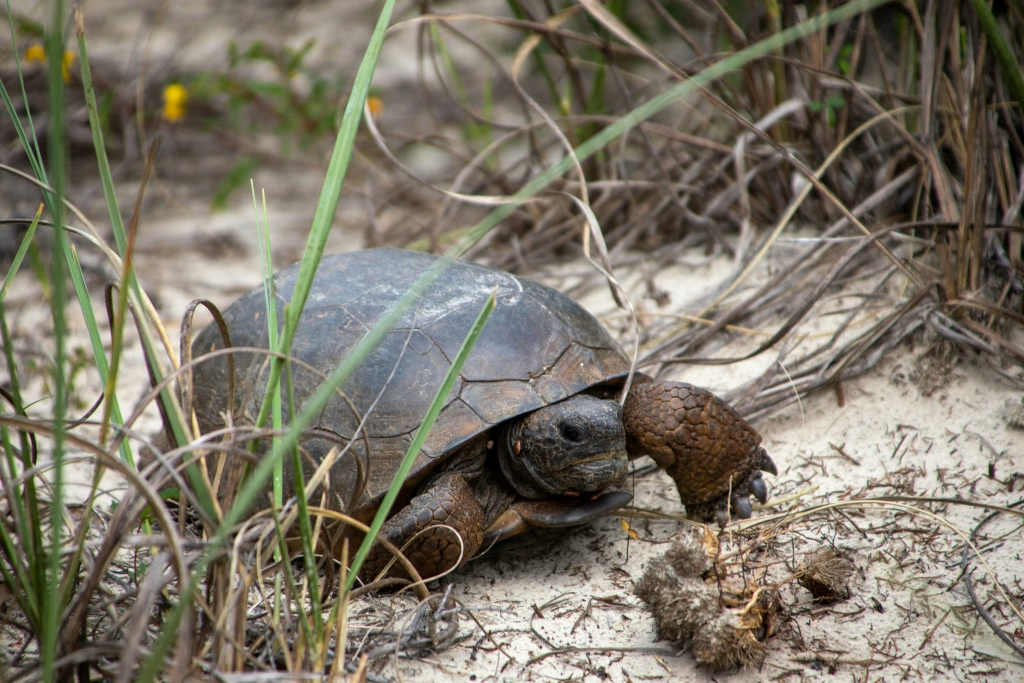
PHOTO BY DAWN MCDONALD VIA UNSPLASH.COM
The gopher tortoise, one of Florida’s most recognizable native reptiles, has been reclassified as critically endangered by the International Union for Conservation of Nature, a significant downgrade from its prior “vulnerable” status on the organization’s global Red List.
The new assessment, the tortoise’s first update since 1996, found that populations have declined by roughly 80% over the past 120 years, or about three tortoise generations. Researchers project an additional 69% to 91% decline over the next two generations. Currently, no monitored gopher tortoise population anywhere in its range is showing positive population growth, even within protected areas.
The primary driver of the decline is habitat loss. The longleaf pine sandhill and coastal dune habitat gopher tortoises depend on has been reduced to roughly 3% of its original extent across the Southeast, largely due to development and urbanization – it’s the Florida land that’s easiest to bulldoze and develop.
Gopher tortoises are found in all 67 Florida counties and are considered a keystone species: their burrows, which can extend 30 feet underground, are used by more than 360 other species, including gopher frogs, and their digging and foraging habits help aerate soil and disperse plant seeds throughout the ecosystems they inhabit.
Researchers involved in the assessment also pointed to flaws in how the species has historically been managed. Hunter Howell, one of the assessment’s coauthors, said conservation efforts have relied heavily on translocation programs that relocate tortoises away from development sites, sometimes hundreds of miles from their original burrows, often with little to no follow-up tracking of whether the relocated animals survive.
Elise Bennett, Florida and Caribbean director at the Center for Biological Diversity, said it’s time for federal wildlife officials to reconsider their denial of Endangered Species Act protections for the species, arguing that further delay will make recovering the population more difficult.
The IUCN’s critically endangered designation is a scientific assessment, not a legal one. It doesn’t alter Florida law, halt development projects, or change permitting requirements. In Florida, the gopher tortoise remains a state-designated threatened species, protected under Florida Fish and Wildlife Conservation Commission rules that require developers to obtain permits before relocating tortoises or disturbing their burrows.