


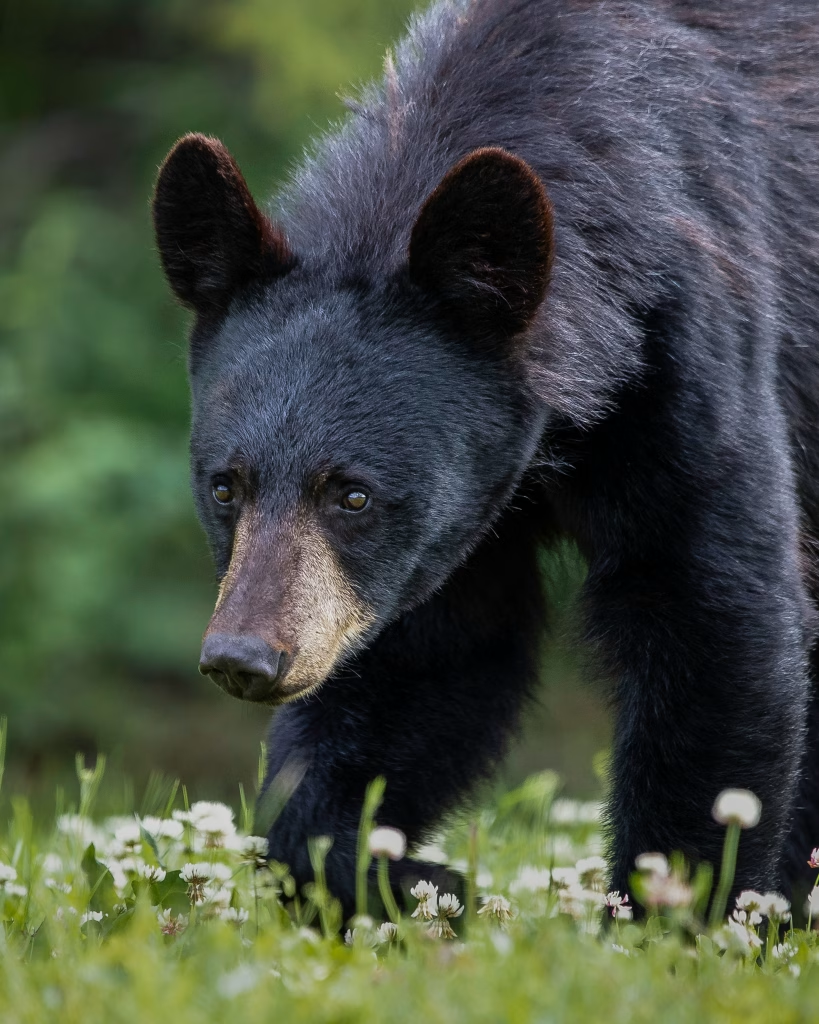
PHOTO BY PETE NUIJ VIA UNSPLASH.COM
Florida’s first black bear hunt in a decade ended on December 28, with an estimated 52 bears killed statewide, according to the Florida Fish and Wildlife Conservation Commission. The hunt ran for three weeks (December 6-28) and was significantly smaller than the state’s last hunt in 2015, which was shut down early after nearly 300 bears were killed in just two days (including protected mothers and cubs).
The 2025 hunt was limited to 172 permit holders, selected through a random lottery that drew more than 160,000 applicants, with each permit allowing the killing of one bear. The state set a cap of 172 bears across four hunting zones, but the final total ended far below that maximum, at least according to what was reported. The system relies on an honor system of compliance, hoping that the ramifications for getting caught make cheating and failing to report a kill too big a gamble.
FWC officials described the hunt as a success, arguing it was based on population science and modern bear management practices used in other states. The agency estimates Florida’s black bear population is around 4,000, and said the hunt provided biological data that will be used to guide future management decisions: Hunters are typically required to present the bear for check-in, and biologists collect a tooth (often a premolar). They can estimate age by examining growth layers in the tooth, similar to counting rings. That tells FWC whether hunters are mostly taking younger bears, older bears, or a mix, which matters for long-term population modeling. They also record sex, body condition, and overall health, and sometimes genetic samples.
Opponents argued the low kill number undercuts the case for a hunt and pointed to what they described as a lack of transparency and oversight. Critics highlighted the state’s reliance on an app-based reporting system and the limited public visibility into real-time harvest numbers, as FWC refused to actively share any data while the hunt was underway. The hunt also drew attention because it allowed controversial methods, including hunting over bait at feeding stations.