



PHOTO BY SCOTTIE CAMPBELL
In front of Orlando’s postmodern city hall, a 1992 construct with its copper-domed grand façade, the pedestrian path is currently framed not by civic grandeur, but by barricades and tarps. Over one year since its erection, scaffolding and fencing now stand as unsightly gatekeepers to what should be the civic “front porch” of The City Beautiful.
The story began with an all-too‑literal fragment of disrepair. A piece of the marble veneer façade above the colonnade succumbed to gravity (like we all do eventually) and shattered on the pavement below. No one was injured.
In rapid response, the city erected protective scaffolding where foot traffic is heaviest, while fencing off parts of the right-of-way that passed anywhere under its freestanding colonnade. Yet roughly four seasons later, the barricades remain.
An official statement back in April deferred clarity: “An engineer will be coming by at the end of the week to assess the building and try to gauge the extent of the repair work needed.” Whether this marked a renewed urgency due to a media inquiry or a polite stalling remains unclear, but a recent follow-up gleaned that they are working through “final engineering plans for a solution.” The City’s Public Information Manager shared the following:
“We are working through final engineering plans for a solution. The engineers determined that just resecuring the granite to the facade was not possible based on the nature of the underlying structure. Teams will be meeting next week to look at what we hope is the final solution.
Ensuring that the granite on the face is secure is the primary goal, but we have to balance that solution with the overall architectural look of the building. We are focused on getting this work completed before the holidays.” – ANDREA OTERO, PUBLIC INFORMATION MANAGER, CITY OF ORLANDO
When a downtown corner remains caged in for an extended time, the damage extends beyond aesthetics. It gestures towards a disruption of public confidence and the daily routines of visitors. As Orlando forges ahead in its ambitious DTO 2.0 plan, promising reimagined public spaces, traffic reconfiguration, and new pocket parks, this scaffolding stands as an ironic counterpoint. The scaffolding is more than an eyesore: it’s a governance question. Civic architecture isn’t merely a backdrop; it is an invitation. When the marquee of its municipal heritage is shrouded for so long, the message is accidental but unmistakable: public space, it appears, isn’t really that much of a priority.
Rather than sitting idle and letting the scaffolding linger as a visual and psychological curb, I’d suggest that Orlando might consider partnering with its Public Art Program or the Downtown Art District to enliven the structure with creative designs, community messaging, or interactive features.
Temporary interventions could range from bold graphics and lighting to participatory art events, transforming a drawn-out repair into a dynamic civic moment. Turning the scaffolding from an architectural limbo into a platform for creativity could restore civic affection right where the public meets its government, a temporary reparative gesture that’s both literal and symbolic.
If we have to live with it until the holidays, why not give ourselves a little early Christmas present and gussy the place up a bit?
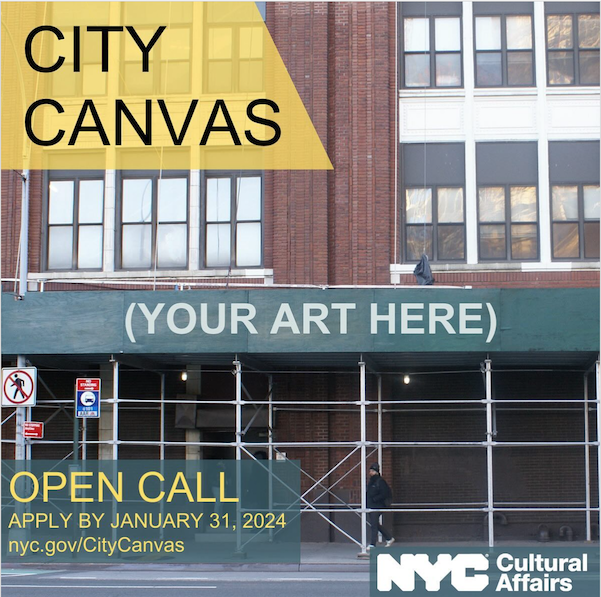
New York City – City Canvas Program: NYC’s Department of Cultural Affairs and Department of Buildings now allow property owners to wrap scaffolding, sidewalks, sheds, and fences with public art—creating a mobile gallery visible to pedestrians.
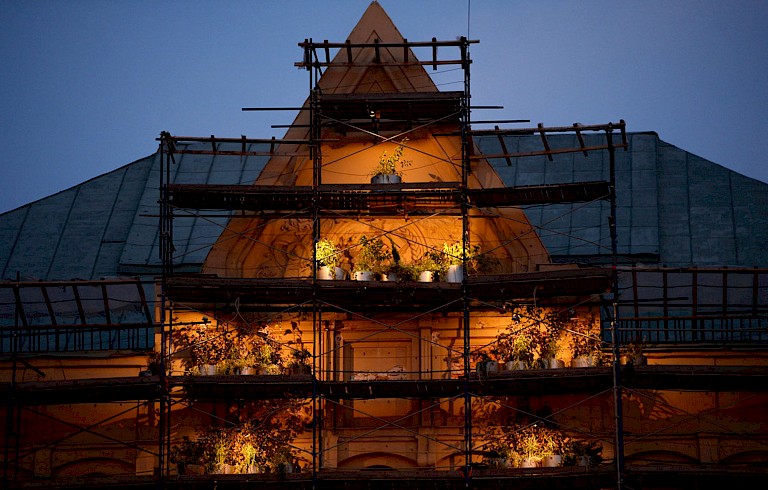
Moscow – Polytechnic Museum Installation: Artists adorned the scaffolding of a renovation site with living plants, suggesting that even sterile construction can host organic beauty.
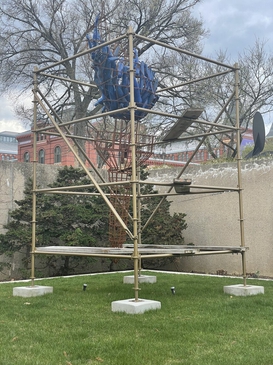
Abigail DeVille’s Light of Freedom: Using scaffolding as a structural frame, the sculpture reimagines Lady Liberty’s torch with mannequin arms and reclaimed steel—and underscores how construction materials can powerfully express civic ideals.

Héctor Zamora’s Lattice Detour / Triennial (NYC & Bruges): Zamora constructed a meticulously gridded scaffold pavilion atop an urban tree or rooftop, turning scaffolding into a poetic form of monumentality.

This is a rendering by Midjourney with the prompts of overlapping vinyl sheeting of different colors that could interact with sunlight and shadows in a really interesting way, echoing the forms of the scaffolding.

Graffiti artist BiancoShock turned scaffolding into a pop-up personal living space back in 2015, as part of the Memorie Urbane Street Art Festival. Each section mimicked a different scene with a garage/storage space on the bottom, a TV room, and a rootop patio.