



PHOTO OF THE PLATFORM WHERE THE INSTALLATION USED TO BE
Our “Neighborhood Watch” series features photos and tips provided by our readers. If you see something, say something, and send us an email at News@OrlandoShine.com so we can look into it and maybe even write a story like this one.
“I just drove past the Orlando Museum of Art, and you might remember there’s a sculpture/platform made out of railroad ties on the other side of Orlando Avenue. There’s a crew there disassembling it, or at least disassembling part of it.”
– JOHN (@OrlandoActionFigure)
The Orlando Museum of Art has removed “Wing Stepper,” a large-scale cedar sculpture by New York artist Jackie Ferrara (Website) that has stood outside the museum since the mid-1980s, overlooking Lake Rowena. The piece, which I always assumed was an ignored bandstand or public stage, was actually one of Orlando’s earliest major public artworks, was originally commissioned and donated by Cardinal Industries Inc. and installed at what was then the Loch Haven Art Center.
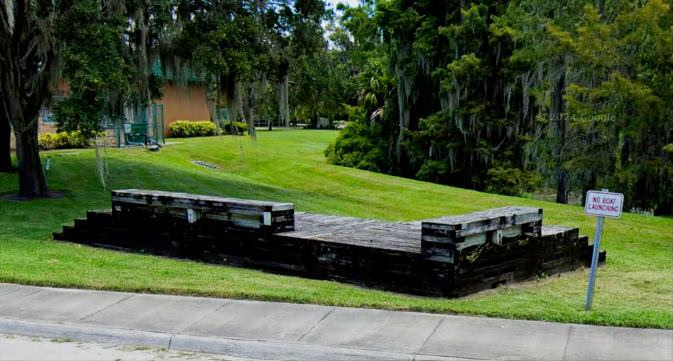
Constructed from 475 pieces of cedar and weighing 10 tons, “Wing Stepper” was dedicated in 1984 as both a sculptural and functional work that was part geometric puzzle, part wooden deck. Ferrara, known for her mathematically inspired, architecturally precise wooden constructions, described the project at the time as “an intricate puzzle” that celebrated both design and craftsmanship. The work’s creation involved 19 employees from Cardinal’s Sanford modular housing plant, who spent 290 hours assembling the structure.

The sculpture’s L-shaped form measured more than 30 feet on one side and 17 feet on the other, positioned prominently near the museum, adjacent to 17-92/North Mills Avenue. Made from untreated cedar, it was designed to weather naturally over time, turning a soft gray that would complement its black-stained checkerboard inlays. Ferrara said the pattern and shape were inspired by Central Florida’s landscape and wildlife, particularly the wings and movements of local water birds like egrets and herons.
At the time of its installation, “Wing Stepper” was valued at $90,000 and celebrated as a major addition to Orlando’s growing public art collection. The donation reflected a rare kind of corporate patronage: rather than writing a check, Cardinal Industries engaged its workers directly in the artmaking process, allowing them to apply their skills to something lasting and public.
The museum shared that the installation was beyond saving and needed to be removed, saying, “Wingstepper is being removed because its condition is beyond conservation efforts – this is a regular procedure when an object becomes a safety hazard.”
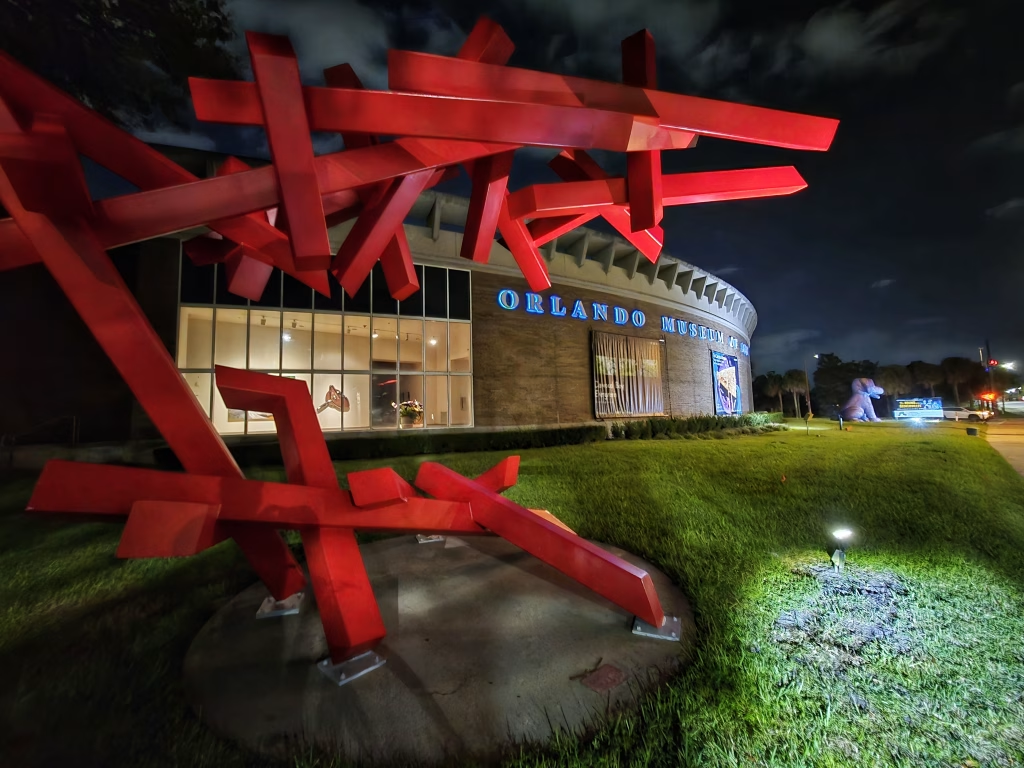
The museum also carried out a conservation effort with the nearby Ruins XIII piece by Ernest Shaw, which received a good pressure wash and a new coat of red paint. Shaw’s piece was a gift of Joseph Albenda.