

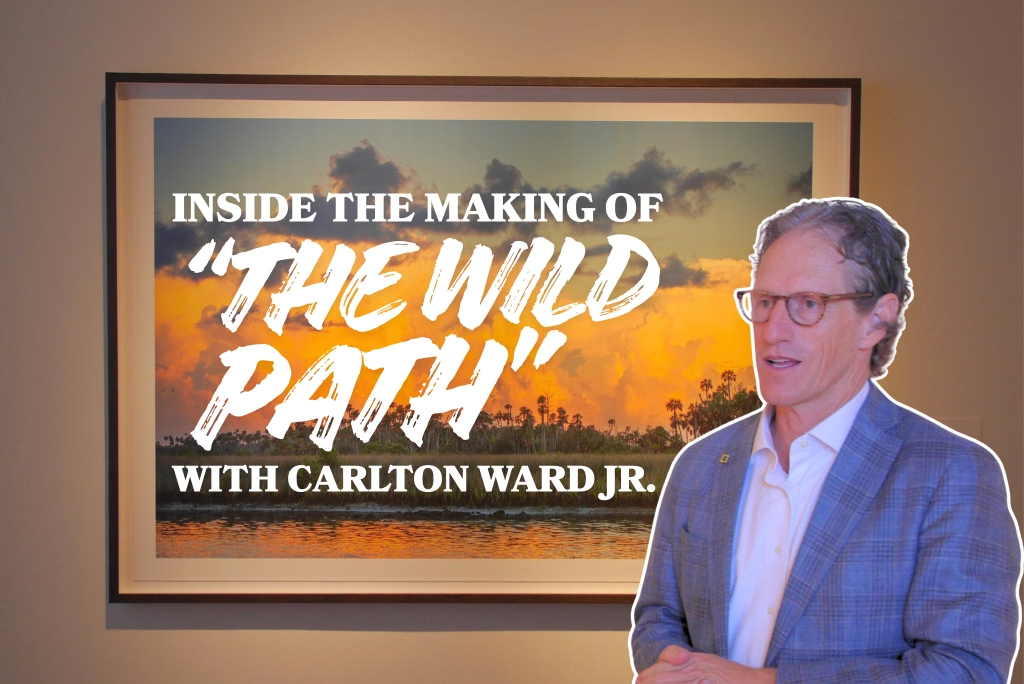
We got an early walkthrough of The Wild Path: Connecting the Florida We Don’t See this week, joining a small group of media for a guided tour of the exhibition with Carlton Ward Jr. himself, the same day it opened to the public at the Orlando Museum of Art (Website).
Chief Curator Coralie Claeysen-Gleyzon, who worked alongside Ward to select and arrange the show, explained that the exhibition was built with intention: an outer ring tracing Florida’s major ecosystems, from the Everglades through coastlines and seascapes, into the springs, and finally the ranchlands and Florida cowboys most people don’t know exist. At the center sits an inner sanctuary devoted to “Path of the Panther,” Ward’s National Geographic-backed project and the documentary of the same name that premiered at Enzian Theater during the 2022 Florida Film Festival.
Ward told us the show pulls together roughly two decades of work, some images dating back to 2001, alongside photographs from this past summer. Selecting from that much material, he said, was one of the hardest parts of putting the exhibition together.
One image draws from Fisheating Creek, the last naturally flowing tributary into Lake Okeechobee, a place Ward described as wild but often overlooked, tucked north of the Everglades most people picture between Miami and Naples. It carries real significance for the Florida panther’s story: the first female panther documented north of Fort Myers in nearly 50 years was found not far from there in 2016. The last confirmed sighting before that had been in 1973, at that same creek.
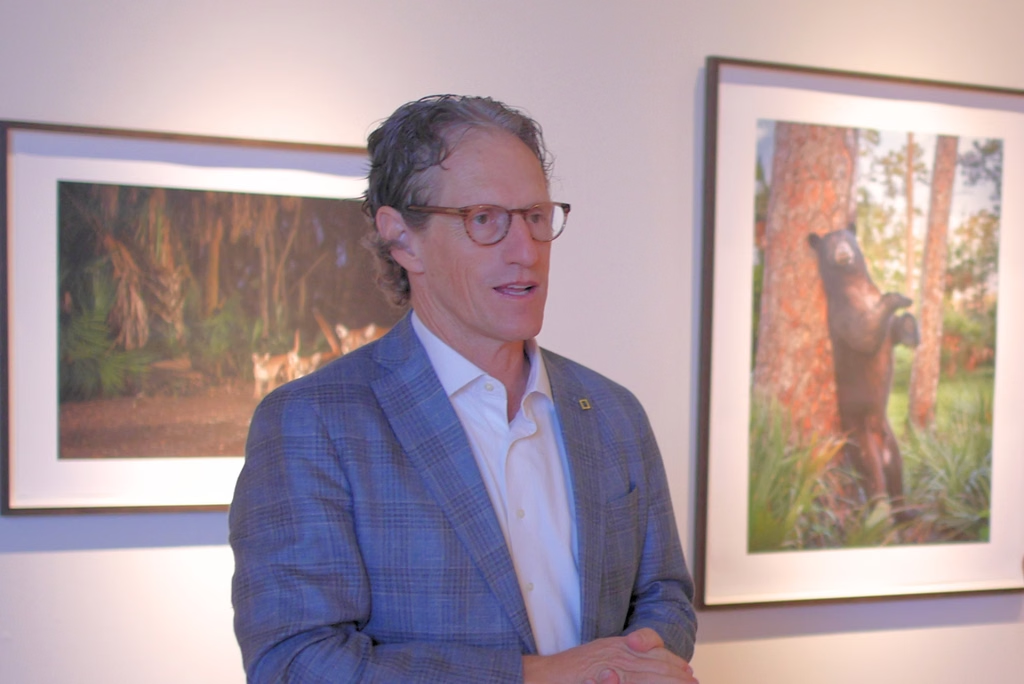
Nearly every image on one wall came from a remotely triggered trail camera, including a striking shot of a black bear scratching its back against a tree, the camera itself mounted higher up, out of frame.
Ward said he got distracted from panther work chasing an entirely different mystery for a while: figuring out what pollinates the ghost orchid, a question that stumped scientists for years. After two frustrating summers of capturing the wrong moths, he finally got footage in the summer of 2018 of five different species visiting the flower, two of which carried its pollen. The work led to two scientific papers and a documentary, “Chasing Ghosts.” “Orchids make you crazy a little bit,” Ward said. “It got me too.” One of those photos is in the exhibit.
Ward pointed out one of his own favorite images (a tough thing to do, he says), a self-described selfie from 2015, taken during a Florida Wildlife Corridor expedition that traced a path from the Everglades headwaters near Orlando around the Gulf Coast into Alabama. About three weeks into that trip, camped near Chassahowitzka National Wildlife Refuge along Crawford Creek, Ward woke before sunrise while the rest of the group was still asleep, set his camera on a tripod to fire automatically, and paddled out alone to capture the still water and morning light.
Asked whether he edits his photographs digitally, Ward said he comes out of a photojournalism tradition- the Tampa Bay Times, National Geographic– where altering pixels isn’t part of the process. What he will do is expose carefully for highlights, protecting detail in bright skies even if it means shadows and foregrounds come out darker in the raw file, then bring some of that shadow detail back in post. It’s a technical choice, he said, not a creative rewrite.
Much of the conversation returned to the people behind the landscapes as much as the landscapes themselves. Ward spoke about growing up connected to Florida ranching, eight generations deep, and how that background opened doors that might otherwise have stayed closed. He recalled an early conversation from around 2005 with a well-known rancher who bristled a bit at being called an “environmentalist,” wary of outsiders showing up from air-conditioned offices to tell longtime landowners how to manage their own property. Ward said that tension has shifted over the years as more ranch families have come to see themselves, and the panthers sharing their land, as being on the same side.
He told a story about a 13th-generation Floridian rancher at Babcock Ranch who read an essay Ward wrote for the Tampa Bay Times connecting the panther’s return to the Florida Wildlife Corridor. The rancher later told Ward, from the cab of his pickup truck, that the essay changed how he saw things: if he and the panther could coexist, they could actually help each other.
Ward also talked about the deliberate choice to name the Florida Wildlife Corridor itself. The underlying science, he said, had existed for decades, but it hadn’t reached the public or lawmakers in a way that stuck. Giving the concept a name gave people something to rally around, and gave storytellers, photographers and filmmakers a shared language to build on. Something he sees as vital to his role as a storyteller and advocate for protecting wild Florida is sharing his work with stakeholders and decision-makers who rarely have a connection with the land they oversee.
“The Wild Path: Connecting the Florida We Don’t See” is now open at the Orlando Museum of Art through January 3.