

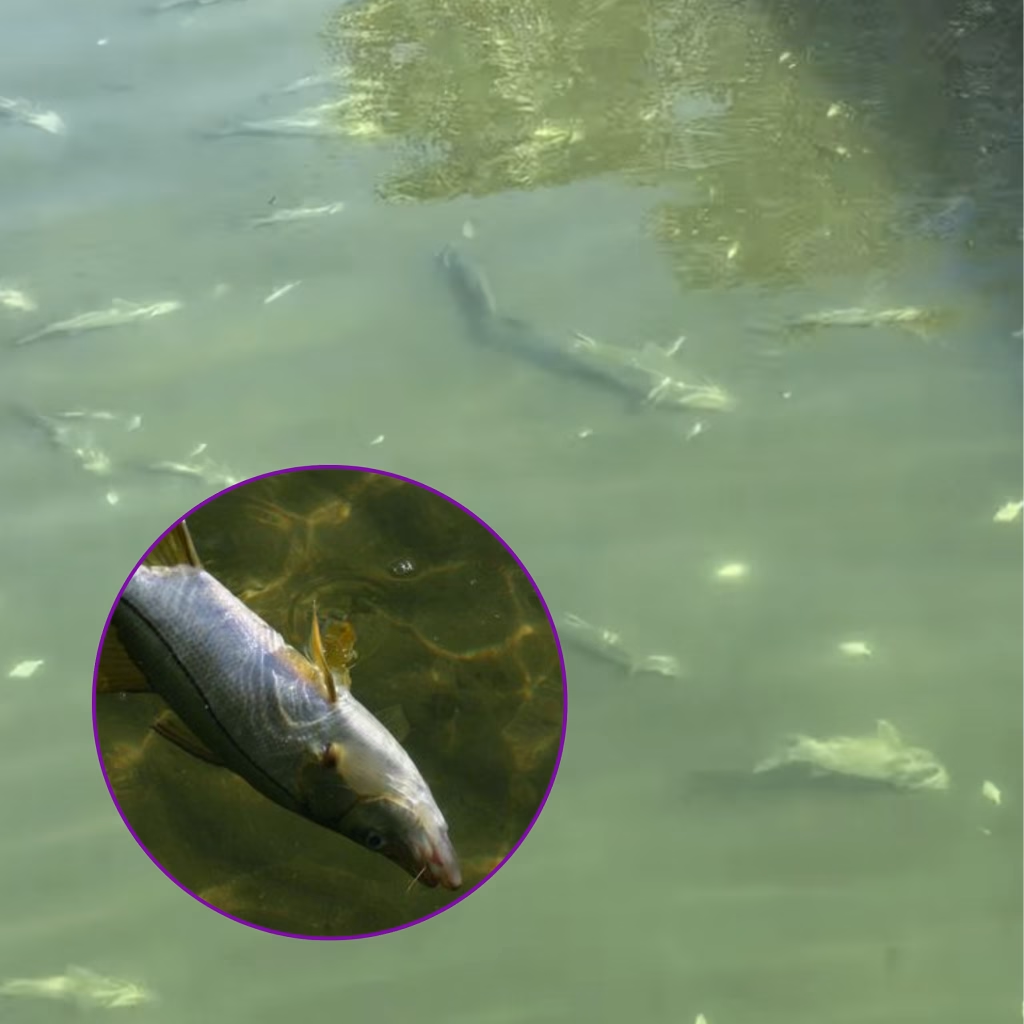
Florida’s late-January and early-February cold snap has pushed coastal waters in parts of the state below the comfort zone for many warm-water fish, leading to reports of stressed, “cold-stunned” animals and localized fish kills in shallow lagoons and estuaries.
The Florida Fish and Wildlife Conservation Commission said ahead of the cold surge that severe or prolonged cold can affect both freshwater and coastal species. In its statewide advisory, the agency noted that sudden temperature drops can stress marine and estuarine fish, including snook and tarpon, while nonnative freshwater fish are often especially vulnerable. FWC also asked the public to report fish kills and other cold-weather wildlife impacts so researchers can track what is happening as the cold front moves through.
Several local fishermen have taken to social media to beg Fish and Wildlife to consider a closure on snook and sea trout fishing until further notice to allow local populations to recover. Check out some of their videos below.
Cold-related fish impacts tend to show up first in places where fish have fewer escape routes: shallow backwaters, canals, mangrove-lined coves, and enclosed lagoons. When those waters cool quickly, fish may become lethargic and congregate in slightly warmer pockets, such as deeper channels or areas influenced by springs or warmer discharges. If temperatures fall too far or stay low too long, the stress can turn into mortality events, particularly for species that are strongly tied to subtropical conditions or are nonnative/invasive to the area.
The cold snap has been part of a broader regional winter outbreak that brought record-setting lows into Florida, with temperatures dropping into the 20s and 30s in some areas. That same chill has been visible in other cold-stun effects, including immobilized iguanas in South Florida and rescue responses for cold-stunned sea turtles elsewhere in the state.